


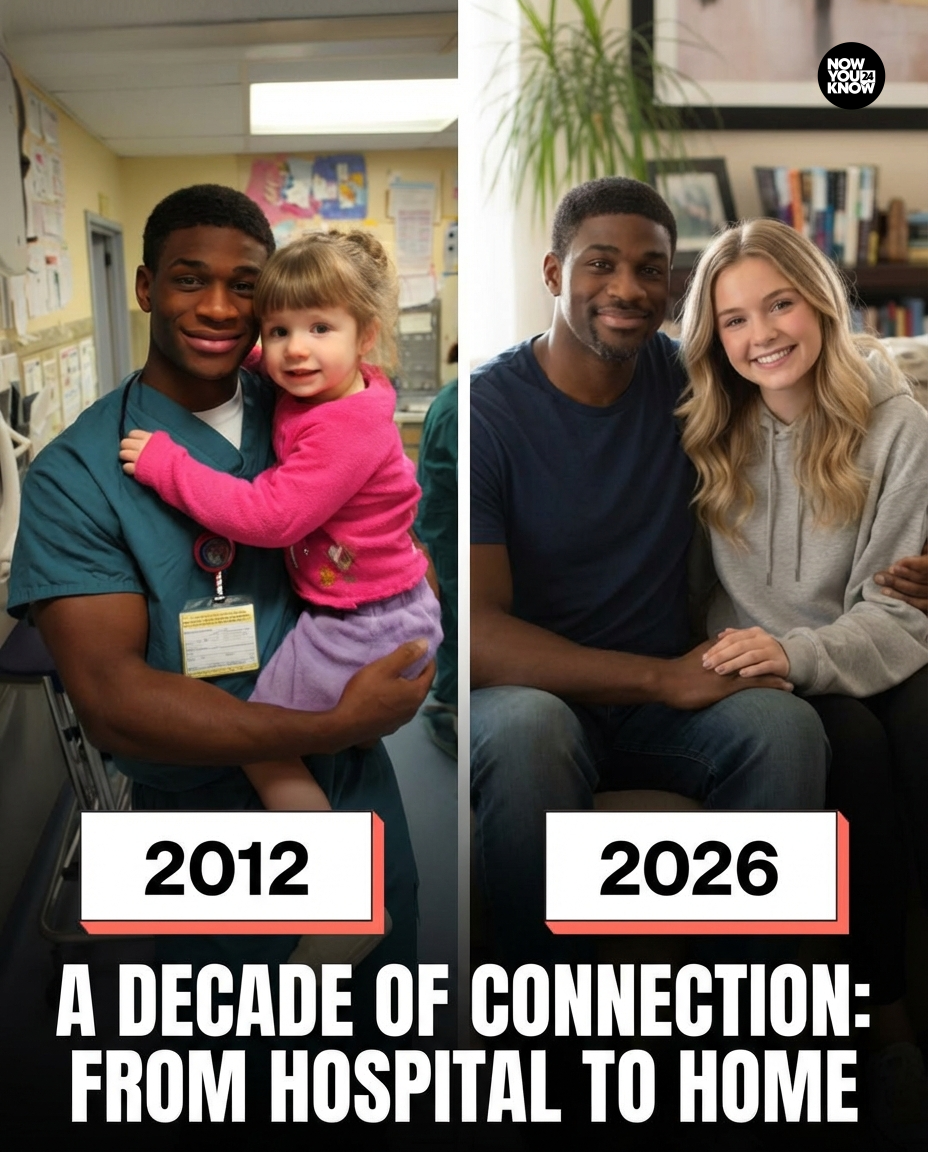

She clung to me the moment we met.
I brought her apple juice, found a children’s book from the waiting area, and read it over and over because every time I finished, she whispered the same word.
“Again.”
At one point she tapped the badge on my scrubs and said something so serious it caught me off guard.
“You’re the good one.”
A caseworker later pulled me aside.
“She’ll be placed in temporary foster care,” she explained. “There’s no next of kin.”
Before I could even think it through, the words left my mouth.
“Can I take her tonight? Just until you figure things out.”
The caseworker looked skeptical.
“You’re single, you work shifts, and you’re young.”
“I know,” I said. “But I can’t let her go with strangers.”
One night became a week.
A week became months.
I balanced hospital shifts, parenting classes, and home visits while trying to learn how to be a father overnight. It wasn’t easy, but the first time she called me “Dad” — in the freezer aisle of a grocery store — something inside me locked into place.
That little girl, Avery, became my daughter.
I adopted her, adjusted my schedule, and started a college fund for her. I wanted to make sure she never doubted that she was loved and wanted.
Over the years she grew into a bright, witty, stubborn girl who could out-argue most adults.
Life eventually settled into a rhythm.
Then I met Marisa.
She was smart, confident, and worked at the hospital too. Avery was cautious at first but polite. Slowly things started to feel like we might be building something stable again.
Eight months later, I had even bought a ring.
But one evening Marisa showed up acting strangely.
She didn’t sit down. She didn’t take off her coat.
Instead she shoved her phone toward me.
“Your daughter is hiding something terrible from you,” she said.
My stomach tightened as the screen loaded.
On it was a message thread Avery had posted in a private online group for foster and adopted kids. At first glance it looked alarming, talking about secrets and “finding the truth.”
But as I read more carefully, my heart broke for an entirely different reason.
Avery wasn’t hiding something dangerous.
She was searching for information about her biological mother.
Not because she wanted to leave me.
Because she was afraid asking me would hurt my feelings.
When I finished reading, I looked up at Marisa.
“That’s it?” I asked quietly.
“She’s been lying to you!” Marisa insisted.
But I shook my head.
“No,” I said. “She’s just trying to understand where she came from.”
That night I sat down with Avery and told her the truth.
She could ask me anything.
About her past. About her mother. About everything.
Families aren’t built on secrets.
They’re built on trust.
And sometimes the hardest part of being a parent is realizing that love means letting your child search for answers — even when those answers don’t include you.