




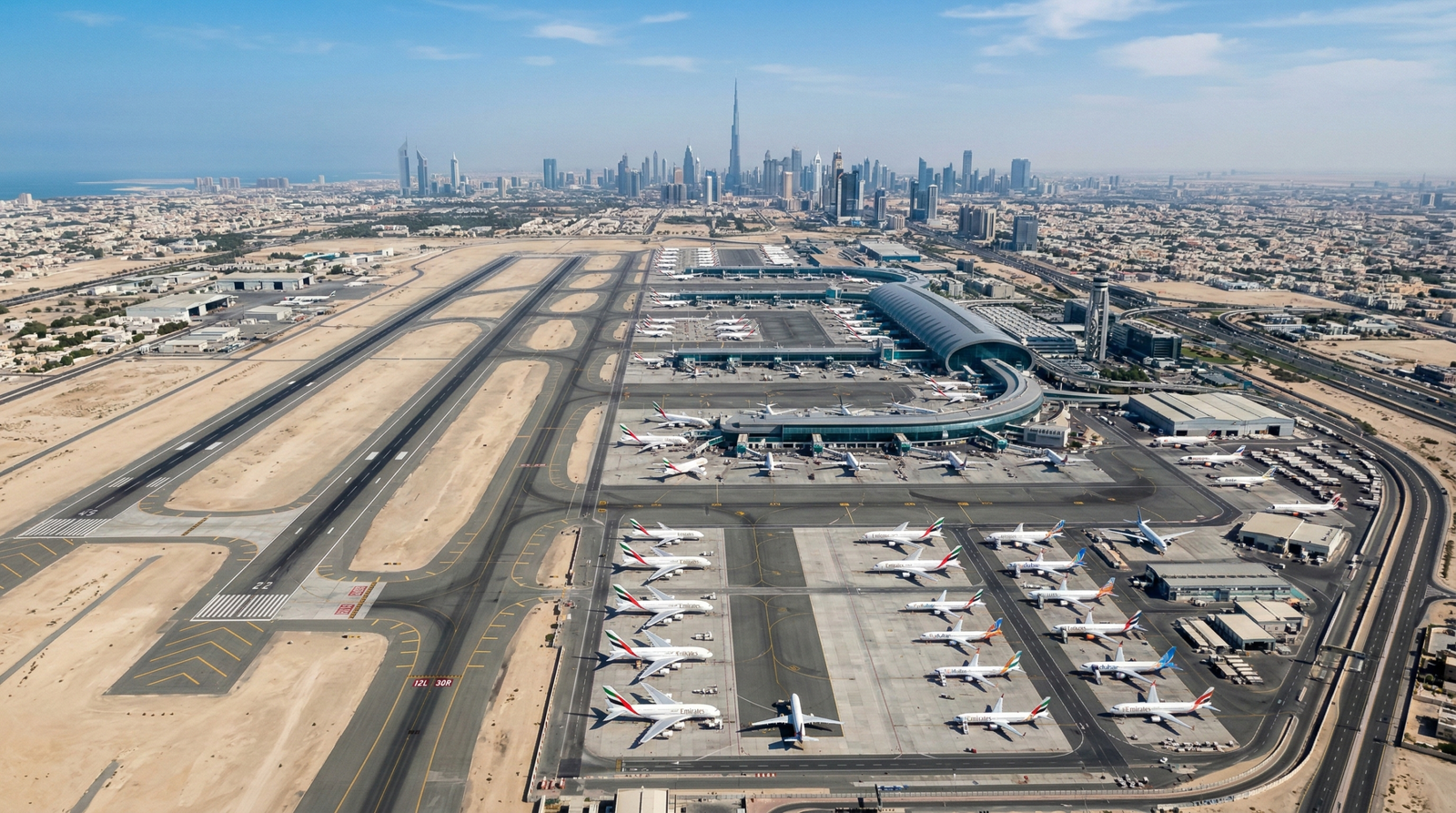

Significant disruptions have affected flight operations across the Middle East following military strikes on Iran conducted by the United States and Israel. These strikes, initiated on Saturday morning, have led to cancellations, diversions, and the closure of crucial airspace that serves some of the world’s busiest international flight corridors.
Key countries including Iran, Iraq, Kuwait, Bahrain, and Qatar have closed their airspace in response to the conflict. One of the most impacted facilities, Dubai International Airport—which holds the distinction of being the world’s busiest airport for international traffic—has suspended all flights indefinitely. Following a reported missile strike on the airport on Sunday morning local time, the full extent of the damage and the resulting operational impact remain uncertain.
Flight-tracking data and aviation analytics firm Cirium indicate that as of late Saturday evening (11:00 p.m. Central European Time), approximately 970 scheduled flights to the region had been canceled. When outbound flight cancellations are included, this figure rises to nearly 1,900. Major Middle Eastern airlines, including Qatar Airways, Etihad Airways, and Emirates, which operate vital hubs connecting global passengers, have collectively canceled a large portion of their flights. Qatar Airways canceled nearly 60% of flights, Emirates canceled 65%, and Etihad Airlines canceled 50% for the day, with additional cancellations planned for Sunday.
These disruptions have reverberated globally, as the airspace serves as a crucial corridor for flights operating between Europe and Asia. Airlines have taken alternate routes, often navigating around Saudi Arabian airspace or avoiding the region altogether, contributing to longer journeys and increased operational costs. These detours lead to higher fuel consumption, longer labor hours, and potential passenger compensation requirements. There is also concern that airports receiving diverted flights may become overwhelmed.
Several long-haul flights have notably diverted mid-air. An Emirates flight bound for Dubai from Orlando was rerouted to Istanbul, extending the flight time to approximately 14 hours. Similarly, a Qatar Airways flight from New York to Doha diverted to Rome after roughly ten hours in the air. American Airlines and Air Canada flights were also forced to turn back or divert, enduring extended flight times.
In response to the situation, Emirates has temporarily suspended all flights to and from Dubai, a move affecting close to 500 flights daily. Passengers are advised to check the current status of their flights. Qatar Airways has halted flights to and from Doha until at least midnight Coordinated Universal Time and expects delays upon resuming normal operations. Hamad International Airport in Doha has cautioned passengers against traveling to the airport and has increased staff to assist those impacted.
Etihad Airways announced suspension of all departures and arrivals at Abu Dhabi airport until early Sunday afternoon. Additionally, a drone attack at Kuwait’s airport resulted in minor injuries among airport staff and inflicted damage to a passenger terminal. Saudi Arabian Airlines has canceled flights to and from affected airports until at least Tuesday.
The disruptions come amid heightened regional tensions following the US and Israeli strikes. In a public statement posted on social media, former US President Donald Trump pledged to dismantle Iran’s missile capabilities and naval forces to prevent nuclear armament.
This airspace disruption follows precedents set by previous geopolitical conflicts, where air travel has been severely affected, such as the Russian invasion of Ukraine in 2022 and regional tensions in South Asia in 2025. Airlines have had to adjust routes extensively, sometimes adding stops to avoid restricted airspace. The ongoing situation is expected to continue influencing air traffic and operational dynamics in the region and globally.