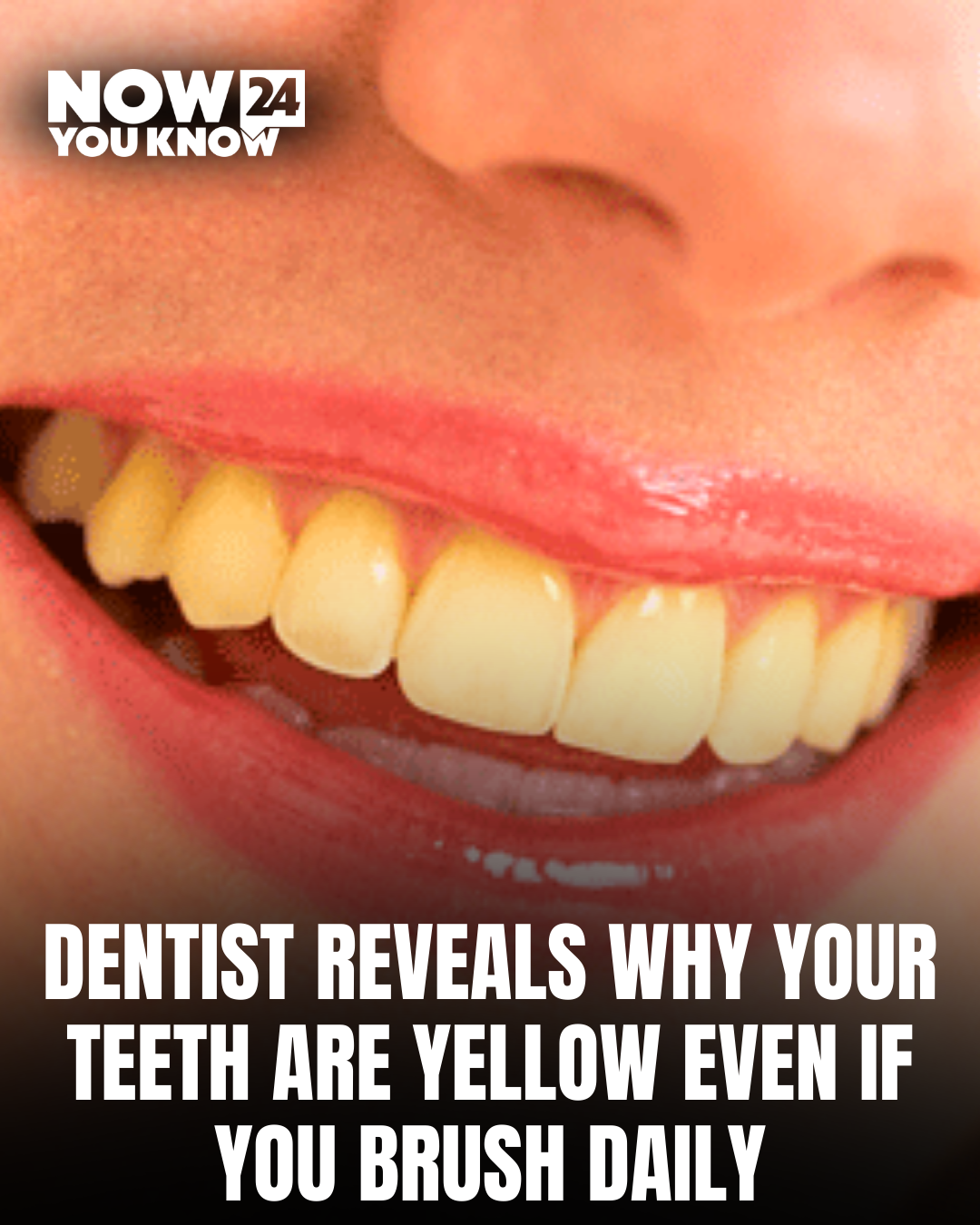

Many people assume that brushing daily should guarantee a bright white smile — but dentists say that’s not always the case.
Even with good oral hygiene, teeth can still appear yellow due to factors that go far beyond brushing alone. In fact, the natural structure of your teeth plays a major role.
One key reason is something called dentin — the layer beneath the enamel, which is naturally yellow. If your enamel is thinner, that color can show through more easily, making teeth look less white even when they’re clean.
Diet is another major factor. Drinks like coffee, tea, and red wine, along with certain foods, contain pigments that gradually stain the enamel. Over time, these stains build up and aren’t always removed by regular brushing.
There’s also the issue of plaque and tartar. While brushing helps remove surface buildup, hardened tartar can only be cleaned professionally — and it often has a yellowish tone that affects the overall appearance of teeth.
Enamel wear is another common cause. Acidic foods, drinks, or even brushing too hard can slowly erode enamel, exposing more of the yellow dentin underneath. Once enamel is worn down, it doesn’t grow back.
Lifestyle habits also play a role. Smoking or tobacco use can lead to deep stains that are difficult to remove with everyday brushing.
In some cases, it simply comes down to genetics or aging. As people get older, enamel naturally thins, making teeth appear more yellow over time — regardless of how well they brush.
Experts say that while brushing is essential for healthy teeth, it doesn’t necessarily change their natural color — and in some cases, yellowish teeth can still be perfectly healthy.