
Just 48 hours after President Donald Trump announced a “double-sided ceasefire” with Tehran, the agreement is on the brink of collapse. While the 8 p.m. Tuesday deadline was averted in exchange for a 14-day negotiation window, new strikes in Lebanon and conflicting reports from the Strait of Hormuz have sent shockwaves through global markets.
The Lebanon Loophole
The primary threat to the truce isn’t coming from direct U.S.-Iran engagement, but from the ongoing war in Lebanon.
-
The Israeli Stance: Prime Minister Benjamin Netanyahu clarified that while Israel supports the U.S.-Iran truce, it does not include a ceasefire with Hezbollah. On Wednesday, Israel carried out its deadliest strikes in Lebanon to date, killing at least 182 people, including a high-ranking adviser to Hezbollah’s leadership.
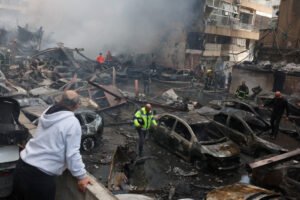
Rescuers work at the site of an Israeli strike in Beirut, Lebanon, April 8, 2026. REUTERS/Mohamed Azakir TPX IMAGES OF THE DAY -
The Iranian Response: Tehran has reacted furiously, accusing the U.S. of violating the spirit of the deal. Iranian media outlets are now reporting that the Revolutionary Guard may once again suspend tanker traffic through the Strait of Hormuz in protest.
Strait of Hormuz: “False Reports” vs. Maritime Warnings
Confusion reigns in the world’s most vital oil chokepoint.
-
The White House: Press Secretary Karoline Leavitt stated this morning that reports of the Strait being re-closed are “false” and that the administration expects the “complete, immediate, and safe opening” promised in the 10-point proposal.
-
The Ground Reality: Iran’s Revolutionary Guards have issued a chilling notice to shippers, advising them to take “alternative routes” due to the risk of sea mines. This suggests that even if the Strait is technically “open,” insurance and safety risks are keeping traffic at a standstill.
Oil Update: The Reluctant Rebound
Oil traders are struggling to price in the chaos.
-
The Wednesday Dip: Crude initially plummeted below the $100 mark following the ceasefire news.
-
The Thursday Surge: Prices rose again this morning, climbing back above $97 per barrel.
The market is clearly signaling skepticism. As long as the “14-day window” is punctuated by explosions in Beirut and mine warnings in the Persian Gulf, the expected relief at the gas pump will likely be delayed.
Peace Talks Move to Pakistan
Despite the violence, the diplomatic track is still moving. Security has been tightened in Islamabad, where high-level delegations from Washington and Tehran are expected to meet later this week. Pakistani Prime Minister Shehbaz Sharif, the primary mediator of this deal, is under immense pressure to broaden the ceasefire to include the Lebanon front before the two-week clock runs out.