

NASA’s Artemis II mission is nearing its final and most dramatic stage as the crew prepares for a high-speed return to Earth ending in a Pacific Ocean splashdown.
After a 10-day deep space journey around the Moon, the Orion spacecraft is scheduled to re-enter Earth’s atmosphere and land off the coast near San Diego, California.
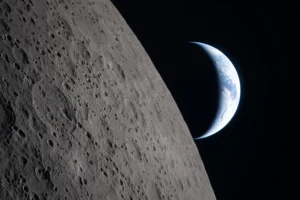
The exact splashdown time is expected at around 7:07 p.m. Central Time, marking the end of a mission that has taken astronauts farther from Earth than any humans have traveled in over 50 years.
During re-entry, the capsule will hit the atmosphere at roughly 25,000 mph, generating extreme heat and creating a glowing “fireball” effect as it descends.
To survive this phase, Orion relies on a reinforced heat shield capable of withstanding temperatures of around 3,000°F, one of the most critical systems of the entire mission.
As the spacecraft slows, a sequence of 11 parachutes will deploy, gradually reducing its speed from thousands of miles per hour to a gentle ocean landing of around 20 mph.
Once splashdown is confirmed, U.S. Navy recovery teams will move in quickly. Divers will secure the capsule, assist the astronauts into a raft, and transfer them by helicopter to the recovery ship for medical checks.
NASA will stream the entire return live on NASA+ and other platforms, allowing viewers worldwide to watch the final minutes of the historic mission in real time.
The Artemis II mission is a key step toward NASA’s long-term goal of returning humans to the Moon and eventually preparing for future Mars exploration.