
A Seattle-based finance executive who spent years pursuing financial independence discovered that early retirement wasn’t the dream he had envisioned after relocating his family to Thailand in 2019.
Jona Dunning, now 40, had dedicated his career to climbing the corporate ladder while aggressively saving money with the goal of retiring early. Working in a demanding but lucrative finance position, he viewed his substantial paychecks as a vehicle to accelerate financial freedom for himself and his family.
The turning point came in 2018 when Dunning received a long-sought promotion that brought intense pressure along with increased responsibilities. His wife Mary observed changes in his behavior, noting he had become increasingly distracted and stressed. These observations sparked conversations about making significant life changes.
The couple, who had harbored dreams of living abroad, decided to act on their aspirations. With their children aged one and three at the time, they felt the timing was right for such a transition. Dunning, who is half Thai and had regularly visited Thailand throughout his life, had always been drawn to Chiang Mai, a northern city approximately an hour’s flight from Bangkok.
To facilitate the move, Mary, a former elementary school teacher who had become a stay-at-home mother, needed to secure employment at an international school to obtain the necessary visas for the family. After researching schools in Chiang Mai and applying to suitable positions, she successfully landed a teaching role, making their relocation plans a reality.
In June 2019, the family arrived in Chiang Mai. Dunning framed his departure from work as a sabbatical and immersed himself in Thai language lessons. The warmer climate allowed for more outdoor activities, and the family found Thai culture particularly welcoming to young children, with restaurants and public spaces accommodating families in ways they hadn’t experienced in Seattle.
Mary discovered that her new teaching position offered better work-life balance than her previous experience in American schools. With smaller class sizes and teaching assistants providing support, the demands were less overwhelming.
However, within six months of settling in Chiang Mai, Dunning confronted an unexpected challenge. Despite the family’s satisfaction with their new life, he struggled significantly with being out of the workforce. The anxiety of not working overwhelmed him, contradicting his expectations of enjoying life as a stay-at-home father while studying Thai.
This realization proved pivotal for Dunning, who recognized how deeply his identity and sense of purpose were intertwined with professional success. Approximately eleven months after arriving in Thailand, he briefly ventured into entrepreneurship by opening a burrito shop with friends in Chiang Mai. The business provided temporary purpose, but after six months, he stepped back when he secured a remote position with a Hong Kong-based consumer electronics company.
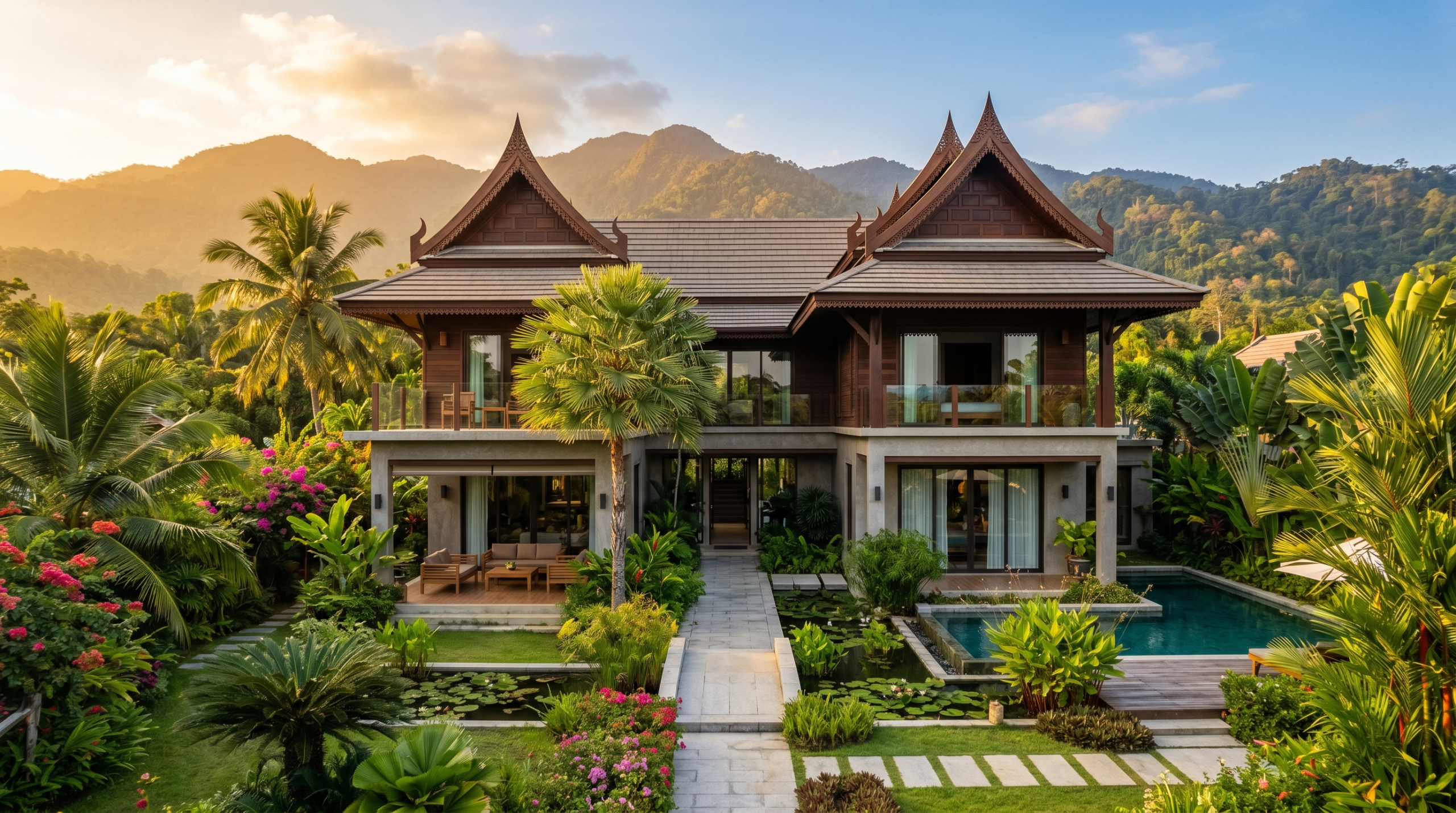
The remote role marked a turning point in their commitment to life in Chiang Mai. The family subsequently purchased land near their children’s international school and invested approximately 12.1 million baht ($377,000) in constructing a custom home. The innovative two-story property design splits into two sections: one side serves as the family residence, while the other operates as two identical Airbnb rental units, each featuring three bedrooms and open-plan living areas.
The rental units, commanding 4,000 to 5,000 baht per night with average five-day stays, generate supplementary income while justifying amenities like a pool and outdoor bathroom that the family might not otherwise afford. Dunning manages guest communications for a few hours weekly, while housekeepers handle turnover duties.
This Thailand property forms part of a broader financial strategy the couple developed over years. Before relocating, they had invested in Seattle real estate, acquiring three properties between 2011 and 2017: a townhouse purchased for $430,000, a duplex investment property bought for $387,500, and a single-family home with an accessory dwelling unit acquired for $510,000. All three properties now generate rental income.
Living in Chiang Mai has substantially reduced the family’s living expenses while enhancing their quality of life. Monthly expenses total approximately 160,000 baht, including their mortgage and Airbnb operational costs. Mary’s employment covers their children’s school fees, further reducing financial burden.
The lifestyle changes have been transformative. Dunning begins most days with hour-long runs, while Mary trains for powerlifting competitions. The international school community has facilitated strong social connections, with friends living within twenty minutes of each other, enabling frequent dinner parties, pool gatherings, and social outings.
The experience has reshaped Dunning’s perspective on early retirement and the balance between work and personal fulfillment, demonstrating that financial independence alone may not provide the satisfaction many anticipate.