



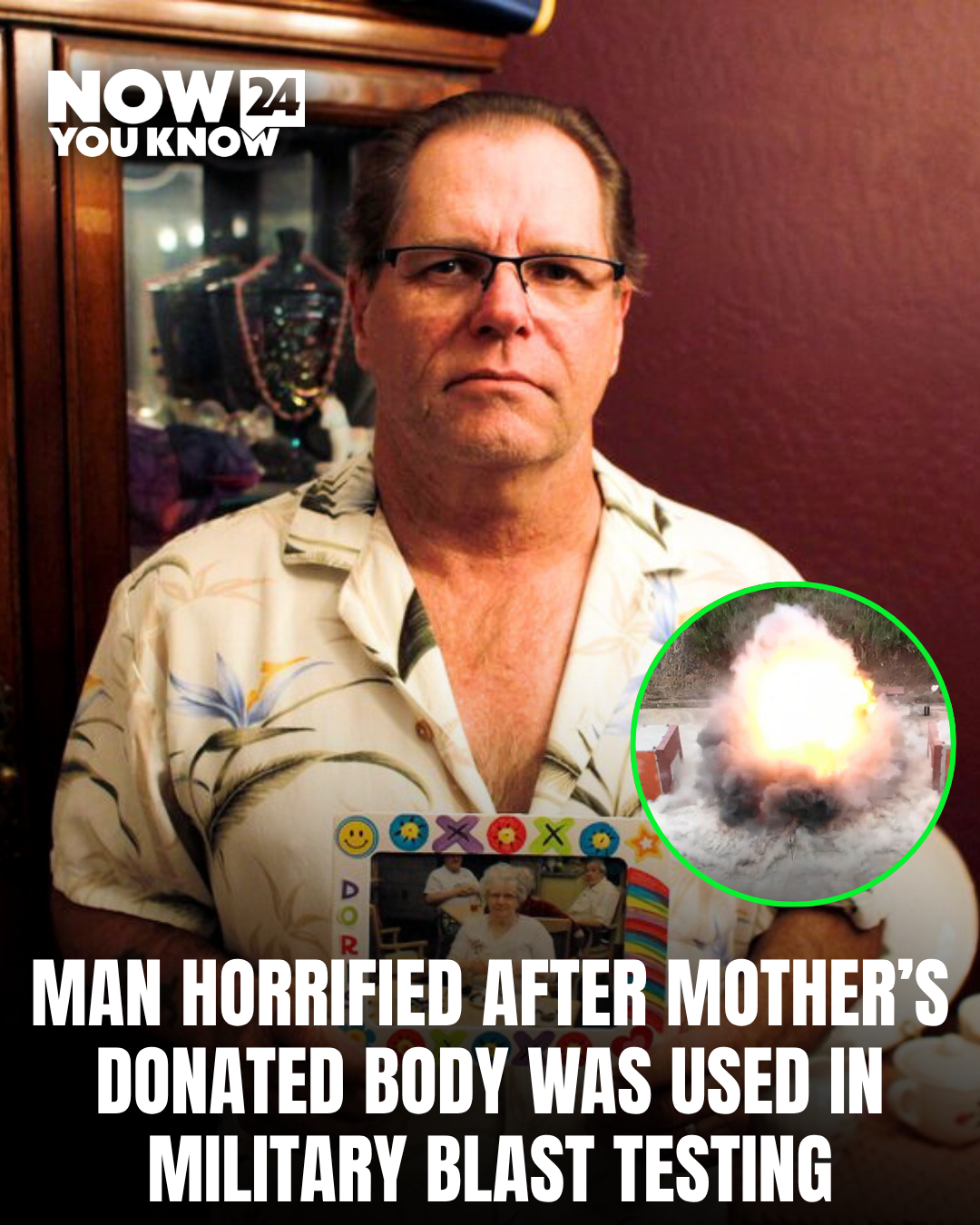

An Arizona man says he was left horrified after discovering his late mother’s body, which he donated for Alzheimer’s research, was allegedly sold to the U.S. military and used in a blast experiment without his consent.
The disturbing case centers around Jim Stauffer and his mother, Doris Stauffer, who died in 2013 after battling Alzheimer’s disease. According to reports, Stauffer donated her body to Arizona-based Biological Resource Center believing it would help medical researchers study the disease.
Family Says They Specifically Rejected Military Testing
Years later, Reuters investigators reportedly uncovered documents showing Doris Stauffer’s body had instead been sold to the U.S. Army for blast testing experiments involving improvised explosive device simulations.
Jim Stauffer later said the family had explicitly checked “no” on paperwork asking whether her remains could be used in military-related experiments involving explosions or ballistic testing.
“She was supposedly strapped into a chair and a detonation took place underneath her,” Stauffer told local media after learning what happened.
Reuters Investigation Exposed Wider Allegations
The case gained national attention after a Reuters investigation revealed that more than 20 donated bodies tied to the facility had allegedly been used in military blast experiments without proper consent from families. Reports stated bodies were sold for nearly $6,000 each.
Federal investigators later raided the facility in 2014, uncovering disturbing scenes inside the building, including dismembered body parts and improperly stored human remains, according to court filings and media reports.
The facility’s owner, Stephen Gore, later pleaded guilty to illegal control of an enterprise and received probation as part of a plea agreement.
Debate Over Body Donation Industry Reignited
The story has once again sparked debate online over the largely unregulated body donation industry in parts of the United States.
Experts have noted that donated cadavers are sometimes legally used for military, medical, or forensic testing, but families are typically expected to provide informed consent beforehand.
For Stauffer, the emotional impact reportedly never faded.
“Every memory of my mom now has this attached to it,” he previously said while discussing the discovery.