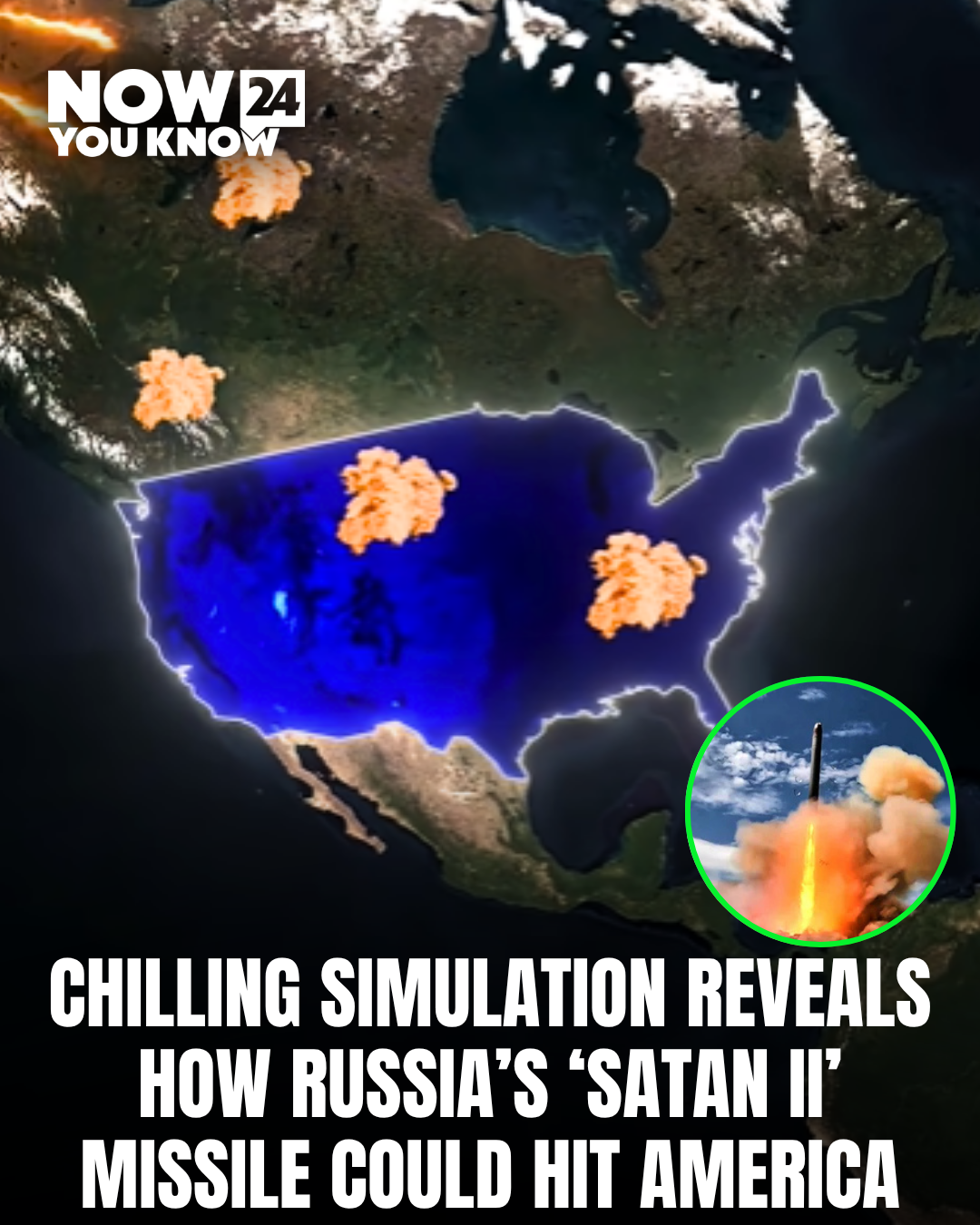

Fresh discussion around global nuclear tensions has erupted after reports highlighted Russia’s latest test of the RS-28 Sarmat missile system, often referred to in Western media as “Satan II.”
The missile, which Russian President Vladimir Putin has described as one of the country’s most powerful strategic weapons, has drawn international attention due to its reported range and nuclear capability.
Russia Confirms Missile Test
According to Russian state announcements, the Sarmat missile recently completed another successful test ahead of planned deployment.
Russian officials claim the weapon is designed to carry multiple nuclear warheads and evade existing missile defence systems.
Putin stated the system would strengthen Russia’s strategic deterrence capabilities amid rising geopolitical tensions.
Viral Simulation Draws Attention
A simulation circulating online has intensified public discussion by illustrating how quickly such a missile could theoretically travel between Russia and the United States.
The video claims the missile could potentially reach targets in roughly 20 to 25 minutes, depending on launch location and flight path.
Military analysts caution, however, that publicly available simulations often rely on estimates rather than verified operational data.
What Makes the Sarmat Different?
The RS-28 Sarmat is classified as an intercontinental ballistic missile, commonly known as an ICBM.
Experts say its reported payload capacity and range are among the reasons it has become heavily discussed in defence circles. Some analysts believe the missile was specifically designed to bypass advanced missile shield systems developed by Western nations.
However, many technical details surrounding the weapon remain difficult to independently verify.
Rising Global Tensions Fuel Fear
The renewed focus on nuclear weapons comes at a time of growing international concern surrounding military conflicts and global instability.
Statements from Russian officials following the test have also added to public anxiety, particularly comments suggesting the missile could overcome future defence technologies.
Former Russian President Dmitry Medvedev further fueled online reactions with a controversial social media post referencing the missile launch.
Experts Warn Against Panic
Despite alarming headlines and viral simulations, defence experts frequently note that nuclear deterrence systems are built around preventing actual deployment through mutual deterrence strategies.
Analysts also stress that simulations shared online are not predictions of real-world events and should not be interpreted as imminent threats.
Still, stories involving nuclear weapons continue to generate major attention online due to the fear and uncertainty surrounding global conflict.
Why the Story Is Trending
The combination of dramatic missile footage, escalating rhetoric, and viral simulations has made the topic spread rapidly across social media and news platforms.
For many viewers, the biggest concern is not just the weapon itself, but what increasing military tensions between nuclear powers could mean in the years ahead.