
A seemingly simple elementary school math problem has gone viral after leaving students, parents, and even experienced teachers struggling to figure out the correct answer.
The puzzle was shared online by Bobby Seagull, a British math teacher and former University Challenge star, who admitted the question had completely stumped him.
The Question Sparking Debate
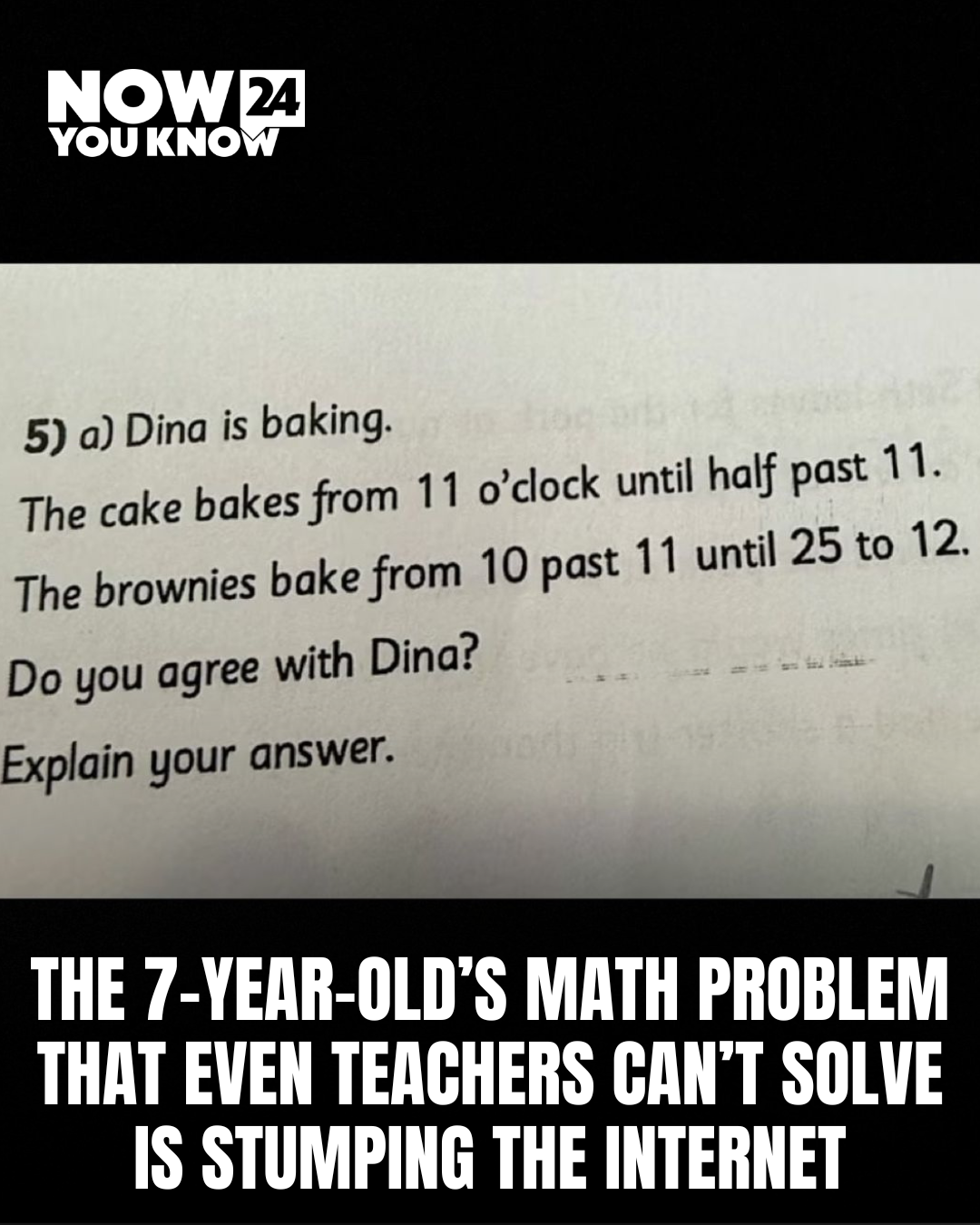
The problem involved baking times for cakes and brownies and asked students whether they agreed with a statement supposedly made by a girl named Dina.
However, there was one major issue that immediately caught people’s attention: the worksheet never actually explained what Dina said.
That missing detail quickly turned the question into an internet mystery rather than a normal math exercise.
Social Media Tries to Solve It
After Seagull posted the image online, thousands of users jumped into the comments trying to make sense of the problem.
Some attempted to calculate the baking times manually, while others argued the worksheet itself was incomplete or poorly written.
Many viewers pointed out that without knowing Dina’s original statement, there is technically no way to determine whether someone should agree with her or not.
The Timing Confused People Too
Part of the confusion also came from the wording used in the problem, including phrases like “half past 11” and “25 to 12.”
Several users admitted they found the phrasing awkward or outdated, especially when trying to calculate baking times quickly.
Others noticed that the brownies actually appeared to bake for five minutes less than the cake, adding another layer of confusion to the debate.
Education Experts Weigh In
Former teacher and curriculum developer Caroline Farkas later explained that the question likely works better as a classroom discussion exercise rather than a straightforward calculation problem.
She noted that time-based questions can already be challenging for younger students because they require interpreting clock language and converting time intervals accurately.
According to experts, visual learning tools like clocks and number lines are often used to help children understand these concepts more clearly.
So… What’s the Correct Answer?
In the end, many people concluded that the problem simply cannot be solved properly because key information is missing.
Without Dina’s original statement, there is no clear claim to agree or disagree with, making the worksheet incomplete as written.
That realization only made the viral post even more entertaining for frustrated adults trying to outsmart a question meant for 7-year-olds.