


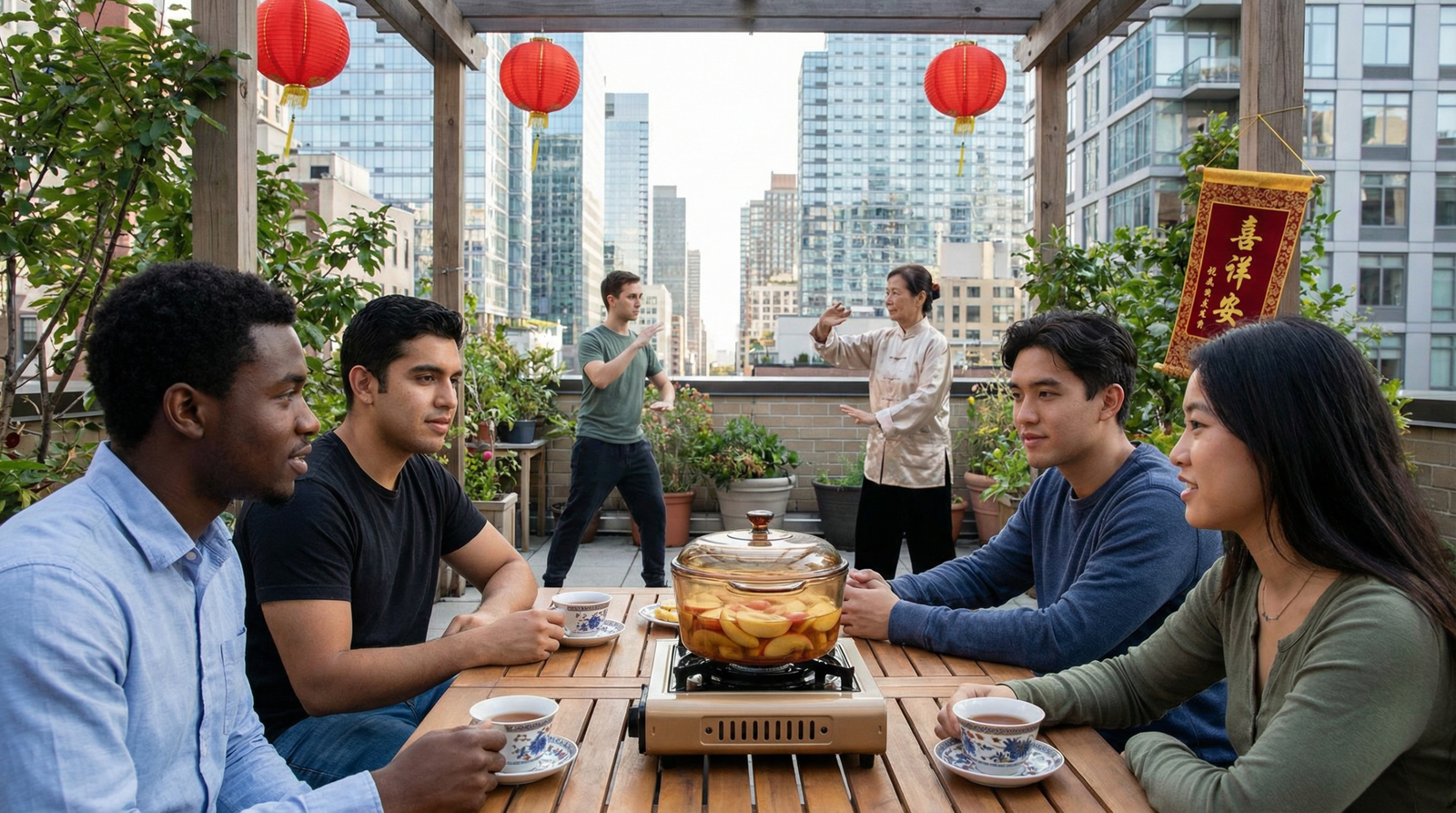

A growing number of young Americans are embracing a lifestyle trend known as “Chinamaxxing,” which involves adopting traditional Chinese wellness habits and cultural practices. Popularized on platforms like TikTok, this trend is characterized by activities such as boiling apples, drinking hot water, practicing Qigong—a traditional Chinese martial art—and adopting other Chinese customs.
On social media, videos tagged with the phrase “You met me in a very Chinese time in my life” have gained widespread attention. In these videos, creators share their routines, highlighting Chinese-influenced self-care rituals. For instance, Miami-based content creator Simplysashanoel shared her morning ritual of drinking hot water, citing benefits such as reduced bloating and improved skin. The video, which also references the Lunar New Year starting on February 17, gained over 1.4 million views. Other users have posted about consuming congee, a savory rice porridge, and following traditional Chinese medicine practices.
On the occasion of the Lunar New Year, non-Chinese participants shared customs like refraining from washing their hair to avoid washing away good luck—a practice rooted in Chinese tradition. These widely shared behaviors have sparked interest and curiosity under the umbrella term “Chinamaxxing.”
Experts note that this trend reflects a shift in how American youth perceive China. Jacob Cooke, CEO of Beijing-based WPIC Marketing + Technologies, explained that TikTok portrays a “modern, aesthetic, and confident” image of China that contrasts with earlier, more static stereotypes. He said that influencers visiting China showcase its contemporary cities and lifestyles, which challenges previous perceptions.
Cooke described the trend’s appeal as centered on everyday comfort practices that are both accessible and easy to adopt. Instead of focusing on geopolitical issues, he observed that China is increasingly appreciated as a source of food, fashion, aesthetics, and lifestyle inspiration among young Americans.
Allison Malmsten, public research director at China-focused strategy consultancy Daxue Consulting, linked the rise of “Chinamaxxing” partly to TikTok users’ migration to the Chinese app Xiaohongshu last year, as TikTok faced a potential US ban. This migration provided American Gen Z users a more intimate view of daily life among their Chinese peers. Malmsten also cited the rise of Chinese brands like Pop Mart as factors enhancing the appeal of Chinese culture. She compared China’s growing soft power to Japan’s cultural influence in the 2000s, driven by anime and popular video games.
Chinese netizens have shared mixed reactions to the trend. Many have expressed encouragement, with some commenting positively on the promotion of Chinese customs by non-Chinese users. TikTok creator EmmaPeng, based in San Francisco, praised participants for adopting healthy hydration habits. Similarly, New York creator Lynn said her family would be proud of those exploring Chinese traditions, appreciating the recognition of the culture.
Many users emphasize the distinction between cultural appreciation and appropriation, with some ethnically Chinese commenters welcoming the renewed interest in their heritage. TikTok influencer Sherry, a prominent figure in popularizing “Chinamaxxing,” has received comments ranging from curiosity about the health benefits of hot water to affectionate acknowledgments of her cultural influence.
However, some Chinese Americans have expressed more nuanced feelings about the trend. Christina Young, a New York City-based TikTok user, described the phenomenon as “wholesome” but also noted the irony given the persistence of racism faced by the Chinese community in the US. She urged awareness of the real challenges faced by Chinese Americans, contrasting selective cultural adoption with daily discrimination experienced by many.
The “Chinamaxxing” trend illustrates how Chinese culture is being embraced by a new generation in the US through wellness and lifestyle practices, underscoring China’s expanding soft power influence in contemporary global culture.