



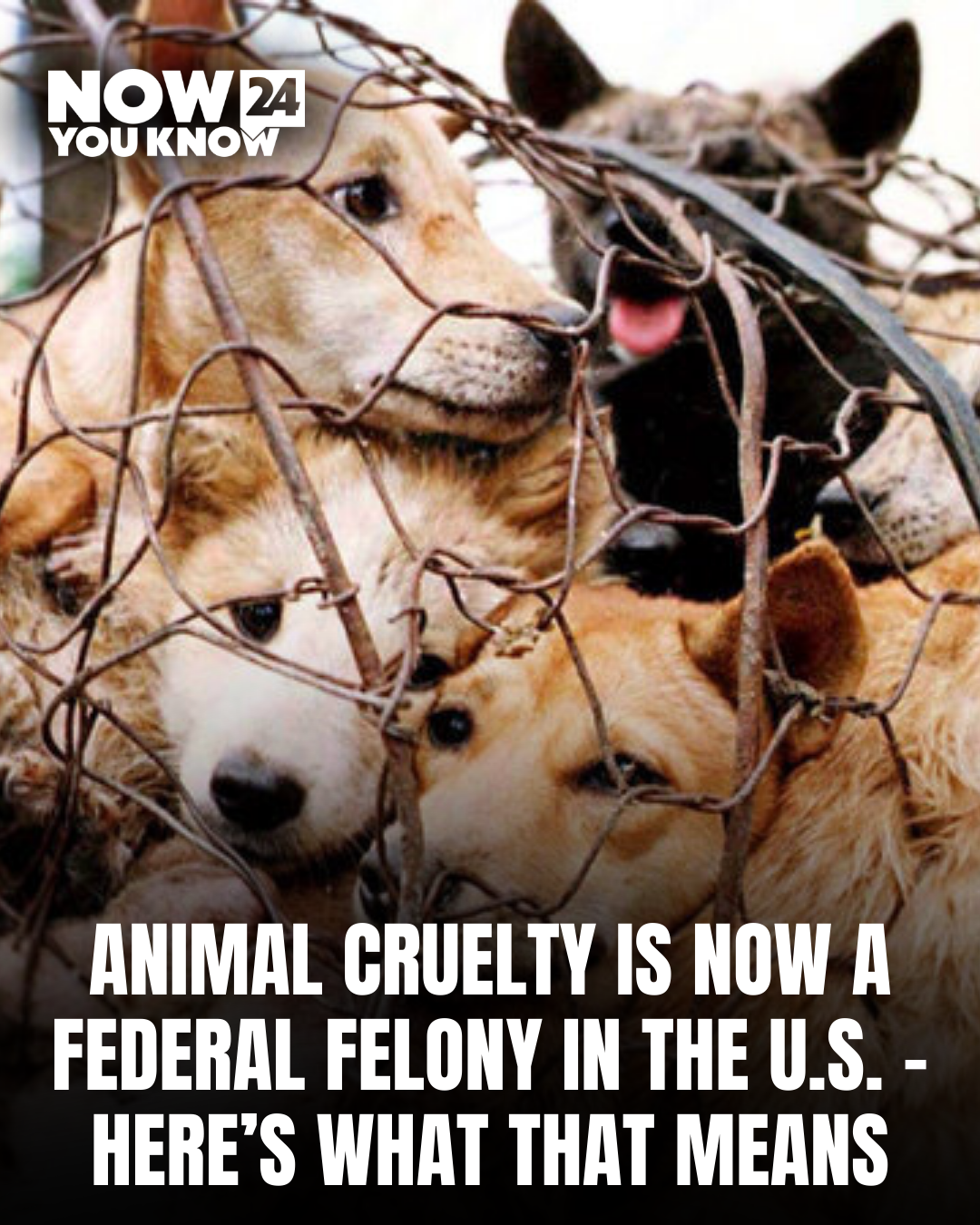

Animal cruelty laws in the United States have taken a significant step forward, with certain acts now classified as federal crimes.
For years, penalties for animal abuse varied widely depending on the state, leaving many people frustrated by inconsistent consequences in serious cases. Some offenders faced strict punishment, while others received far lighter penalties.
That changed with the introduction of the Preventing Animal Cruelty and Torture Act, which allows extreme cases of abuse to be prosecuted at the federal level.
Under the law, intentional acts such as torture, crushing, burning, drowning, or killing animals can lead to severe consequences if they occur on federal property or involve interstate activity.
Those found guilty under the PACT Act can face fines and prison sentences of up to seven years, reflecting a stronger national stance against extreme cruelty.
Supporters of the law say it represents a shift in how society views animal welfare, emphasizing that serious abuse should be treated with the same gravity across the country.
Research has also suggested a connection between violent acts toward animals and broader patterns of aggressive behavior, which lawmakers considered when strengthening penalties.
While individual states still enforce their own animal protection laws, the federal legislation adds another layer of accountability — sending a clear message that severe animal cruelty will not be tolerated.