




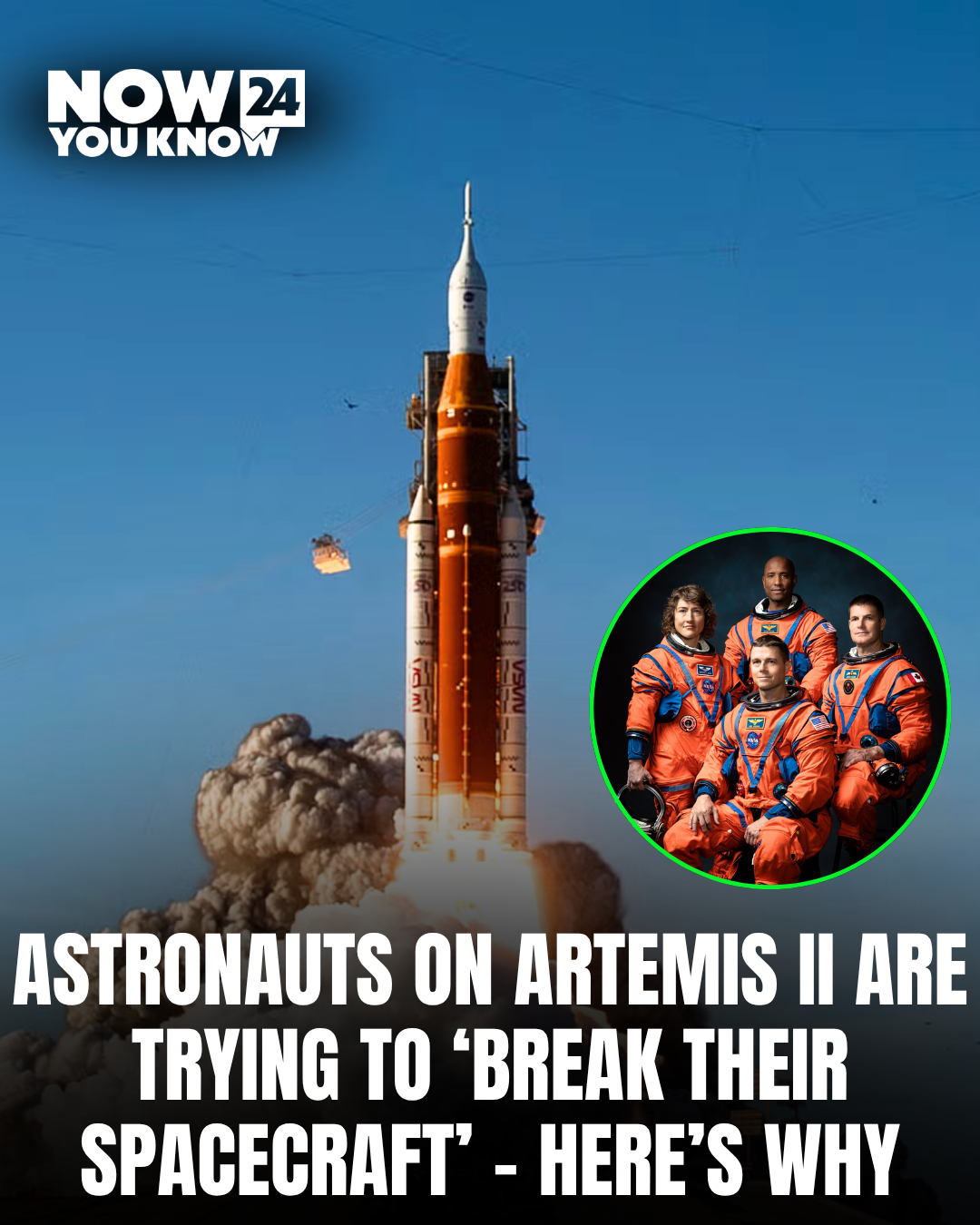

NASA’s Artemis II mission is the first crewed lunar flight in more than 50 years, with four astronauts bound for a fly‑around of the Moon.
Some headlines suggest the crew is “trying to break their spacecraft,” but that’s not literal. The astronauts are performing critical tests on the Orion spacecraft’s systems to prove they work in real deep space.
The 10‑day mission launched from Florida and puts NASA’s new Orion capsule and Space Launch System (SLS) rocket through essential life‑support and navigation checks before future lunar landings.
Artemis II is traveling on a free‑return trajectory around the Moon, meaning it will loop around and return to Earth without landing.
Currently the spacecraft is more than halfway to the Moon and aiming to break the human distance record set by the Apollo 13 crew.
The crew includes Commander Reid Wiseman, Pilot Victor Glover, Mission Specialist Christina Koch, and Canadian astronaut Jeremy Hansen. Hansen is the first non‑U.S. citizen on such a flight.
Along the way the astronauts are checking systems like life support, communications, navigation, and radiation shielding — lessons that will feed into later missions designed to land on the Moon and eventually go to Mars.
Although there have been minor issues — including a temporary malfunction in Orion’s waste system — the mission is moving forward and collecting valuable data.
Artemis II is a major milestone for human spaceflight and an important test before future lunar exploration begins.