



New York Fashion Week (NYFW) launched during a difficult period for US multi-brand retail, with industry players still recovering from the bankruptcies of Matchesfashion and Ssense. The recent filing of Saks Global for bankruptcy further complicates the market, as brands face uncertainty over payments owed prior to the filing. Despite this financial turbulence, NYFW continues to serve its core function: providing designers—many of whom operate independently in New York—the opportunity to connect with buyers who decide which collections to stock and sell.
Saks Fifth Avenue, Neiman Marcus, and Bergdorf Goodman confirmed their buyers’ attendance for this season, signaling cautious optimism about the future under Saks’s new ownership. However, uncertainty persists among founders and buyers, with some preferring smaller orders and more conservative engagement. This situation adds pressure to an event already challenged by tight economic conditions and limited institutional support for independent fashion businesses.
The landscape of NYFW reflects ongoing shifts; notable designers have relocated to other fashion capitals, leaving New York’s shows dominated largely by emerging and independent talents. The necessity for these designers to remain on schedule remains, as showcasing during fashion week offers their best chance to gain visibility and secure orders. This year, brands are particularly focused on diversifying their wholesale channels amidst the changing retail environment.
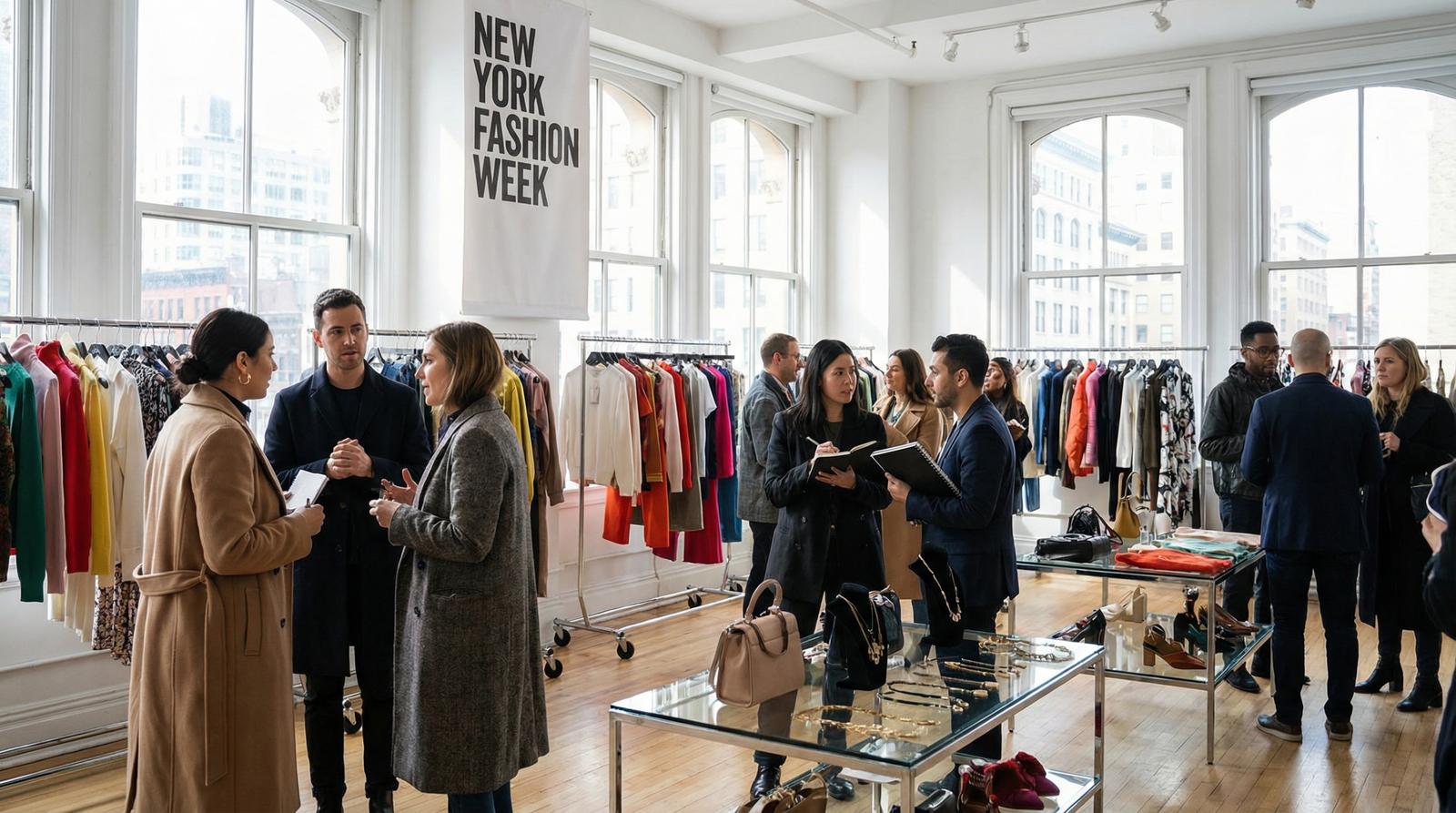
The usual roster of US buyers—including Bloomingdale’s, Moda Operandi, Net-a-Porter, The Webster, Mytheresa, and Nordstrom—have confirmed their attendance. Numerous US boutiques such as Oakland’s McMullen, the newly relaunched Jeffrey in Atlanta, and Elyse Walker are also participating. Jeffrey’s founder, Jeffrey Kalinsky, indicated that he plans to prioritize showroom appointments over attending runway shows, citing efficiency and the nature of modern fashion week audiences as reasons. Luxury consultant Robert Burke noted that showrooms play a critical role, especially for specialty stores, and anticipates high activity in these spaces.
Some retailers will not attend this season; for example, Atlanta’s Ant/dote and LA’s Maxfield will be absent. Meanwhile, international buyer participation is variable. Ssense from Canada will attend, but Paris’s Le Bon Marché and London’s Harrods will not be present at this February edition. These stores typically allocate resources based on the importance of other fashion weeks, such as those in Paris, Milan, and London.
This selective attendance reflects broader challenges for New York’s fashion ecosystem. Buyers must allocate budgets carefully, balancing orders from established European houses with emerging brands. This dynamic has contributed to a trend of New York designers eventually moving their focus to other fashion weeks offering greater financial opportunities.
Despite these hurdles, there is renewed interest in emerging US talent. Both Bloomingdale’s and Nordstrom have increased investments in independent designers following the Saks bankruptcy impact. Specialty stores, which often maintain strong customer relationships in affluent areas, provide valuable support through investment and dedicated clientele, enabling smaller brands to thrive.
On the product front, buyers are prioritizing wearability and commercial appeal. Jeffrey Kalinsky highlighted labels such as Ashlyn, Kallmeyer, Heirlome, Zankov, and Fforme as brands of interest due to their practical yet innovative designs. Elyse Walker’s Courtney Grant mentioned similar standouts and emphasized the importance of consistency and strategic brand development.
Fashion directors and buyers recognize NYFW’s enduring relevance as a discovery platform despite a quieter atmosphere compared to previous years. Tiffany Hsu of Mytheresa described it as an intimate and culturally influential moment on the global fashion calendar, conducive to focused discovery. The Webster’s Astrid Boutrot sees New York increasingly as a nurturing ground for rising talent, supported by initiatives like Net-a-Porter’s Vanguard program, which mentors promising designers.
Buyers are adopting a measured approach to supporting new designers, emphasizing long-term commitment rather than one-off purchases to ensure sustainability. Kalinsky and Boutrot both stress the need to monitor brand evolution to make informed buying decisions.
Nordstrom’s Rickie De Sole highlighted the opportunity to champion emerging brands during challenging times, while David Thielebeule of Bloomingdale’s expressed dedication to connecting customers with next-generation designers. This approach aligns with NYFW’s evolving role as an incubator for new fashion talent, distinct from the grander spectacles seen in other international fashion capitals.
As New York Fashion Week proceeds, it continues to balance the pressures of an uncertain retail environment with the enthusiasm and resilience of independent designers and buyers committed to fostering innovation and discovery in the fashion industry.