



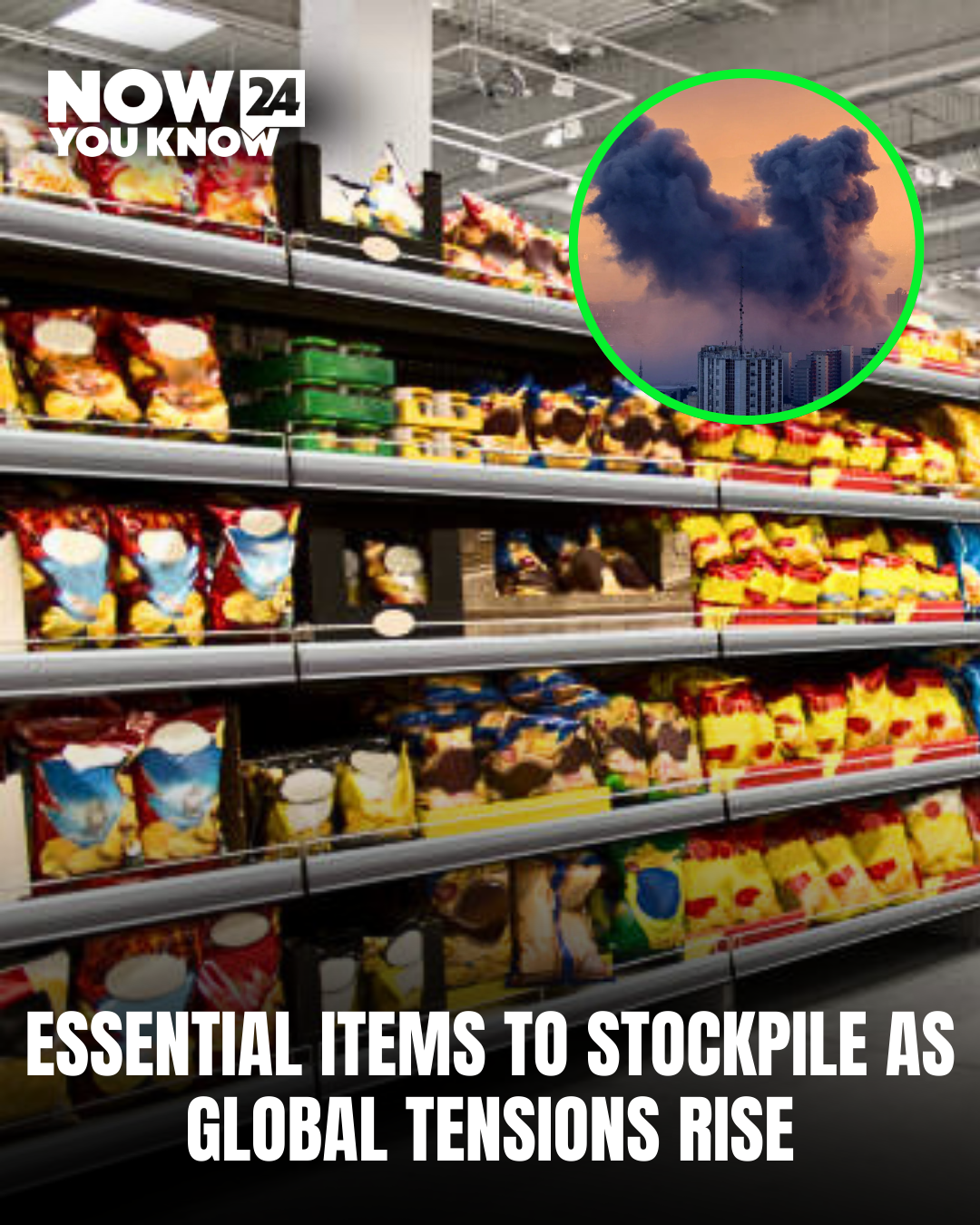

As global tensions continue to make headlines, some households are choosing to prepare for possible disruptions. Experts say preparation does not mean panic, but having basic supplies available in case of emergencies.
One of the first items many people stockpile is nonperishable food. Canned goods, rice, pasta, and dried beans can last a long time and provide reliable nutrition during supply disruptions.
Another important item is clean drinking water. Emergency planners often recommend keeping enough water stored for several days in case local water systems are interrupted.
Many families also keep basic medical supplies at home. First aid kits, essential medications, and simple health items can be important if access to pharmacies becomes limited.
Flashlights, batteries, and portable chargers are also commonly recommended. Power outages can happen during major crises, and having backup lighting and energy sources can make a big difference.
Communication tools such as battery powered radios can help people stay informed if internet or phone services are disrupted.
Experts emphasize that emergency preparedness is about being practical and ready for unexpected situations, not assuming the worst will happen.
Having a small reserve of essential items can help families feel more secure and prepared for whatever challenges may arise.