



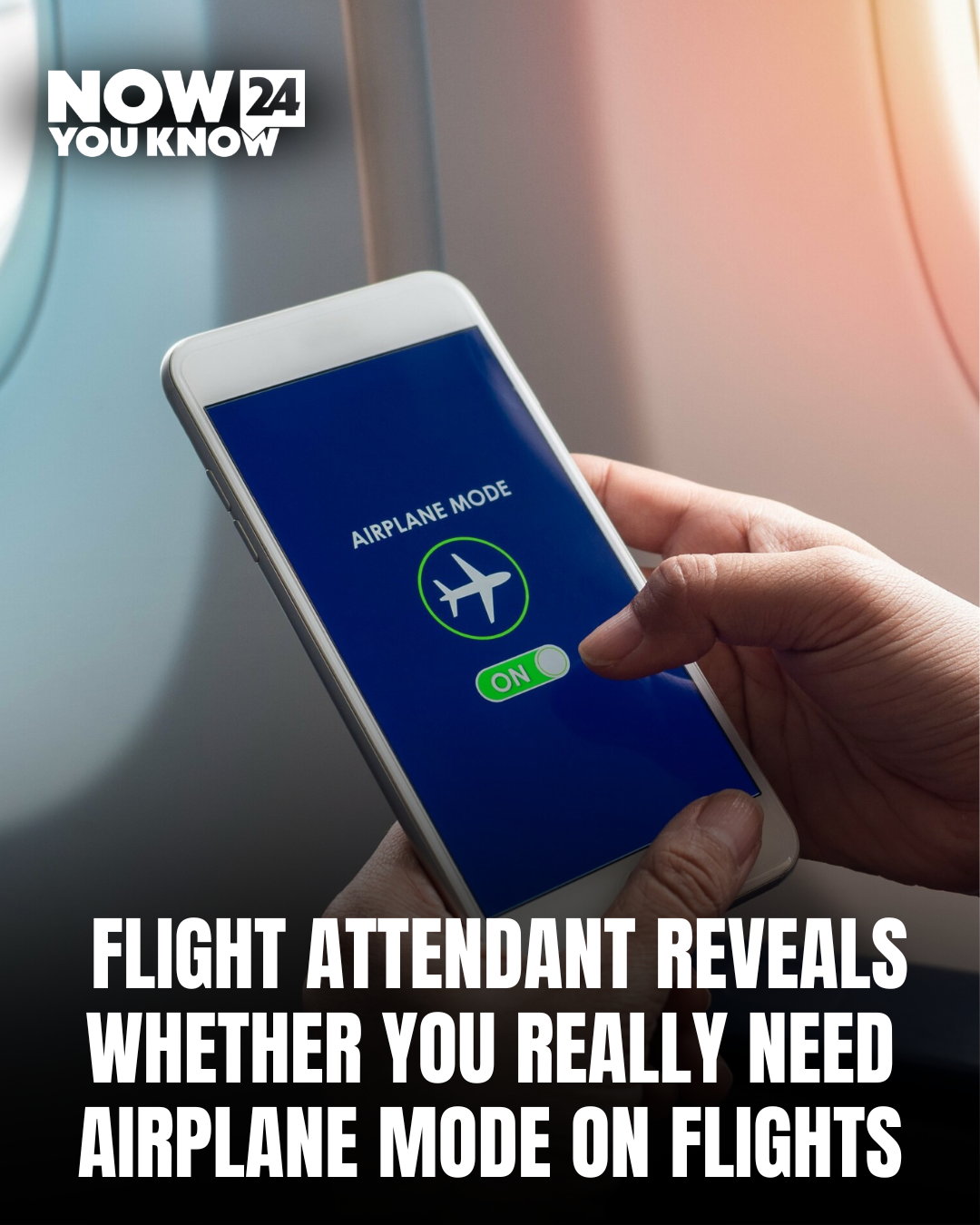

Many passengers automatically switch their phones to airplane mode before takeoff—but some still wonder whether it’s actually necessary. A flight attendant recently explained the real reason airlines still ask travelers to use the setting during flights.
According to former cabin crew members, airplane mode helps prevent mobile signals from interfering with aircraft communication systems, especially during critical moments like takeoff and landing.
When a phone is left in normal mode, it constantly searches for cell towers to connect to. At cruising altitude, that signal can bounce between towers and potentially create interference with the aircraft’s radio communications.
One former flight attendant explained that airplanes rely on radio beacons and communication systems to help pilots navigate and land safely. Extra signals from passengers’ devices could disrupt those signals or create unwanted noise.
Aviation experts say that a single phone likely wouldn’t cause a serious problem. However, a plane full of devices all trying to connect to networks at the same time could create radio interference that distracts pilots while they communicate with air traffic control.
That’s why airlines require airplane mode as a precaution. The setting disables cellular signals and stops the phone from constantly searching for a connection.
The good news for travelers is that airplane mode doesn’t completely disable your device. Most smartphones still allow you to manually turn on Wi-Fi or Bluetooth, which is how passengers can use onboard internet or wireless headphones during a flight.
While the risk may be small, aviation professionals say following the rule helps keep cockpit communications clear and ensures everyone on board follows the same safety procedures.
So the next time a flight attendant reminds passengers to switch on airplane mode, it’s not just a random rule—it’s part of a system designed to keep flights running smoothly and safely.