




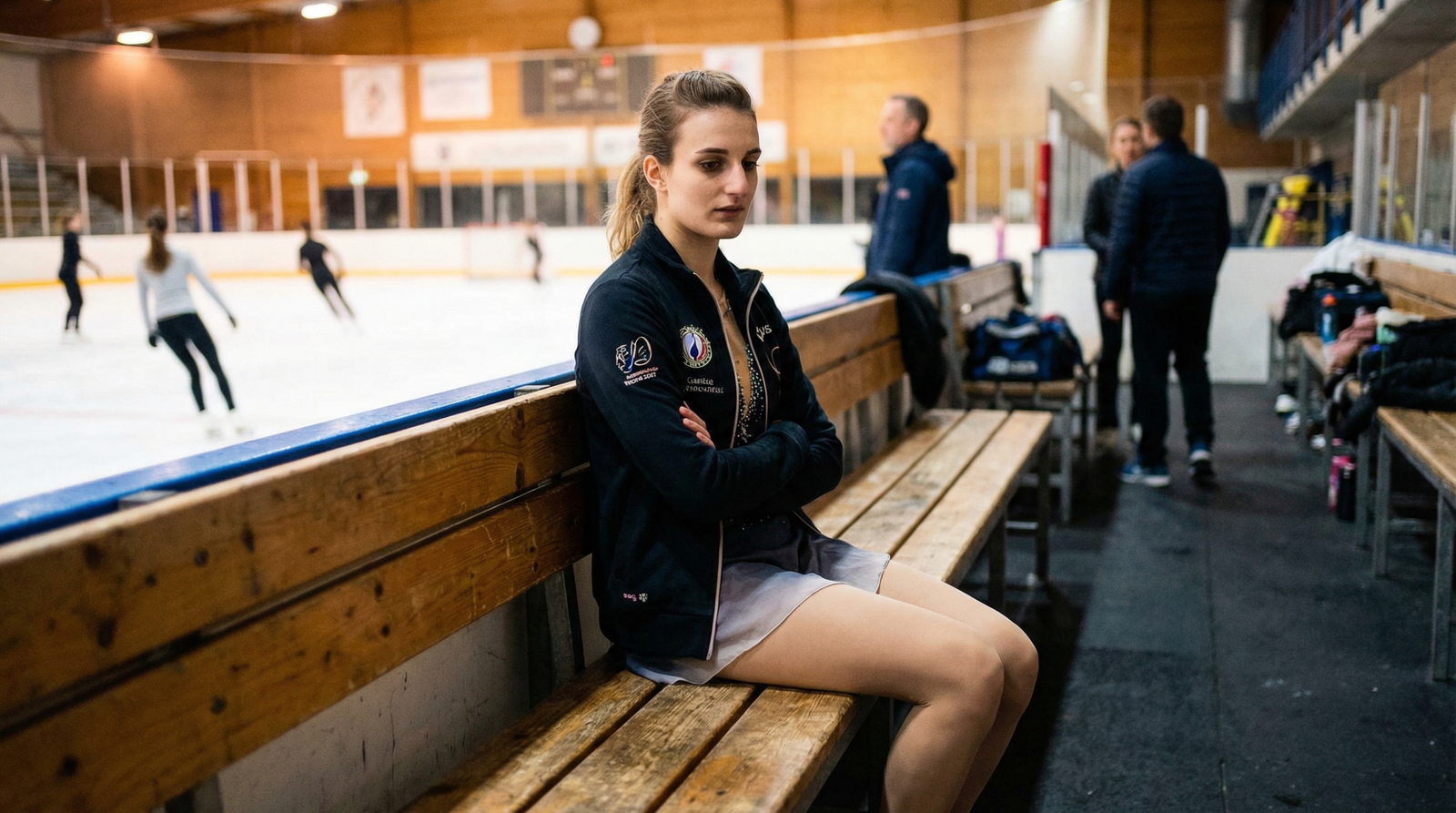

French ice dancer Gabriella Papadakis, Olympic gold medalist at the 2022 Beijing Winter Games, has opened up about the circumstances leading to the conclusion of her competitive career in her recently published memoir, Pour Ne Pas Disparaître (So as Not to Disappear). The book, released on January 15 in France, recounts her two-decade journey in competitive ice dance alongside former partner Guillaume Cizeron, highlighting systemic challenges and personal struggles within the sport.
After claiming gold in Beijing, Papadakis returned to the Greek island of Tinos with her father, fulfilling a promise he made to light a candle at Evangelistria Church if she won. When asked about her future ambitions, she confessed her desire simply “to be happy,” signaling an awareness of the complexities ahead beyond her athletic achievements.
Throughout her career, Papadakis and Cizeron won numerous titles, including seven French national championships, five European championships, and five world championships. Together, they trained extensively, relocating from France to the Ice Academy of Montreal, a renowned training center for ice dance.
Initially considering a comeback and exploring new creative directions with choreography from the Paris Opera Ballet and couples therapy to improve communication, Papadakis ultimately faced obstacles that ended her career not by choice but due to increasing mental and physical strain within her partnership. She describes Cizeron’s controlling behavior intensifying before the 2022 Olympics, including restrictions on her training methods and appearance.
Papadakis revealed that after their Olympic triumph, she suffered psychogenic non-epileptic seizures attributed to stress. Her memoir details how her autonomy was compromised, with decisions often made by Cizeron and coaches without her input. Following their announcement of retirement as a competitive team in December 2024, Cizeron resumed competition with a new partner.
In detailing her experience, Papadakis frames her story within a broader context of systemic issues in ice dance, such as traditional gender roles mandated by the International Skating Union (ISU) that designate teams as one man and one woman, limiting opportunities for female skaters and reinforcing power imbalances. She indicates that these entrenched norms contributed to an environment where her body and choices felt controlled.
Papadakis began writing her memoir a year after the Beijing Olympics, documenting her perspective to highlight not just personal hardship but a call for responsibility and change in the sport. An editor approached her following the official end of her partnership to help bring her story to a wider audience.
The memoir’s release was met with legal challenges; Cizeron issued a cease-and-desist letter alleging false information and a smear campaign. The dispute led to Papadakis being removed from a commentary role for NBC at the Milano Cortina 2026 Olympics due to perceived conflicts of interest.
Raised by her mother and occasionally influenced by her Greek father’s mythology stories, Papadakis credits these narratives with fostering resilience during difficult times. Currently based in London, she continues to advocate for change in ice dance and explores new personal and professional paths beyond competition.
Her memoir is part of a growing conversation about athlete welfare and cultural dynamics in figure skating, emphasizing the need to address systemic challenges while respecting the complexities of high-level sports partnerships.