



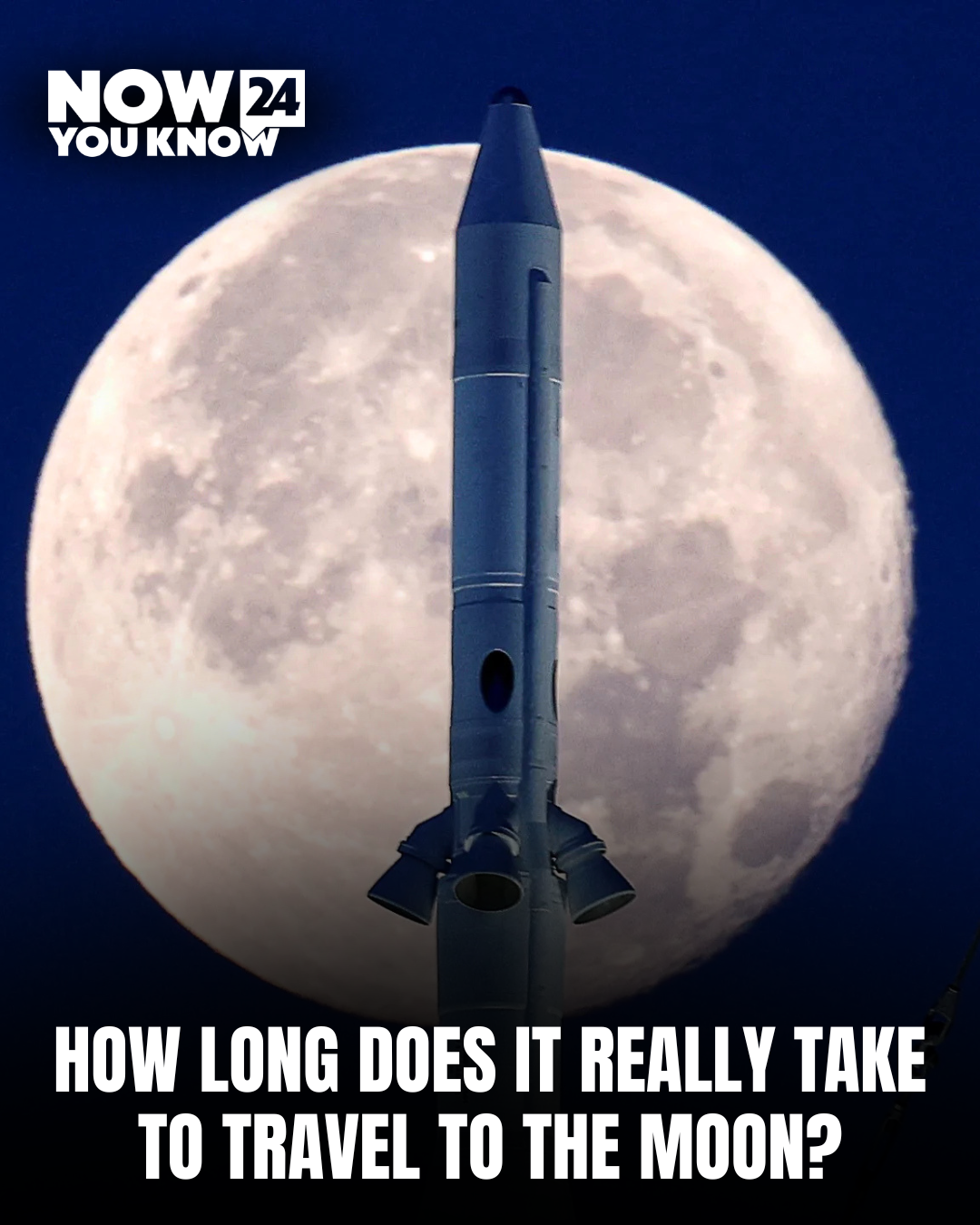

Humans have dreamed of visiting the Moon for centuries, but how long does it actually take to get there?
The average distance between Earth and the Moon is about 238,900 miles (384,400 kilometers). Apollo missions in the 1960s and 1970s typically took about three days to travel from launch to lunar orbit.
Modern missions, like NASA’s Artemis II, follow a similar timeline. After launching aboard the Space Launch System (SLS) rocket, astronauts will take roughly three days to reach the Moon while testing spacecraft systems for future lunar landings.
Factors such as the spacecraft’s trajectory, speed, and mission objectives can slightly change the travel time. For example, a free-return trajectory — which loops around the Moon and returns to Earth — allows for safety while maintaining a fast trip.
Once in lunar orbit, astronauts may spend additional days preparing for landings, conducting experiments, or testing life support systems, depending on the mission type.
Even with technological advances, a Moon mission is still a significant undertaking, requiring precise planning, robust spacecraft, and careful coordination between astronauts and Mission Control.
For comparison, robotic spacecraft can reach the Moon in as little as 24–48 hours, but crewed missions prioritize safety and life support over speed.
As Artemis missions aim to eventually land humans on the Moon again by 2028, understanding travel time is key for mission planning and astronaut safety.