


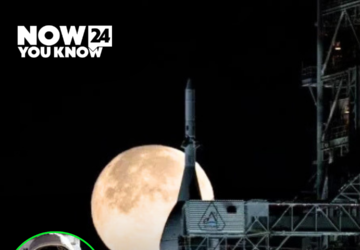



On Wednesday, April 1, humans will travel to the vicinity of the Moon for the first time in 54 years during NASA’s Artemis II mission.
The mission will carry four astronauts — Reid Wiseman, Victor Glover, Christina Koch, and Canadian astronaut Jeremy Hansen — on a 10-day journey around the Moon and back to Earth. It marks the first crewed mission beyond low Earth orbit since Apollo 17 in December 1972.
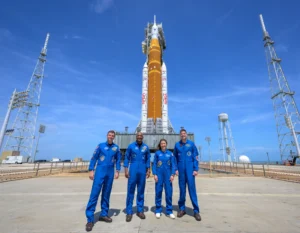
The mission is historic for diversity milestones: Glover will become the first person of color, Koch the first woman, and Hansen the first non-U.S. citizen to travel beyond low Earth orbit.
The crew will not land on the Moon. Instead, Artemis II is designed to test the Orion spacecraft and its life support systems in preparation for a planned lunar landing targeted for 2028.
NASA aims to gather critical data to ensure safety and efficiency for future missions, making this a key step in human space exploration.
This mission highlights the new era of space travel and international collaboration, bringing attention back to the Moon after more than five decades.
Experts say Artemis II could reshape plans for long-term lunar exploration and pave the way for deeper space missions in the coming decades.
The eyes of the world are on Artemis II as it ventures beyond Earth, rekindling excitement for human space exploration.