



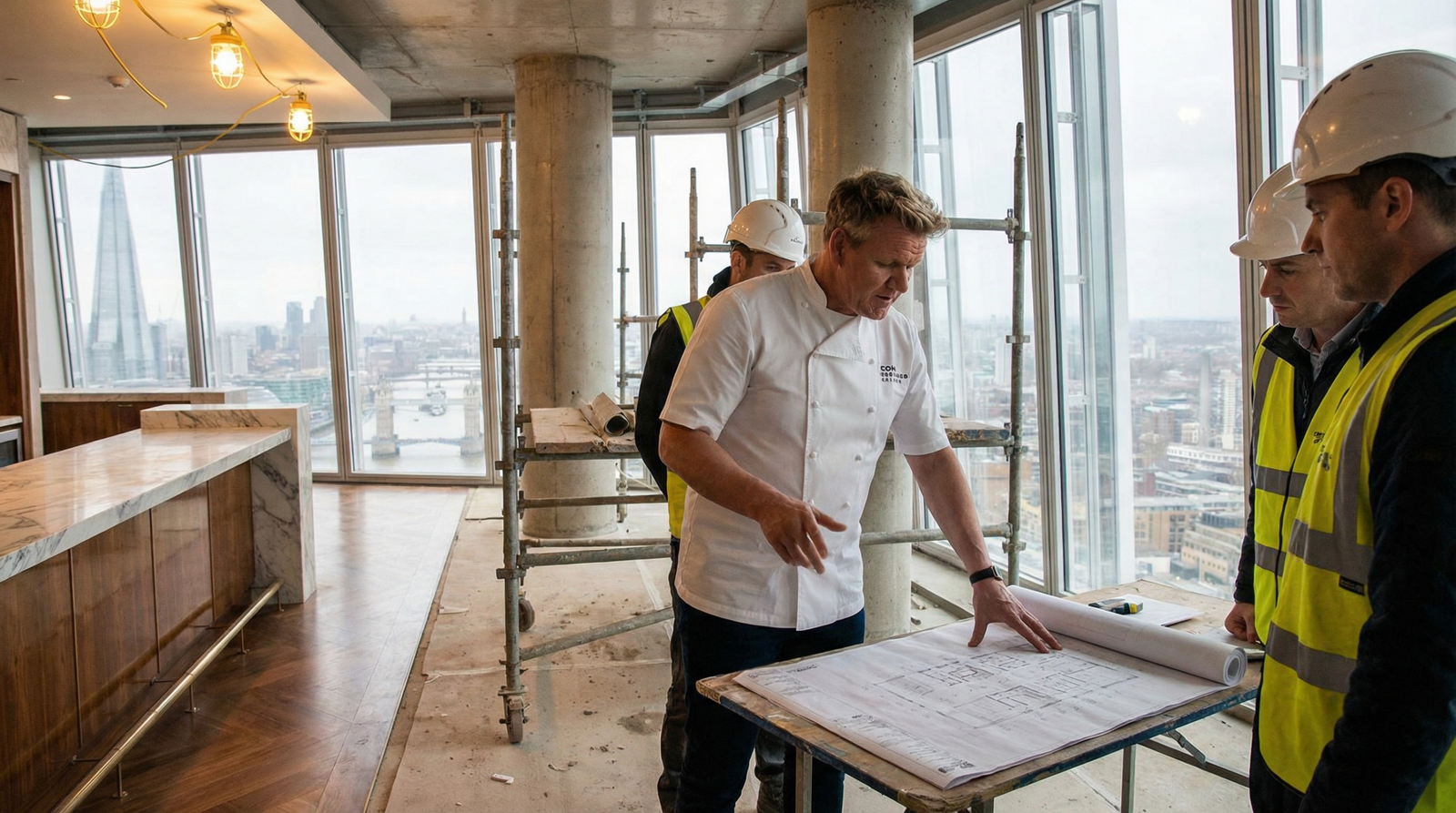

The Netflix docuseries “Being Gordon Ramsay” offers viewers an intimate look at the life and career of the renowned chef and television personality Gordon Ramsay. Premiering recently, the six-episode series chronicles Ramsay’s efforts to open four new restaurants and a culinary academy within the 22 Bishopsgate skyscraper in London, one of his most ambitious projects yet. Alongside his professional endeavors, the show also explores his childhood, family life, and aspirations for his legacy.
Originally, Ramsay’s first name was almost Scott, which he has mentioned he would have preferred. He was named Gordon after his father, despite doctors initially fearing he would not survive beyond a few hours after birth. Growing up in Stratford-upon-Avon, Ramsay experienced a difficult childhood marked by poverty and family struggles. His mother worked multiple jobs, while his father battled alcoholism. These early experiences instilled in him a strong drive to succeed.
Ramsay’s father was unsupportive of his culinary ambitions, regarding cooking as an unsuitable career. Before his death at 53 from a heart attack, he never visited one of his son’s restaurants. Ramsay has expressed a desire for his father’s recognition of his achievements.
The chef’s personal life also features prominently in the series, including his relationship with his wife Tana. They first met while in separate relationships at a mutual friend’s wedding. Despite initial tension, they eventually formed a strong bond, with Ramsay crediting food as the way he won her over.
Professionally, Ramsay credits chef Marco Pierre White as a significant influence, describing him as a father figure who nurtured his talent. Ramsay worked long hours under White’s mentorship, which helped develop his skills quickly.
When opening his first restaurant in 1998, Ramsay faced financial constraints, opting to use less expensive ingredients like oxtail instead of costly cuts such as filet mignon. This effort still earned the restaurant two Michelin stars, and by 2001 it had achieved three, a distinction it maintains today.
Ramsay has faced setbacks, including having to close his Michelin-starred restaurant Amaryllis in Glasgow. He attributed the closure to inconsistent patronage during weekdays, resulting in financial unsustainability. Despite this, he considers the experience a valuable lesson informing his current projects.
The series also addresses criticisms regarding Ramsay’s television career. He defends his restaurants, insisting that his media presence has not compromised their quality but rather works in tandem with his culinary ventures. In a recent move, he chose to invite social media influencers rather than traditional food critics to preview events, noting a shift in the influence landscape.
Ramsay’s youngest daughter, Tilly, features in the series as she trains at Ballymaloe Cookery School in Ireland, following her father’s footsteps into the culinary world. Ramsay emphasizes the importance of balancing his work with family life, especially aiming to be more present for his two youngest sons compared to his older children.
The 22 Bishopsgate project represents a significant financial and personal commitment. Ramsay has invested 20 million pounds and secured a 20-year lease on the building. The complex will include several dining venues: Lucky Cat, an Asian-inspired 250-seat restaurant; Lucky Cat Terrace, a rooftop garden seating 60; the fine-dining Restaurant Gordon Ramsay High with 12 seats; Bread Street Kitchen, a casual all-day brasserie; and the Gordon Ramsay Academy culinary school.
Ramsay regards this venture as a defining moment of his career, underscoring the pressure and stakes involved. He must personally guarantee the borrowed funds, emphasizing the need for success to sustain the project for decades. “It’s sort of one of my final stakes in the ground,” he said, highlighting the venture’s importance to his professional legacy.