




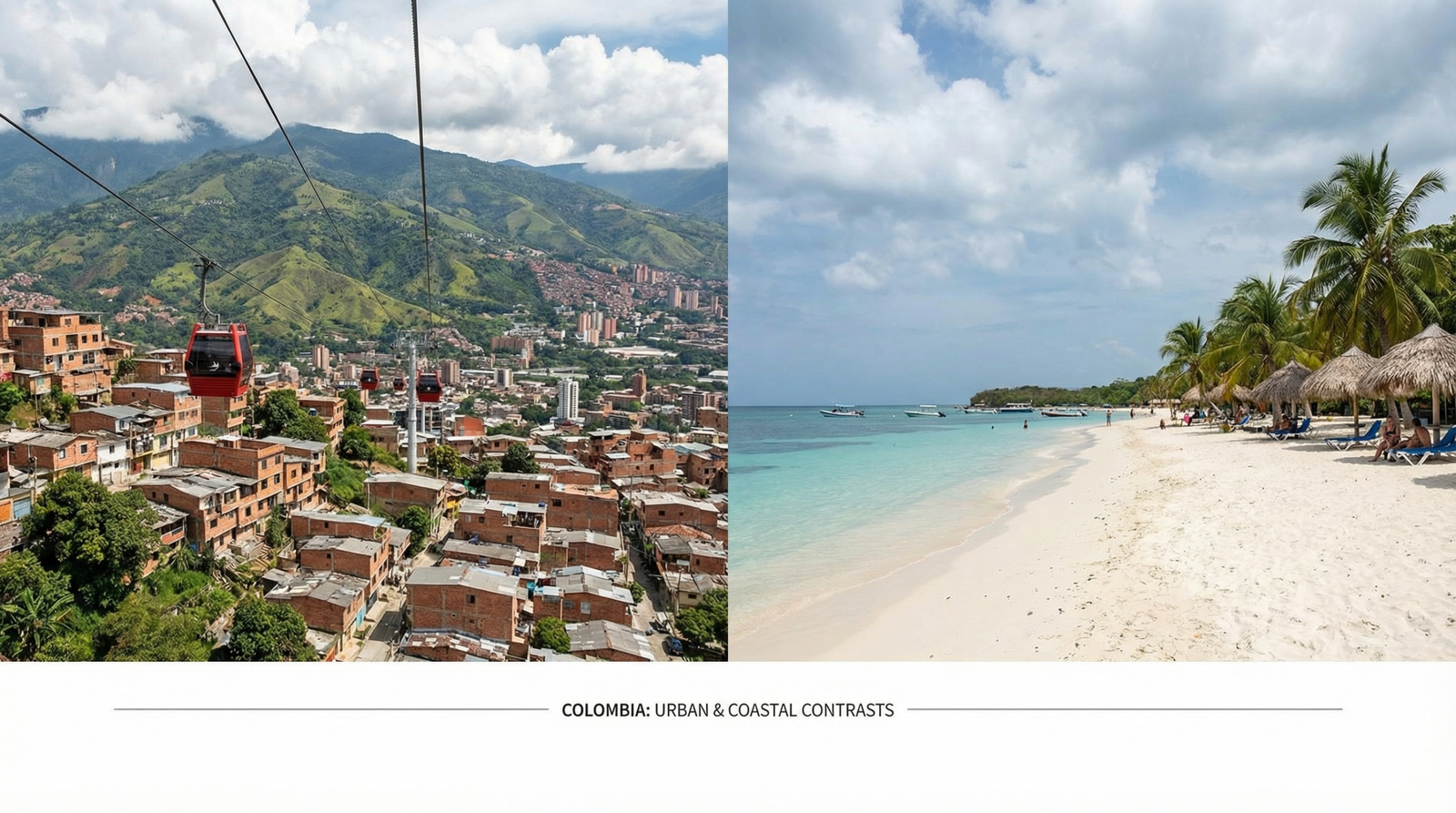

A recent eight-day trip to Colombia provided a firsthand experience of the country’s vibrant cities and beautiful landscapes, along with lessons on travel preparation and itinerary planning. Visiting Cartagena, Isla Barú, and Medellín, the traveler highlighted some challenges and opportunities that could enhance future visits.
The trip began in Cartagena, a historic port city located on Colombia’s Caribbean coast, where the travelers spent three nights. Following that, they moved to Isla Barú, a beach peninsula about an hour from Cartagena, for two nights before concluding the journey with two nights in Medellín, Colombia’s second-largest city nestled in the Andes Mountains.
One of the main takeaways was the need for carrying more cash than initially anticipated. While larger establishments and upscale restaurants commonly accepted credit cards, many smaller shops, street vendors, and even some local transit points only accepted cash. An instance was noted where a card reader malfunctioned at a train station, and ATM withdrawal fees were prohibitively high. This experience emphasized the importance of having ample cash on hand when traveling in South America.
The stay on Isla Barú, despite its natural beauty and fresh seafood offerings, was considered longer than necessary. The area offered limited recreational activities beyond beach lounging, and fewer shops, bars, or restaurants compared to other visited locations. Reflecting on this, a day trip rather than an overnight stay might suffice to appreciate the island’s appeal.
Medellín emerged as the city with the most to explore, though the travelers only allocated two nights there due to underestimating travel time between destinations. Attractions visited included the Botanical Garden and the Museum of Antioquia, as well as the city’s aerial cable-car system showcasing views of mountainside neighborhoods. However, other notable sites like the El Castillo Museum and Gardens, the Museum of Modern Art, Parque Arví, and Mercado Del Río remained unexplored. The recommendation is to spend at least four full days in Medellín to fully experience its offerings.
Lastly, the traveler expressed a wish to engage more deeply with Colombia’s renowned biodiversity and natural environments. While some exposure to nature was gained through island visits and botanical gardens, conversations with locals revealed numerous off-the-beaten-path nature activities, including hiking in Guatapé, visits to the El Totumo Mud Volcano, and local coffee farm experiences. These highlight opportunities to integrate Colombia’s rich natural heritage into future travel plans.
Overall, the trip underscored the value of thorough itinerary planning, practical financial preparation, and a balanced mix of urban and nature activities when visiting Colombia.