




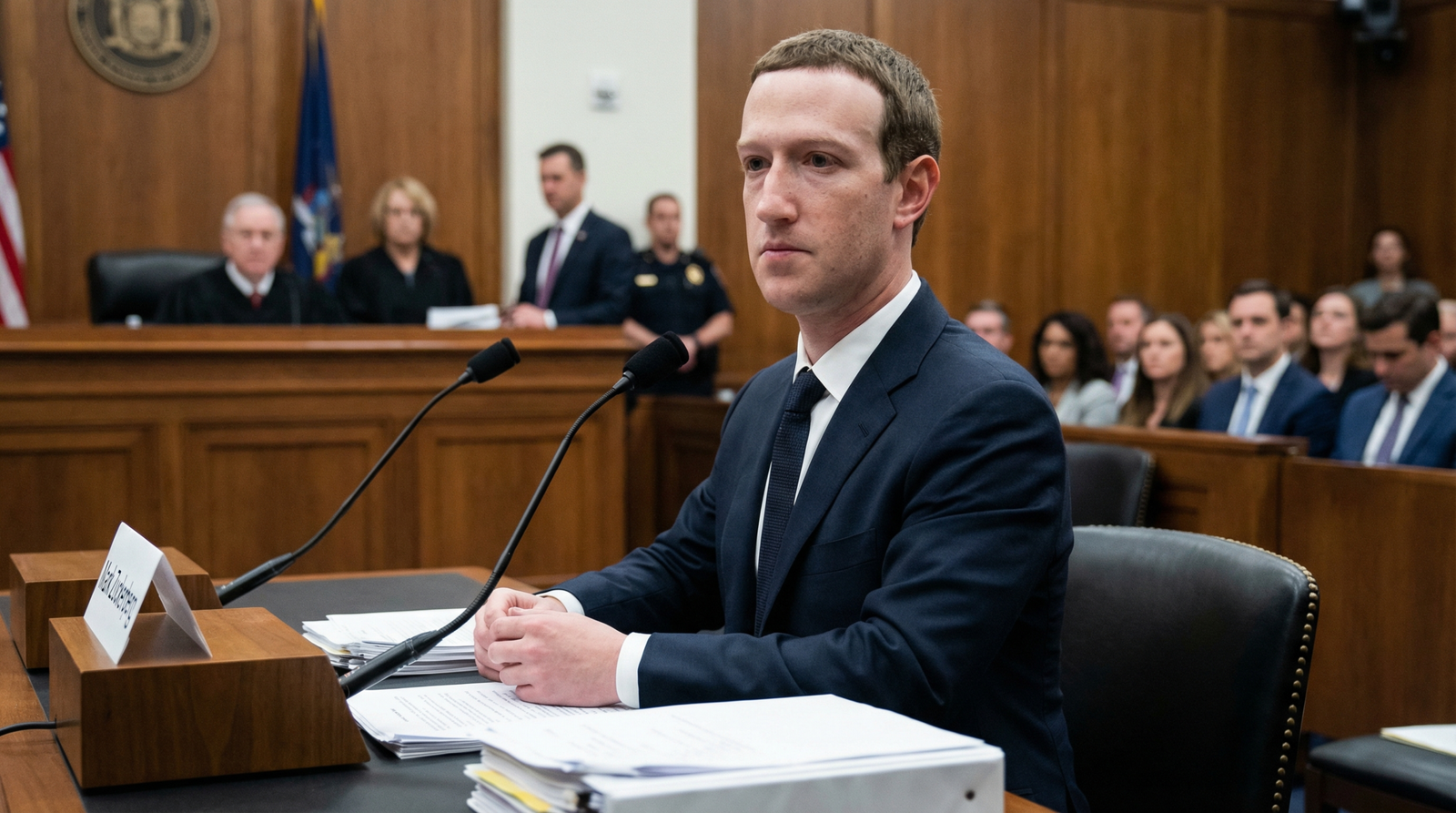

Mark Zuckerberg appeared in a Los Angeles courtroom on February 18, 2026, to testify in a significant social media trial focusing on the impact of Instagram on young users. The Meta CEO faced questioning about the platform’s potential effects on children, his past congressional testimony, and internal company guidance on communication style.
The case centers around allegations by the plaintiff, identified as KGM, now 20 years old, who claims that early use of social media led to addiction and worsened depression and suicidal thoughts. Meta Platforms and YouTube, owned by Google, remain defendants in the lawsuit, with TikTok and Snap having already settled.
During the proceedings, the plaintiff’s attorney, Mark Lanier, sought to establish whether Instagram and other platforms intentionally foster addictive behavior. When asked if increased use correlates with addiction, Zuckerberg responded, “I don’t think that applies here.” He maintained his previous stance that scientific evidence has not definitively linked social media to mental health harm.
Lanier challenged Zuckerberg’s testimony regarding Instagram’s internal goals about user engagement, referencing documents seemingly contradicting Zuckerberg’s claim that no targets to increase user time exist. Zuckerberg acknowledged that such goals existed previously but asserted that Meta shifted focus toward enhancing user utility rather than maximizing usage time.
The attorney also questioned Zuckerberg on internal media training, which included advice to appear “authentic, direct, human, insightful and real.” Zuckerberg described these as feedback and denied being extensively coached on his responses. He acknowledged notoriety for his sometimes robotic public speaking but attributed it to personal traits rather than coaching.
Age verification policies drew scrutiny as well. Zuckerberg reiterated that Meta restricts users under 13 and actively works to detect individuals circumventing these restrictions.
The court also revisited discussions about Instagram’s cosmetic beauty filters. Zuckerberg indicated a high threshold for removing features that allow self-expression, noting insufficient evidence that such filters harm users. However, Lanier cited concerns from 18 external experts consulted by Meta.
Children’s advocacy groups criticized Zuckerberg’s testimony. Josh Golin, executive director of Fairplay, described the testimony as untrustworthy, highlighting company resistance to removing features potentially addictive to youth.
Zuckerberg has previously testified before Congress on youth safety issues related to Meta’s platforms, expressing sympathy for families affected by tragedies linked to social media but refraining from direct admission of responsibility. This trial is the first where Zuckerberg has testified before a jury. The case stands as a bellwether, likely influencing the outcomes of similar lawsuits against social media companies.
Meta’s attorney Paul Schmidt acknowledged the plaintiff’s mental health struggles but contested the degree to which Instagram contributed. He referenced KGM’s turbulent home environment and argued that social media platforms served as coping mechanisms.
A related trial involving Meta began recently in New Mexico. As the legal proceedings advance, the testimony and evidence presented may have broader implications for social media regulation and corporate accountability regarding youth mental health.