


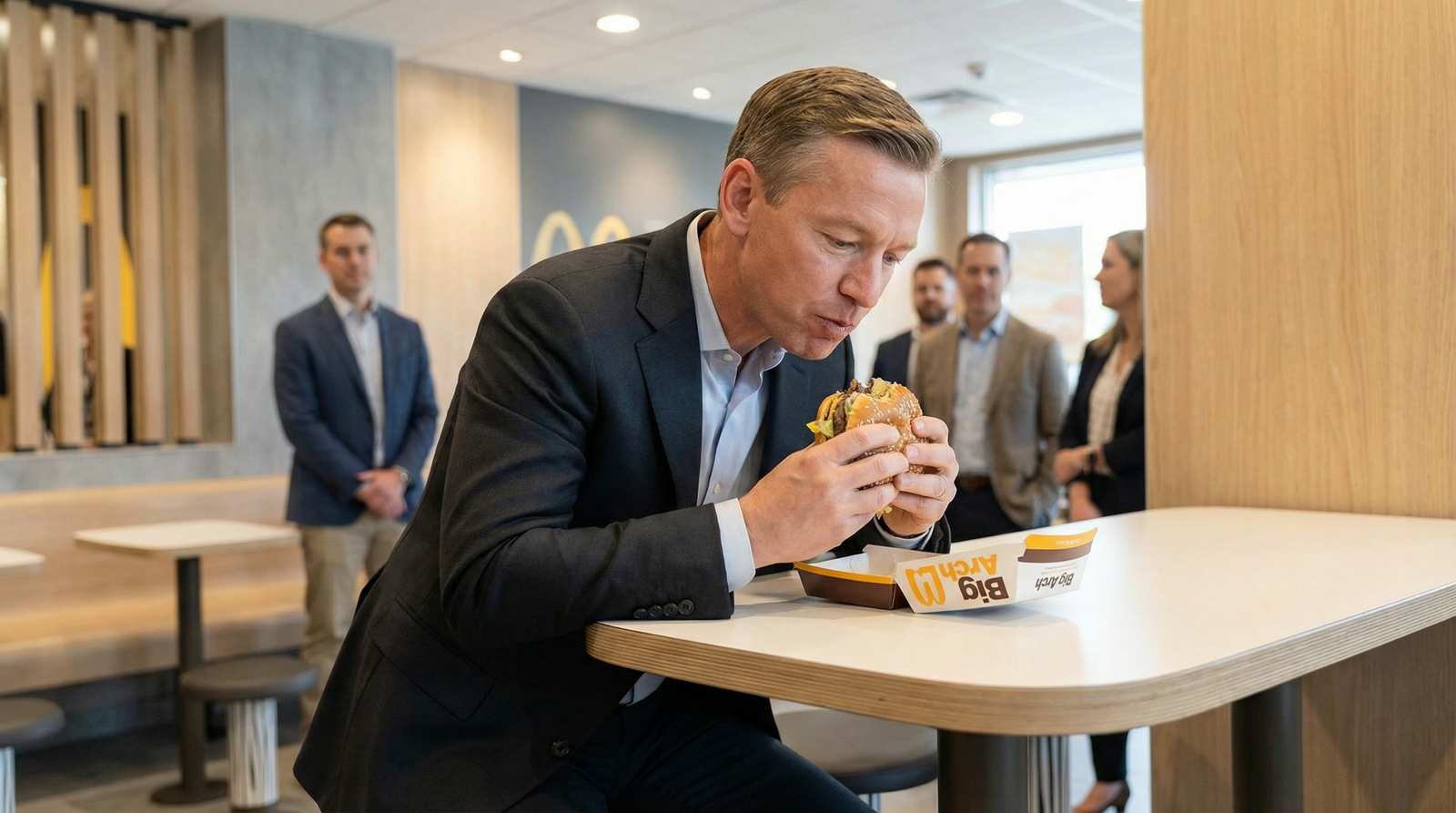

McDonald’s CEO Chris Kempczinski’s recent taste test of the chain’s new Big Arch burger ignited widespread discussion within the fast-food industry, triggering a wave of responses from competitors. Kempczinski’s carefully presented video, in which he sampled the double-patty sandwich and referred to it as a “product,” quickly drew attention for his formal demeanor and restrained enthusiasm.
The video sparked a range of reactions online, including memes and critiques that focused on the perceived corporate tone and questioned the authenticity of Kempczinski’s enjoyment. The clip’s viral nature prompted other fast-food leaders, from Burger King to smaller regional chains like Ohio-based Gold Star Chili, to post their own taste-test videos. These videos often showcased messier, more informal reactions, highlighting a contrast in marketing approaches.
Mike Perry, founder of the creative agency Tavern, noted that while rival CEOs are engaging in a contest to appear more genuine, McDonald’s benefits most by holding the spotlight in this digitally fueled exchange. Perry questioned the increasing presence of CEOs in consumer-facing roles, suggesting that many appear uncomfortable and that forced attempts at relatability are often transparent to viewers.
He warned that such “authenticity wars” risk backfiring, as attempts to prove genuineness can come off as insincere. According to Perry, brands should approach CEO involvement in promotions thoughtfully and avoid efforts that appear contrived. “If you have to say ‘I’m cool,’ you’re not cool,” he stated.
Despite the competitive back-and-forth, McDonald’s retains a dominant position due to its extensive number of global locations and strong financial performance relative to other burger chains such as Burger King and Wendy’s. This scale allows McDonald’s to absorb rival responses while maintaining centrality in public discussions about fast-food offerings.
The ongoing buzz has translated into heightened consumer interest, with multiple reporters sampling the Big Arch burger to assess its appeal. Reviews describe the sandwich as larger than typical McDonald’s offerings but unmistakably characteristic of the brand.
However, Perry emphasized that viral marketing moments often produce only temporary sales spikes rather than long-term brand strength. He cited McDonald’s recent campaigns centered on the character Grimace as examples of enduring brand-building initiatives. In contrast, he characterized the CEO taste-test trend as likely to be remembered as a passing internet moment rather than a lasting marketing success.
Regardless of opinion, the episode succeeded in generating conversation and customer curiosity, underscoring its effectiveness in stimulating demand. Through this dynamic interaction, McDonald’s solidified its role as a key player in the fast-food sector while competitors navigated the fine line between authenticity and marketing strategy in a highly visible public forum.