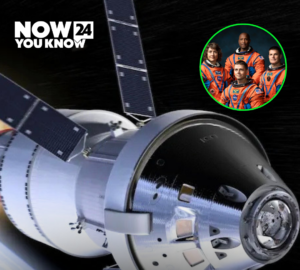


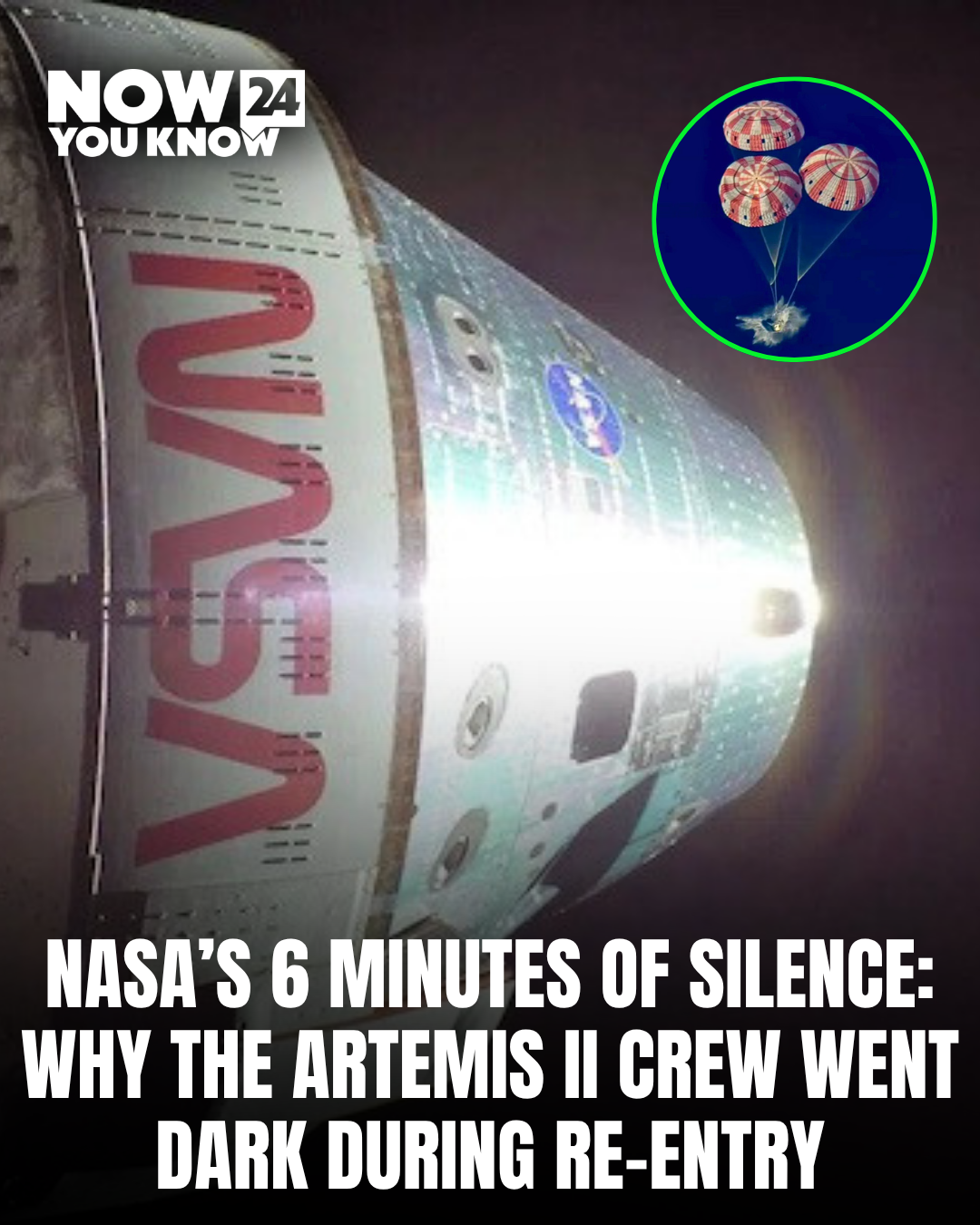

The most nerve-wracking moment of the Artemis II mission wasn’t the liftoff or the loop around the Moon—it was a period of absolute silence. As the Orion capsule plummeted back toward Earth on April 10, 2026, NASA mission control fell quiet for exactly six minutes.
While the world waited with bated breath, this “blackout” was not a technical failure, but a predictable consequence of the physics required to bring four humans home from deep space.
The Physics of the Fireball
The silence began at roughly 400,000 feet above the Pacific Ocean. Traveling at nearly 35 times the speed of sound (approximately 24,000 mph), the Orion capsule slammed into the first traces of Earth’s upper atmosphere.
At these hypersonic speeds, the air in front of the spacecraft’s heat shield is compressed so violently that it transforms into plasma—a superheated, electrically charged gas. This plasma sheath, reaching temperatures of 5,000 degrees Fahrenheit, acts as a physical wall that radio waves cannot penetrate.
“6 Minutes of Things That Have to Go Right”
During this six-minute window, the crew—Reid Wiseman, Victor Glover, Christina Koch, and Jeremy Hansen—were completely cut off from Ground Control. Inside the capsule, the astronauts endured G-forces nearly four times the pull of Earth’s gravity.
According to NASA flight directors, this phase is the ultimate test of the spacecraft’s automated systems. During the blackout, Orion had to:
-
Maintain its orientation: Using a series of dramatic 180-degree rolls to clear debris and hit the atmosphere at the perfect angle.
-
Manage the heat: Relying on the redesigned heat shield to protect the crew from the literal inferno outside.
-
Navigate autonomously: Making real-time trajectory adjustments without guidance from Houston.
The Moment of Relief
The silence ended at approximately 8:01 PM ET when the capsule slowed down enough for the plasma to dissipate. The first crackle of audio from Commander Reid Wiseman confirmed the crew was “happy and healthy,” followed shortly by the sight of the three main parachutes deploying over the Pacific.
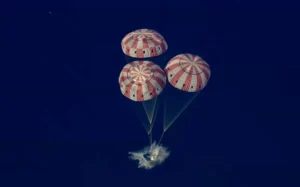
“This is the start of a new era,” NASA officials stated following the successful splashdown. While the six minutes of silence were eerie, they were a necessary rite of passage for the first crew to return from the Moon in over half a century—proving that humanity’s shield against the elements is ready for the next step: a permanent lunar base.