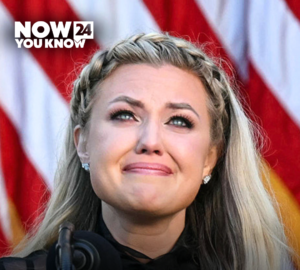




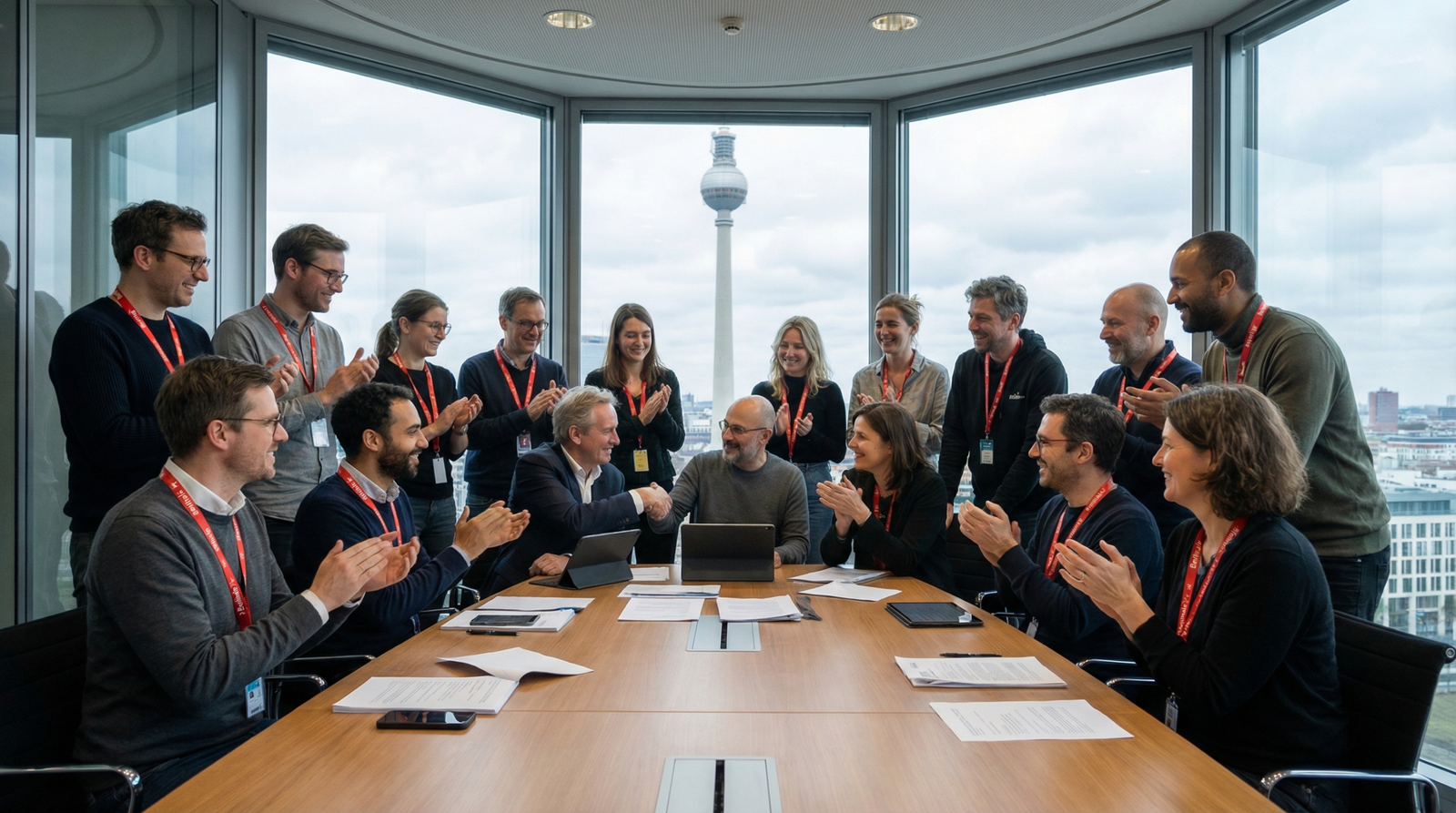

As discussions about the future leadership of the Berlin International Film Festival intensify, over 500 staff members have collectively issued a public statement backing their current director, Tricia Tuttle. This show of support comes amid rising political tension related to the festival’s latest edition.
Tricia Tuttle assumed her role as Berlinale’s artistic director two years ago, succeeding Carlo Chatrian. Despite her efforts to steer the festival artistically, she has faced criticism stemming from political controversies that have recently overshadowed the event. The Berlin Film Festival is unique among major festivals in being government-controlled, with supervision by a board historically presided over by cultural officials such as Claudia Roth.
The controversy escalated after some attendees, including jury president Wim Wenders, refrained from political discussions during the festival. It further intensified on the closing night ceremony when multiple prize winners used their speeches to express support for Palestine and Gaza. Palestinian director Abdallah Al-Khatib, who won the top prize in the Perspectives section for his film “Chronicles From the Siege,” accused the German government of complicity in the violence in Gaza, prompting German Federal Environment Minister Carsten Schneider to reportedly leave the event.
In response to these developments, Germany’s federal government commissioner for culture and media convened an extraordinary meeting of the Berlinale’s governing body to evaluate the festival’s future direction. This official oversight adds another layer of complexity due to the festival’s public funding and governmental ties.
The open letter from the Berlinale employees emphasizes Tricia Tuttle’s qualities as a leader, highlighting her “clarity, integrity, and artistic vision.” The staff commended her for fostering respect among hundreds of employees and guiding the festival through challenging times. In their words, she remains “an intelligent, ethical and responsive leader” devoted to maintaining the Berlinale as a vital international platform for cinema.
Before joining the Berlinale, Tuttle led the BFI London Film Festival through a period of significant audience growth. From her outset, she acknowledged the Berlinale’s history as a “lightning rod for political controversy,” especially given Germany’s domestic political climate and the ongoing Middle East conflicts.
The employee letter, signed by full-time staff, contract workers, and freelancers, underscores widespread admiration and loyalty towards Tuttle and signals hope that this support will influence policymakers and the public amid the controversy. As the Berlinale moves forward, its leadership and the festival’s political positioning remain under close scrutiny.