




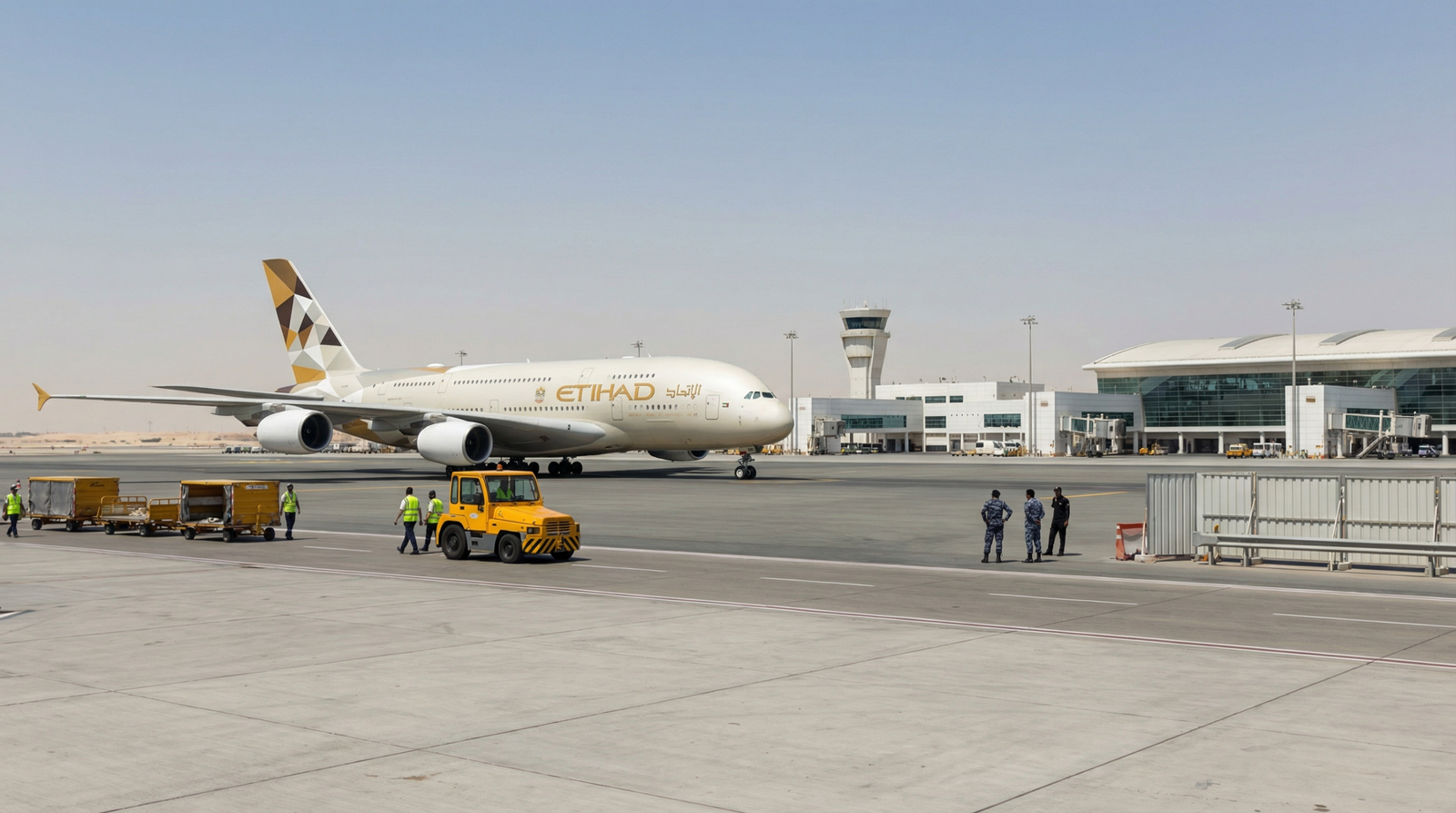

After three days of flight suspensions and widespread disruptions in the United Arab Emirates’ (UAE) airspace, some commercial flights resumed on Monday, though confusion and cancellations persisted. The resumption comes in the wake of missile strikes linked to tensions involving Iran, compounded by attacks reported on the US embassy in Riyadh.
Etihad Airways operated twelve departures from Abu Dhabi by mid-afternoon, marking the first passenger flights leaving since the outages began. Destinations included Europe, Asia, and Africa, such as London, Amsterdam, Paris, Moscow, Karachi, Mumbai, Islamabad, New Delhi, Riyadh, Jeddah, Dammam, and Cairo. However, the airline maintained that overall operations were still suspended and that flight movements were occurring only under strict safety and operational approvals, primarily for repositioning, cargo runs, or repatriation.
Concurrent announcements from Emirates in Dubai indicated the airline was operating a limited number of flights, though many continued to cancel or divert. A notable example involved two Etihad cargo flights rerouted to Muscat, Oman, early Tuesday. An Emirates Airbus A380 departing Mumbai experienced holding patterns off the UAE coast before returning to Dubai in the early hours. While some aircraft had reentered UAE airspace by Tuesday morning, the majority of flights into and out of Dubai remained canceled.
In Riyadh, disruptions also increased after the reported missile strikes near the US embassy. Several flights intended for the Saudi capital were held in holding patterns or diverted amid heightened security concerns. The US State Department issued an advisory urging Americans to leave more than a dozen countries in the region, including the UAE and Saudi Arabia, using commercial means, though the practicality of such movement remains uncertain given prevailing airspace and airport restrictions.
Other regional airlines showed signs of cautiously resuming flights. Emirates departed from Dubai to various Indian cities Monday evening, while Saudi carriers and airlines such as Saudia and Flynas utilized UAE airspace to operate flights between Saudi Arabia and India. Several other airlines, including IndiGo, Royal Jordanian, Flydubai, and Air India, also conducted departures from Dubai, though their passenger status was not clear.
The safety situation remains volatile. On Sunday, an Iranian drone targeting Abu Dhabi airport was intercepted, resulting in one fatality and multiple injuries from falling debris. As of Monday, flights from Qatar, Bahrain, and Kuwait remained suspended.
A notable incident involved a Lufthansa Airbus A380 departing Abu Dhabi for Munich with only two pilots aboard and no passengers. The aircraft had been in the UAE for maintenance and could not carry passengers due to insufficient crew and restricted airport access amid the ongoing conditions.
Airport authorities and airlines continue advising passengers to verify the status of flights given the changing circumstances. The combination of airspace closures, diplomatic tensions, and security threats has created operational challenges impacting travelers and airlines alike.
Authorities have yet to provide a full timeline for a return to normal flight schedules as the region remains under alert following the recent escalations.