



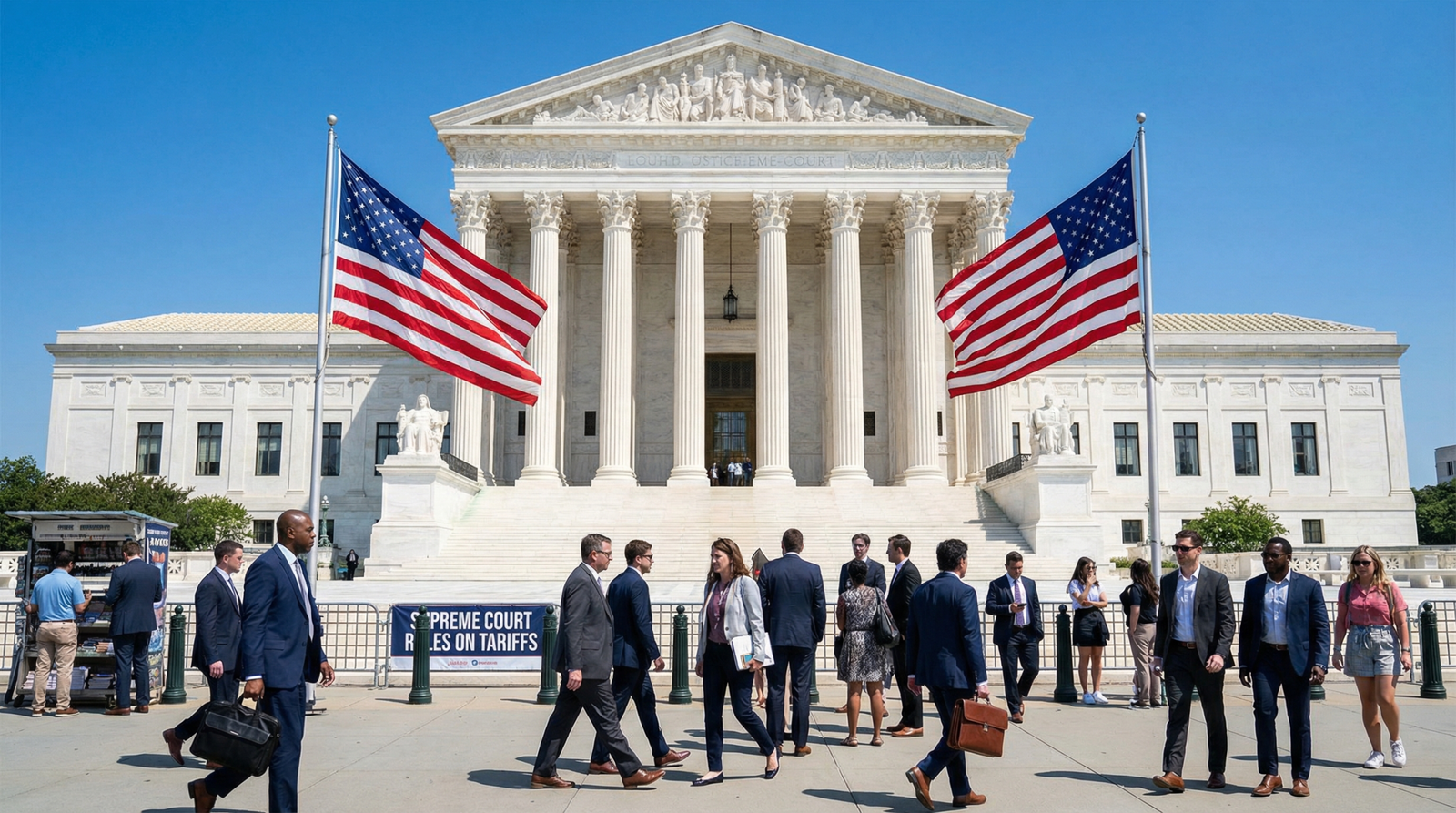

The Supreme Court issued a 6-3 decision on Friday that restricts President Donald Trump’s authority to impose tariffs under the International Emergency Economic Powers Act (IEEPA), a national security law invoked to justify broad tariff actions during emergencies. The ruling marks a significant limitation on the scope of presidential power Trump had exercised in his trade policy.
The tariffs challenged under IEEPA include those announced in April, commonly known as the “Liberation Day” tariffs, which imposed at least a 10% tariff on imports from nearly all countries globally. These tariffs were part of Trump’s strategy to renegotiate global trade agreements and were considered among the administration’s strongest tools.
Chief Justice John Roberts, writing for the majority, emphasized that the Trump administration’s interpretation of IEEPA was overly expansive. He stated that Congress must explicitly grant the president tariff powers and that any such delegation is typically subject to clear and strict limitations. Roberts noted, “What common sense suggests, congressional practice confirms,” highlighting that past congressional delegations of tariff authority were explicit and narrowly defined.
This decision arrives as the U.S. trade deficit has been showing signs of contraction, reaching $29.4 billion in October — its lowest since 2009 — a trend partly attributed to tariffs on imports.
The ruling followed lawsuits filed by two business groups directly challenging Trump’s use of IEEPA to impose tariffs. The Supreme Court consolidated these challenges and expedited oral arguments at the start of its November term.
IEEPA, enacted during President Carter’s administration, grants presidents the power to regulate importation during emergencies but had never before been interpreted to include broad tariff authority. The Trump administration’s claim that this law allowed tariff imposition met with skepticism from the bench. During oral arguments, Justice Neil Gorsuch, himself appointed by Trump, remarked on the gravity of taxation authority, calling taxes “part of the spark of the American Revolution” that warrants thorough scrutiny.
The court’s ruling does not affect tariffs imposed under other statutory authorities, which the administration can still use. However, those alternative laws typically include restrictions such as expiration dates, tax caps, and limits on targeting specific countries rather than industries. The Trump administration favored IEEPA for its perceived flexibility compared to these other statutes.
The ruling signals a new curb on unilateral presidential powers related to trade and may influence how future administrations approach tariff policies and national security claims concerning economic measures.
This is an ongoing story and further updates may follow.