




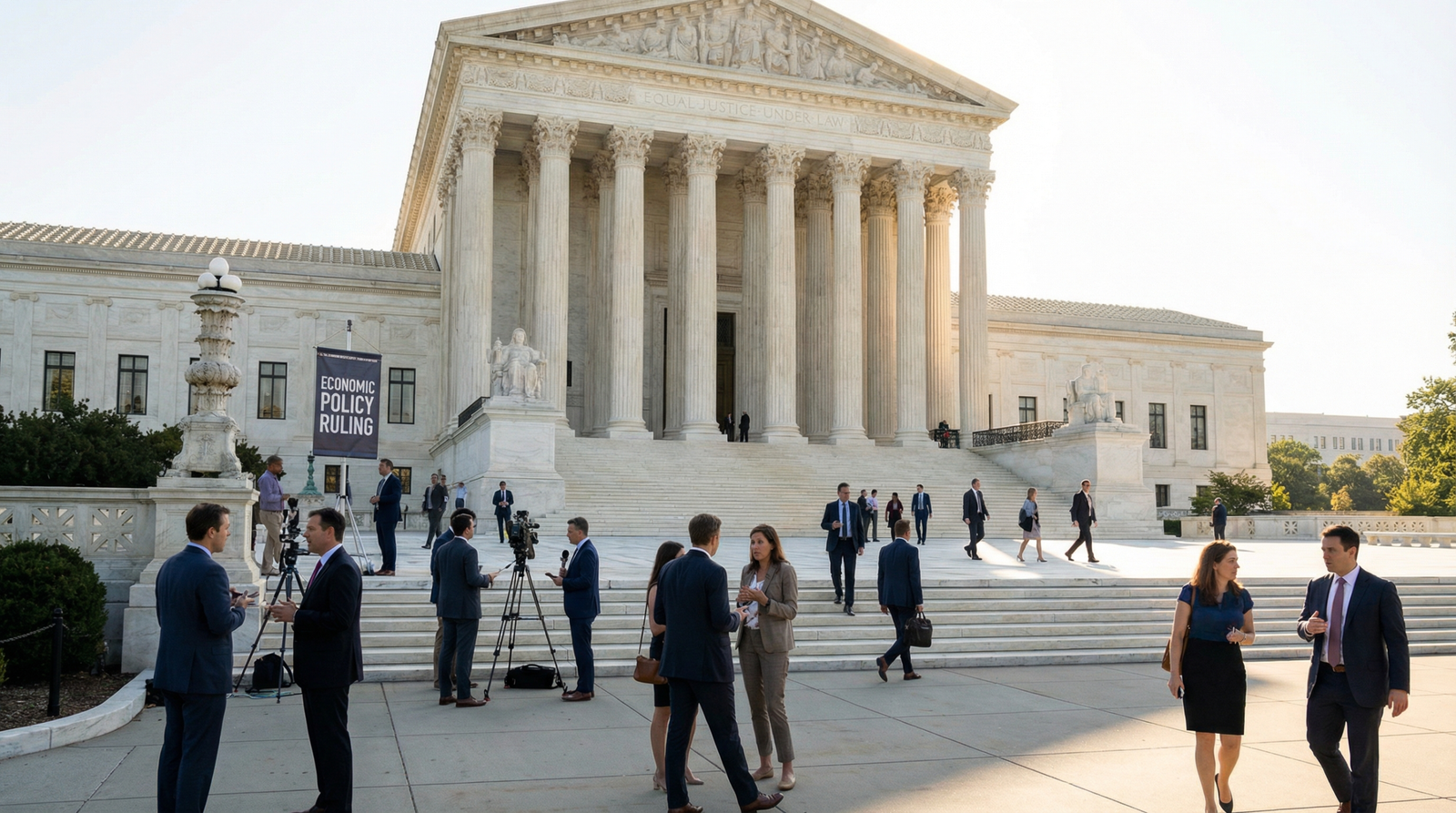

The Supreme Court recently invalidated a substantial portion of former President Donald Trump’s broad tariff policies, marking a significant legal setback. Despite this ruling, the future of US tariffs remains unclear and complex, as the administration has signaled intentions to continue imposing trade restrictions.
Following the decision, the Trump administration announced plans to introduce a 15% tariff applied on a worldwide basis. This measure is being invoked under Section 122 of the Trade Act, which authorizes the president to impose tariffs on an emergency basis, but such tariffs can only be maintained for up to 150 days. To establish a longer-term tariff policy, the administration will likely need to collaborate with Congress.
A major unresolved issue concerns the approximately $133 billion collected from tariffs that were deemed unlawful. Over a thousand companies have filed lawsuits seeking to recover these funds. However, the process of obtaining refunds is expected to be complicated and drawn out, involving extensive legal negotiations. Some Democratic lawmakers have proposed direct refunds to American consumers, amounting to around $1,700 per household.
Economic analysts, including those at Goldman Sachs, caution that the court ruling is unlikely to lead to immediate price reductions for consumers. Investors are facing mixed implications: the ruling may deter future large-scale tariffs, which benefits businesses; companies affected by tariffs could receive financial reimbursements; but reduced tariff revenue could exacerbate the federal government’s budget deficit, potentially affecting bond yields and stock market performance. Certain consumer stocks have been identified as possible beneficiaries in this new environment.
The broader impact on the US economy remains difficult to gauge. Recent data shows economic growth continuing, though the benefits have not been evenly distributed. While some had predicted negative consequences from Trump-era tariffs, those forecasts have largely not come to pass according to economic research from think tanks.
As the situation develops, legal professionals are expected to see increased activity due to tariff-related litigation. Corporate supply chains also continue to face uncertainty, complicating operational planning. Further insights are anticipated following the upcoming State of the Union address, which will outline the administration’s direction on trade policy.
In summary, while the Supreme Court decision represents a pivotal moment, the battle over tariff policies is far from resolved, with significant economic and legal ramifications still unfolding.