


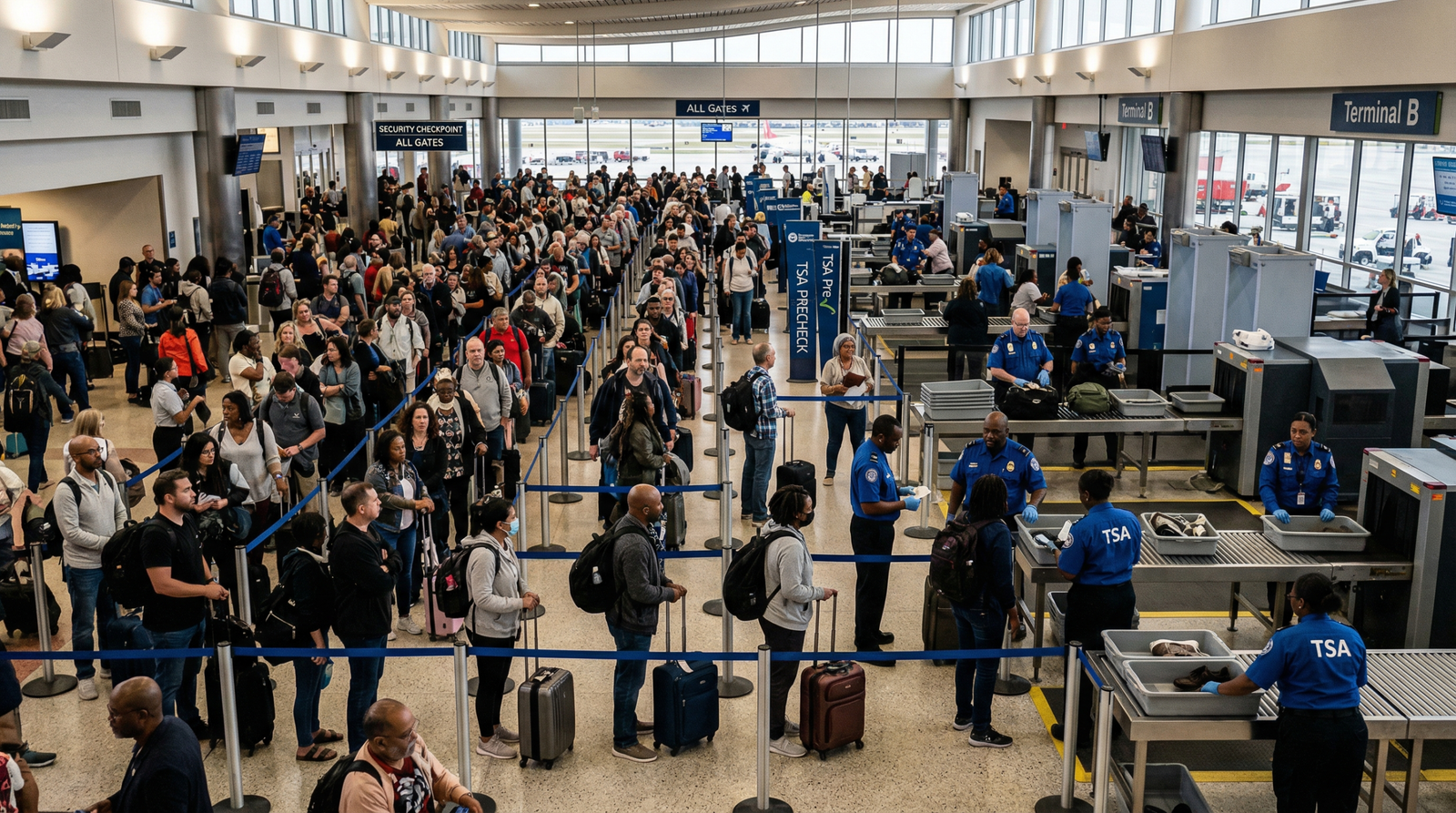

Travelers at several major U.S. airports are still experiencing lengthy TSA security wait times, despite the recent restoration of pay for TSA officers following a government funding dispute. The standoff left many TSA agents unpaid, contributing to significant staffing shortages and causing security lines to stretch to unprecedented lengths at some locations.
Hartsfield-Jackson Atlanta International Airport, the busiest airport in the world by passenger volume, has been especially affected. The airport’s website continued to warn of wait times exceeding four hours for both domestic and international travelers, and it currently does not provide live updates on security line waits. During the shutdown, over one-third of TSA staff were absent on some days, compounding delays.
As of Monday morning, wait times had decreased but were still notable at several airports. Houston George Bush Intercontinental Airport reported longest waits just under an hour, improved from previous waits of up to four hours. New York’s JFK Airport showed wait times of up to 20 minutes early Monday, although the airport cautioned that these times can fluctuate quickly depending on passenger volume and staffing levels. Newark Liberty International Airport reported waits near 15 minutes during the same period, though it also noted that live wait time updates had been suspended and current delays might be longer than usual.
Other airports reported shorter wait periods or minimal delays. Dallas-Fort Worth had a maximum wait of 20 minutes at one checkpoint, with others below 10 minutes, while Denver’s waits were around 11 minutes soon after opening. Las Vegas McCarran International Airport saw very low queues for both general and TSA PreCheck lines.
Travelers are being advised to allow extra time at airports, with some recommending arriving up to three hours early, even for domestic flights. Many are turning to CLEAR, a biometric identity service available at approximately 60 airports that allows passengers to bypass standard TSA identification checks.
Several airports such as Philadelphia, Dallas-Fort Worth, and Denver continue to provide live TSA wait times on their websites. Additionally, the MyTSA mobile app offers estimated wait times in 15-minute intervals based on averaged checkpoint data, though it may rely on historical information if live data is unavailable. The TSA has noted that during the partial government shutdown, it has not actively managed its sites, impacting the timeliness and accuracy of wait time reporting.
While President Donald Trump signed an executive order directing the Department of Homeland Security to restore paychecks for TSA employees, the effects of the staffing shortage are expected to persist. TSA Deputy Administrator Ha Nguyen McNeill testified that nearly 500 officers resigned since the partial shutdown began in February, adding to the 1,000 who left during the full government shutdown in 2025. Given that TSA training for new officers takes four to six weeks, it may take some time before staffing levels improve.
McNeill indicated that the shortage is unlikely to be resolved in time for the FIFA World Cup in June. Moreover, although TSA employees could receive pay as soon as Monday, the government shutdown remains unresolved. The Senate passed a bill to fund the Department of Homeland Security and end the partial shutdown, but House Republicans have rejected this proposal and advanced an alternative plan that could extend the funding impasse.
In summary, travelers should prepare for ongoing TSA delays while monitoring airport-specific wait times and considering expedited security options where available to help mitigate the impact of security staffing shortages during this period.