




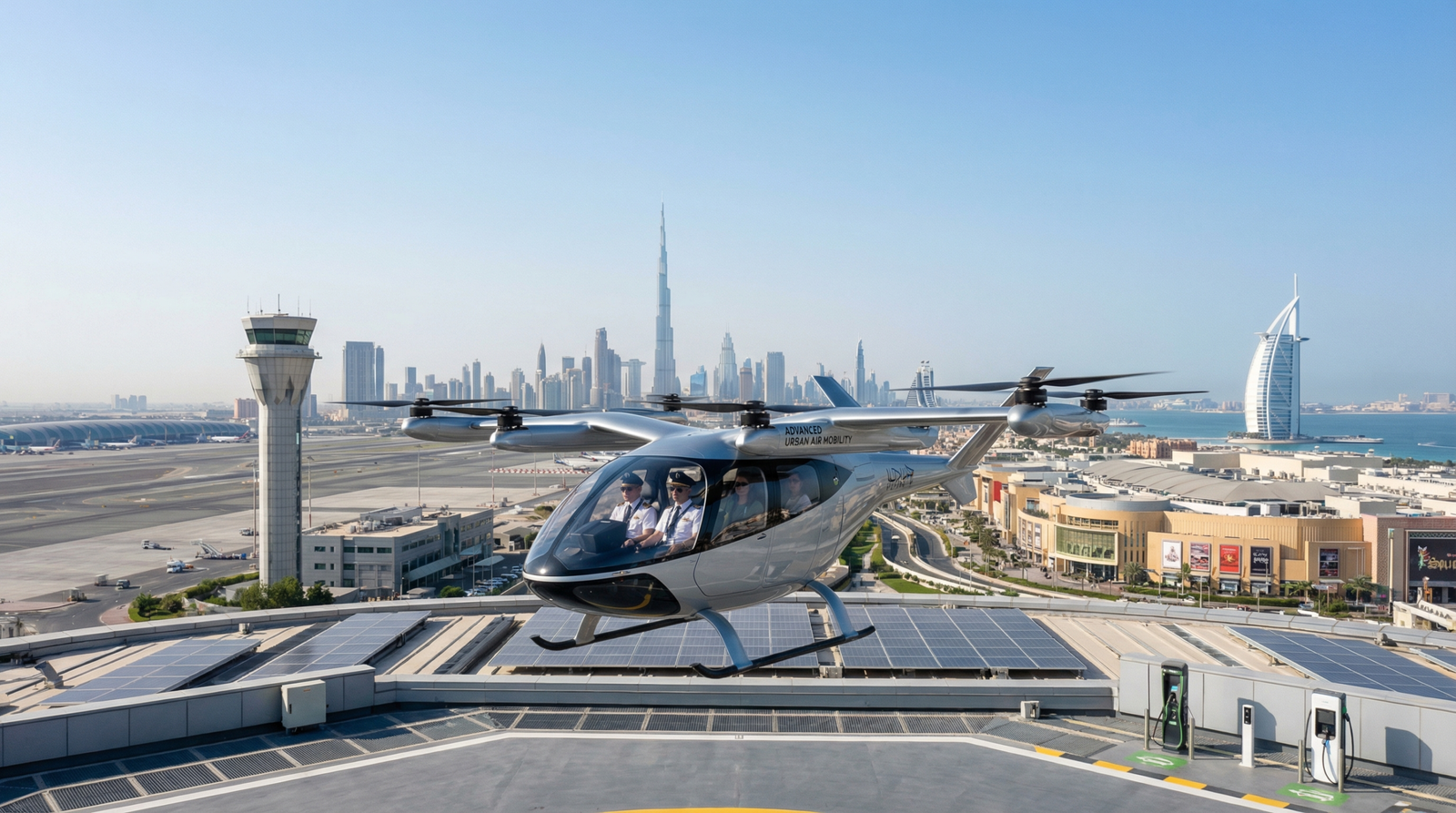

Uber and Joby Aviation announced a collaboration to introduce air taxis in Dubai, with rides becoming available via the Uber app by the end of 2026. This service will utilize Joby’s electric vertical takeoff and landing (eVTOL) aircraft, designed to accommodate up to four passengers and operated by professional commercial pilots.
The new transport option is set to complement Uber’s existing ride-hailing services, which currently include cars, motorbikes, and boats depending on the location. The integration of air taxis marks Uber’s expansion into advanced air mobility, linking traditional ground transportation with aerial travel.
Joby Aviation plans to operate four landing locations known as “vertiports” in Dubai. These will connect key points across the city, including Dubai International Airport, a major shopping mall, a hotel on Palm Jumeirah, and the American University of Dubai, facilitating rapid transit between these areas.
While the air taxi service is launching first in Dubai, Joby is also pursuing regulatory approval from the U.S. Federal Aviation Administration (FAA) to expand its operations stateside. Although there are no immediate plans to launch in the United States, the company is finalizing certification. Joby intends to offer similar services in markets such as New York, Los Angeles, the United Kingdom, and Japan once approvals are secured.
Uber’s Chief Product Officer Sachin Kansal highlighted the transformative potential of advanced air mobility in urban transportation, emphasizing the convenience of integrating air taxis into the Uber platform. Joby’s Chief Product Officer Eric Allison noted that the partnership aims to make this mode of transport accessible and seamlessly connected to existing ground-based rides, including Uber Black pickups and drop-offs.
This announcement follows the acquisition of Uber Elevate by Joby in 2020, a division initially launched by Uber to develop urban air mobility solutions. The deal included a $75 million investment by Uber in Joby. The move reflects strategic shifts after Uber divested several internal projects during the pandemic, including its self-driving car division, which was sold to Aurora. Recently, Uber has continued to explore futuristic transportation through partnerships with companies like Lucid and Nuro for robotaxi services.
The Dubai launch represents a significant step toward integrating electric air taxis into mainstream ride-hailing services, broadening transportation options for consumers and potentially setting a precedent for urban air mobility worldwide.