

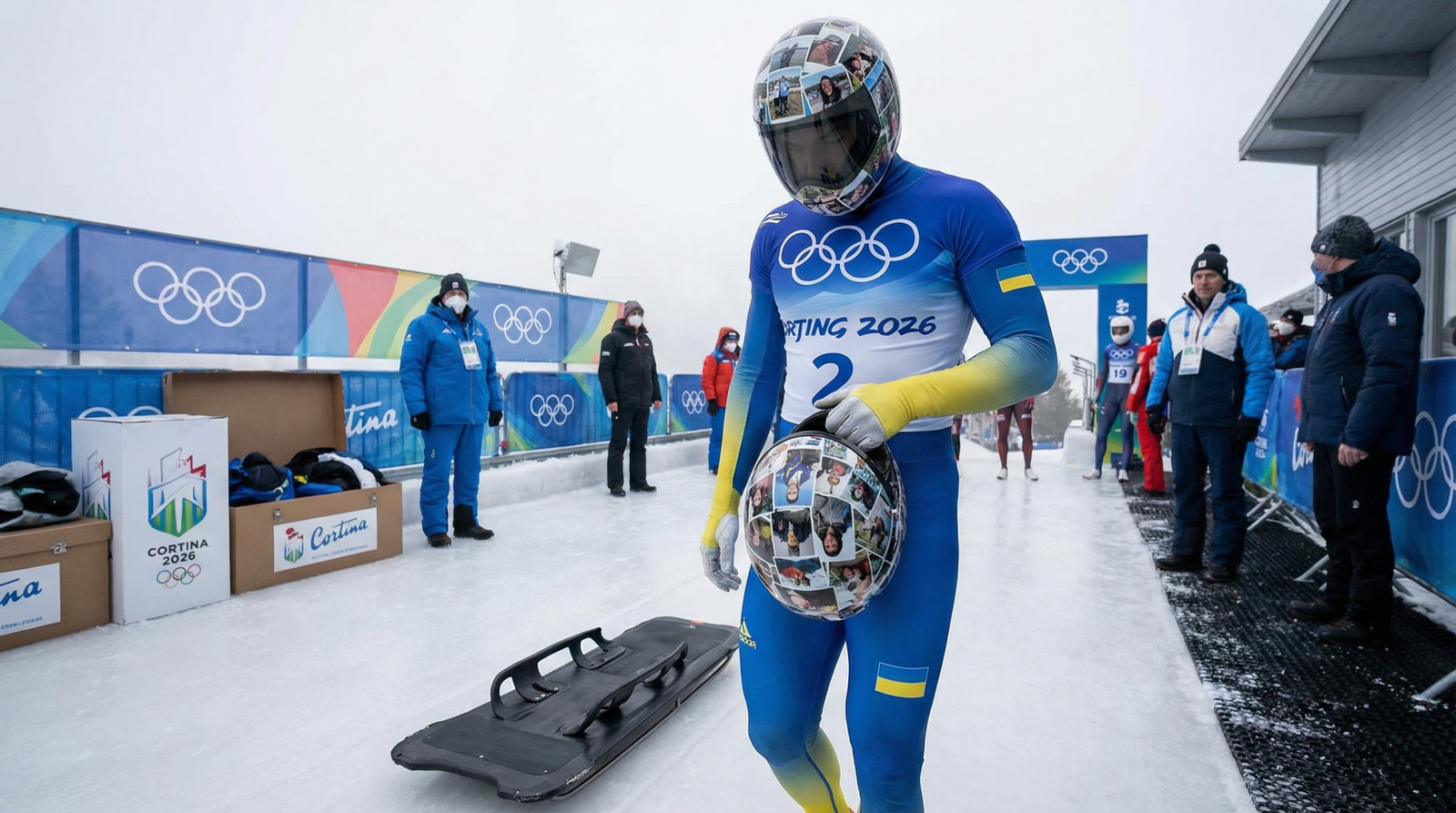

Ukrainian skeleton racer Vladyslav Heraskevych has stated that the International Olympic Committee (IOC) banned his helmet featuring images of individuals killed in the war in Ukraine. Heraskevych, 26, wore the helmet during a training session at the Winter Olympics in Cortina d’Ampezzo and had pledged to use the Games as a platform to draw attention to the conflict in his country.
The IOC has not yet publicly confirmed the ban. Heraskevych announced on social media that the IOC prohibited the use of his helmet during official training sessions and competitions. He described the decision as heartbreaking, expressing that it felt like a betrayal of athletes who could not be honored on the Olympic stage. Heraskevych criticized the IOC for applying special rules toward Ukraine, despite previous instances where tributes were allowed.
In a report to news agencies, Heraskevych identified several of the individuals depicted on his helmet as athletes, including teenage weightlifter Alina Peregudova, boxer Pavlo Ishchenko, and ice hockey player Oleksiy Loginov. He noted that some of the individuals were personal friends. Toshio Tsurunaga, the IOC representative responsible for communications with athletes and national Olympic committees, reportedly informed Heraskevych at the athletes’ village that the ban was due to Olympic Charter Rule 50.
Rule 50.2 of the Olympic Charter prohibits any kind of demonstration or political, religious, or racial propaganda within Olympic sites, venues, or other areas. Heraskevych mentioned that the IOC had contacted the Ukrainian Olympic Committee about the helmet. The IOC stated it had not received any official request to use the helmet in competition, which is scheduled to begin on February 12.
In response, Ukrainian President Volodymyr Zelensky expressed gratitude to Heraskevych for highlighting the cost of Ukraine’s struggle. Zelensky wrote that the truth about the conflict must not be deemed inconvenient or dismissed as a political demonstration at a sporting event. He emphasized that the message served as a reminder to the world regarding Russia’s actions.
Heraskevych, Ukraine’s first skeleton athlete, previously held up a sign reading “No War in Ukraine” at the 2022 Beijing Olympics just days before Russia invaded Ukraine. He had stated his intention to comply with Olympic rules banning political demonstrations within venues, while continuing to raise awareness about the ongoing war.
Following Russia’s full-scale invasion in 2022, athletes from Russia and Belarus faced broad bans from international sports, although some have gradually returned to competition. For instance, 13 Russian athletes were allowed by the IOC to compete as Individual Neutral Athletes (AINs) in Milan-Cortina.
The IOC was contacted for comment but has yet to provide an official statement regarding Heraskevych’s helmet. The Winter Olympics continue through February 22 with competition and coverage ongoing.