





The United States government has issued urgent advisories for American citizens to leave numerous Middle Eastern countries due to heightened security risks resulting from military strikes on Iran by the US and Israel. The strikes, which occurred on Saturday, have prompted retaliatory actions and increased tensions across the region.
The list of countries from which Americans are advised to depart includes Bahrain, Egypt, Iran, Iraq, Israel, the West Bank, Gaza, Jordan, Kuwait, Lebanon, Oman, Qatar, Saudi Arabia, Syria, the United Arab Emirates, and Yemen. The US Department of State has emphasized the importance of enrolling in the Smart Traveler Enrollment Program (STEP) for real-time updates and advised citizens to monitor official social media channels and use designated emergency contact numbers.
Travel restrictions and disruptions have complicated departures. Several Middle Eastern countries have suspended or restricted commercial air traffic, with some land borders offering limited passage. For example, in the United Arab Emirates, some flights are available and land borders with Oman and Saudi Arabia remain open. Saudi Arabia’s Salwa land border is also open, though authorities have cautioned that safety cannot be guaranteed for those traveling via land.
US embassies in the region have communicated directly with American citizens, issuing tailored advice and escalating travel advisories based on regional developments. As of early March, Oman, Saudi Arabia, and the UAE carry a Level 3 “Reconsider Travel” advisory. Bahrain, Israel, Jordan, the West Bank, Kuwait, and Qatar hold similar advisories, while Iran, Iraq, Lebanon, Syria, and Yemen are under a Level 4 “Do Not Travel” warning.
Neighboring countries have also updated their advisories. Egypt remains at Level 2, advising increased caution, while Pakistan has recently recommended the departure of non-emergency US government personnel and their families from its Lahore and Karachi consulates due to regional dynamics.
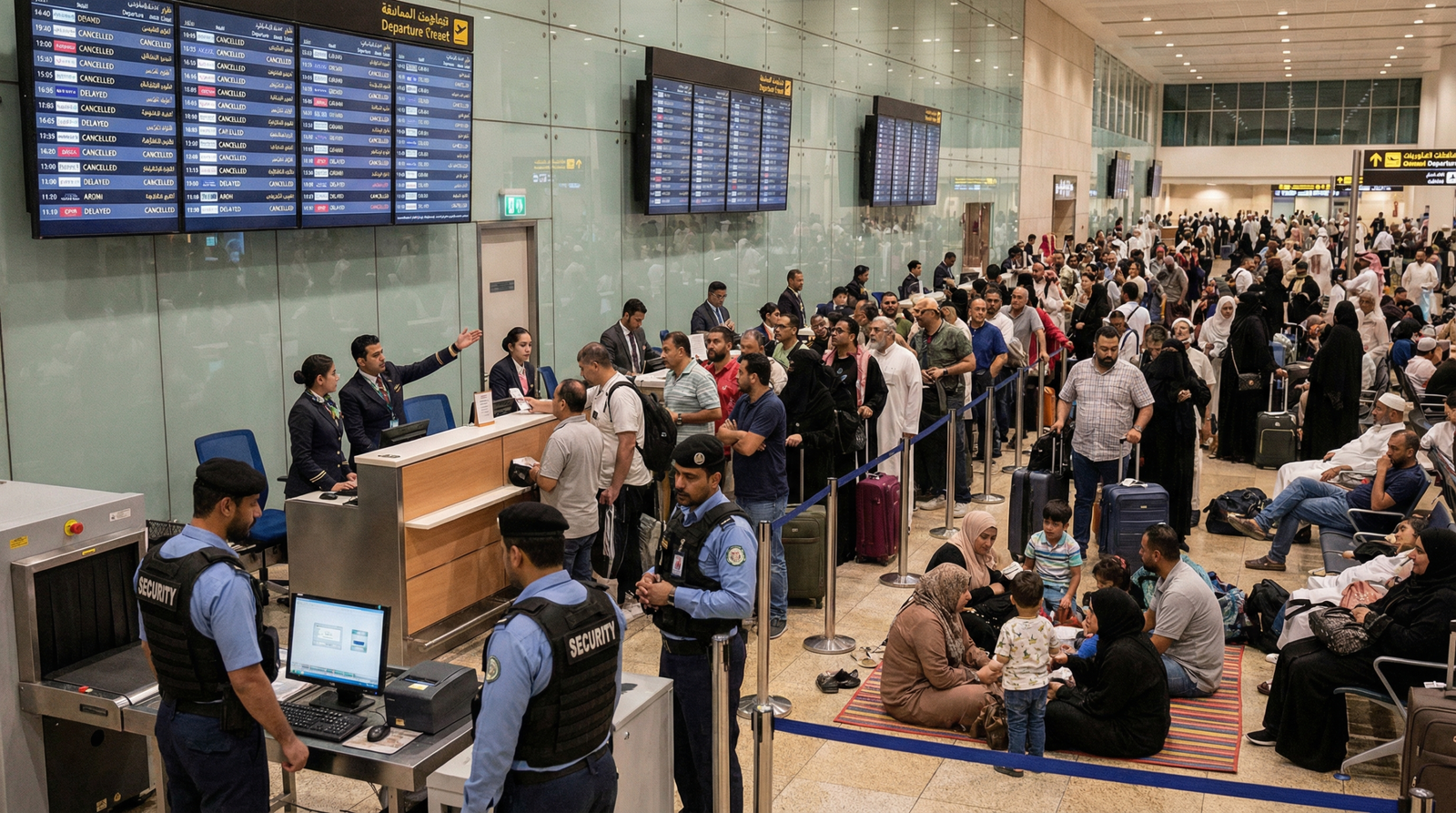
Air traffic disruptions have been significant. Iran, Iraq, Kuwait, Bahrain, and Qatar closed their airspaces over the weekend following the strikes. Though some flights resumed by Monday, airlines such as Emirates and Etihad have since suspended all flights to and from Dubai and Abu Dhabi until early next week. Airports like Dubai International have urged travelers to confirm their flight status before traveling to the airport, warning that unconfirmed passengers will be denied entry.
In Saudi Arabia, King Abdulaziz International Airport has advised passengers to check with airlines prior to traveling to the airport due to ongoing events. Hamad International Airport in Doha continues to suspend all aircraft movements following the closure of Qatari airspace.
President Donald Trump, speaking on the situation, reported that over 9,000 Americans had been safely evacuated from the Middle East. He encouraged all US citizens in the region to register with the State Department to receive travel options and assistance, including chartered and commercial flights arranged by the government.
The US government underscores its highest priority remains the safety and security of American citizens worldwide, urging all individuals in the affected regions to follow official guidance and take necessary precautions.