



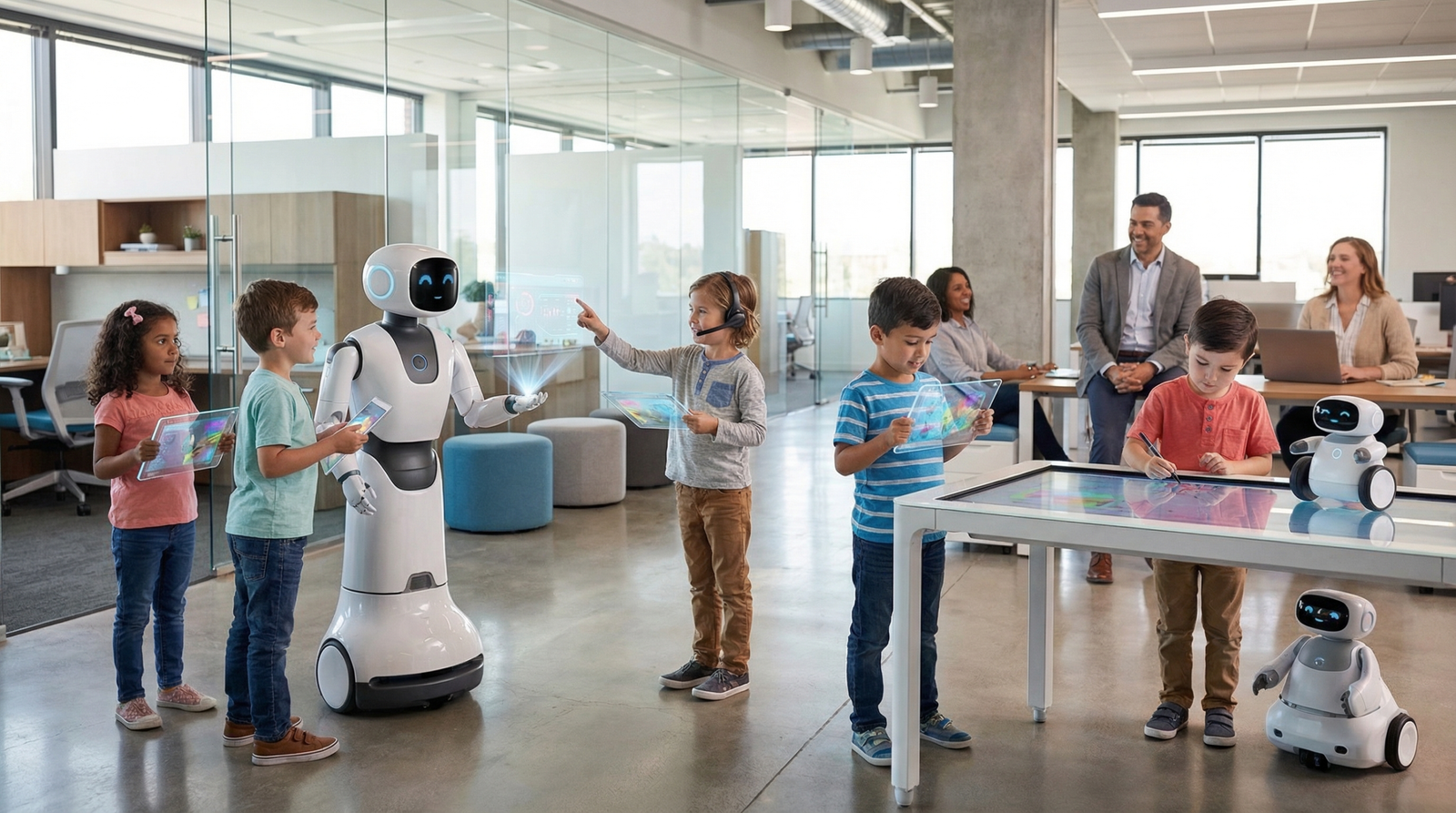

Vinod Khosla, a prominent venture capitalist and early investor in OpenAI, has stated that artificial intelligence advancements could render most jobs obsolete for the current generation of young children. In a recent interview, Khosla predicted that by the early 2030s, AI will be capable of performing up to 80% of existing jobs. “It’s pretty unlikely a five-year-old today will be looking for a job,” he said, highlighting the profound impact technology may have on the workforce.
Khosla, founder of Khosla Ventures and a cofounder of Sun Microsystems, has been influential in the technology investment sphere. In 2019, he made a significant $50 million investment in OpenAI when its valuation was around $1 billion, marking the largest initial investment of his career at the time.
According to Khosla, rapid progress in AI and robotics will lead to a future in which much of human labor becomes effectively free within 15 years. This shift could usher in an era of extreme abundance, where lower costs and increased availability of resources prevail. Instead of working out of necessity, people would focus on pursuits driven by passion and interest. “The need to work will go away,” he stated. “People will still work on the things they want to work on, not because they need to work.”
Addressing traditional manual jobs such as those in manufacturing and agriculture, Khosla characterized these roles less as meaningful occupations and more as forms of servitude. His viewpoint aligns with other notable voices in Silicon Valley who anticipate significant changes to employment structures due to AI. For example, last month Boris Cherny, the creator of Claude Code, suggested that software engineering as a job title could disappear as soon as next year. Dario Amodei, CEO of AI company Anthropic, also estimated that AI could replace 50% of entry-level office positions in the near future.
Khosla framed this technological evolution within the context of international competition, particularly between the US and China. He described the AI rivalry as a “techno-economic war” that will determine which nation sets the global standard and reaps the subsequent economic benefits. He indicated that the winner of this competition will witness a future with abundant technology, lower consumer prices, and reduced exploitation of human labor.
Looking ahead to 2040, Khosla projected that the purchasing power of incomes will improve substantially, noting, “I would suspect by 2040, $30,000 — and maybe $10,000 — will buy much more than you can buy if you have a $100,000 income today.” This outlook suggests considerable economic shifts driven by technological innovation and AI’s widespread adoption.
Khosla emphasized that although the transition could be disruptive, it need not be dystopian if technological leadership is maintained, particularly by the United States. His vision anticipates a dramatic restructuring of work and society as AI technologies continue to advance over the coming decades.