




Wall Street banks are intensifying their efforts to finance the rapid expansion of data centers necessary to support artificial intelligence (AI) technologies, encountering one of the largest capital mobilizations in recent decades. Prominent financial institutions including Goldman Sachs, Morgan Stanley, JPMorgan, and Citizens Bank are developing specialized units that integrate lending, market operations, and private capital to manage financing deals that often exceed billions of dollars.
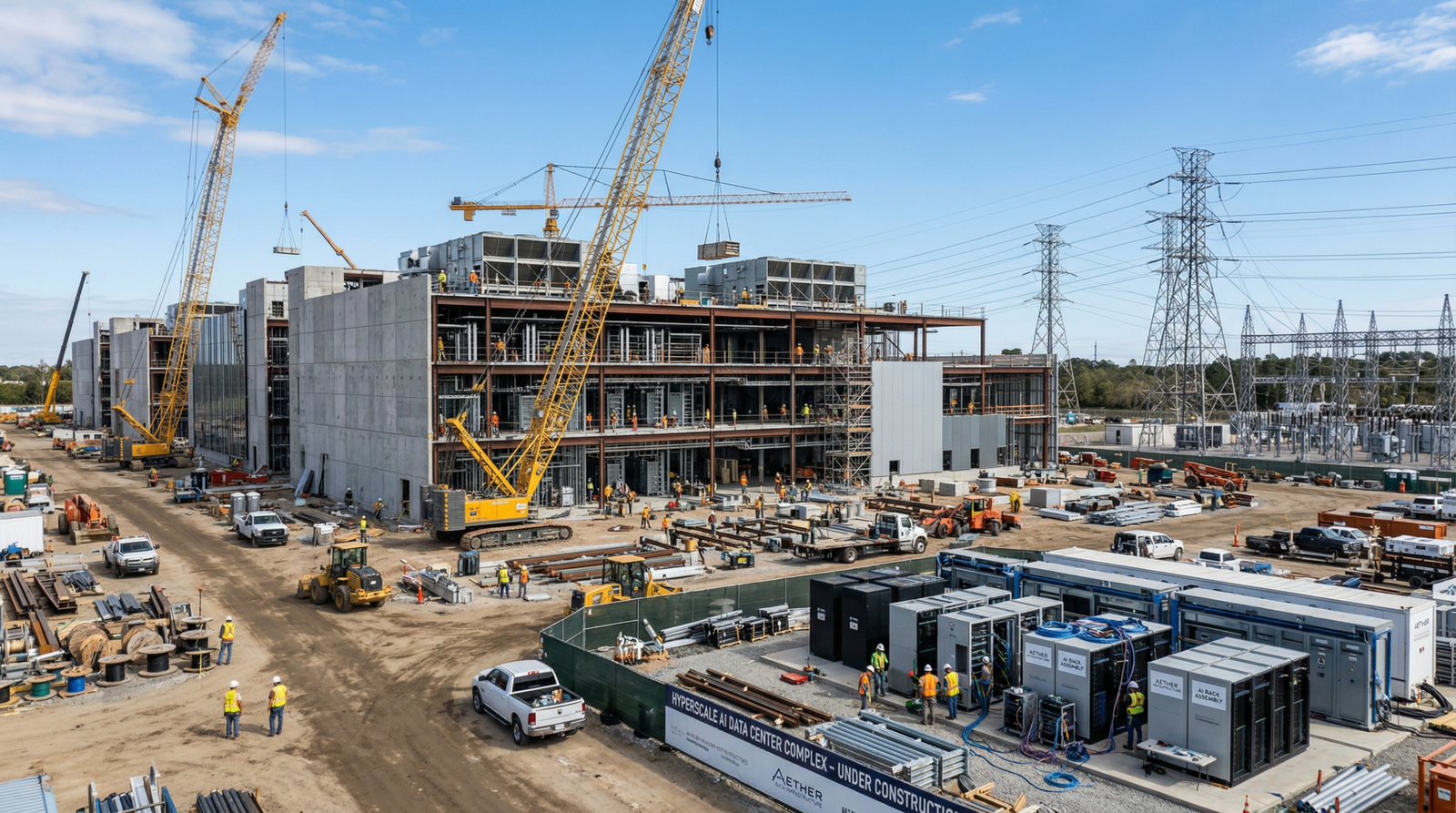
Adam Lewis, managing director at Citizens Bank, emphasized the scale shift: projects now typically require investments starting at $1 billion, a significant jump from the $100 million benchmarks of just a few years ago. The rising cost of land and electricity is a major factor driving these enormous financing requirements, pushing AI infrastructure projects well beyond conventional commercial real estate lending frameworks into large-scale infrastructure finance.
The growing scale of AI data center financing is prompting banks to take coordinated approaches, assembling cross-disciplinary teams to gain deep understanding of the construction and operational complexities associated with these facilities. Internal communications from Citigroup suggest that the buildout of AI infrastructure could reach a staggering $3 trillion by 2030. In response, the bank plans to establish a dedicated AI infrastructure group to streamline operations across investment banking, corporate banking, and financing units.
The financial demands of constructing AI data centers are increasingly stretching the capacities of tech giants, known as hyperscalers, who recognize the necessity of maintaining a competitive edge but cannot fully fund the expansion alone. JPMorgan’s global chair of investment banking, Fred Turpin, described this moment as the “largest investment cycle in the history of capitalism.” Turpin also led a firmwide initiative bringing together technology and energy experts with private capital market bankers to fund projects initially with JPMorgan’s balance sheet and subsequently through long-term institutional investors such as pension funds and sovereign wealth funds.
At Goldman Sachs, the recently formed Capital Solutions Group exemplifies the strategic shifts underway. This team combines origination, structuring, and capital distribution to handle large, complex deals. John Greenwood, head of the infrastructure and real asset finance group, noted that the group collaborates closely with bankers covering sponsors to align financing origination with distribution seamlessly.
Morgan Stanley has also responded with a focused task force on data centers, led by investment bankers Richard Myers and William Graham. Notable deals include a $2.6 billion financing for CoreWeave secured against Nvidia technology and a groundbreaking $27 billion bond issuance for a Meta and Blue Owl joint venture. Additionally, the firm has arranged multibillion-dollar note offerings for infrastructure firms transitioning from crypto mining to AI data hosting.
Bankers face unique challenges owing to the multifaceted nature of AI data centers, which blend real estate, energy consumption, and technology at unprecedented scales. They report acquiring new technical expertise such as interpreting electrical and mechanical diagrams, land use permits, and power configurations. This knowledge is vital to assess the feasibility and risks tied to construction timelines and operational readiness, providing reassurances to investors.
Scott Wilcoxen, head of digital infrastructure investment banking at JPMorgan, explained that understanding the physical reality behind “the cloud”—the continuous physical connections linking users to data sources—is essential.
Constraints such as the availability of power, equipment, and labor do not appear to be dampening demand. Discussions within Wall Street suggest that future developments might extend beyond traditional land-based data centers to more innovative settings, possibly offshore or even in space.
The developments signal a transformative period for Wall Street finance, with significant implications for the technology and infrastructure sectors as they adapt to the enormous capital needs driven by AI advancements.