



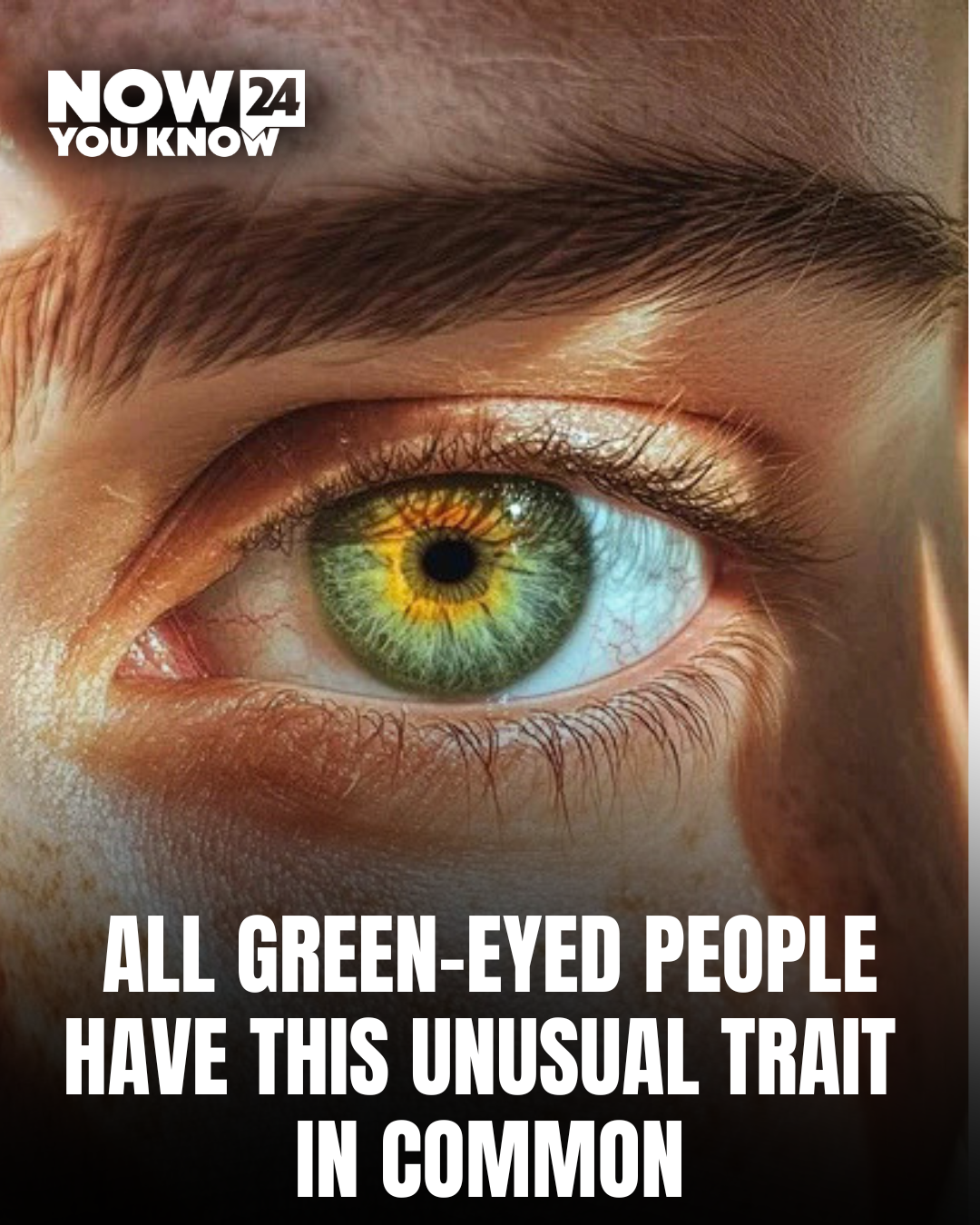

Green eyes are rare, making up only about two percent of the world’s population. Celebrities like Rihanna, Emma Stone, Scarlett Johansson, and Tom Cruise are among the well-known people with this unique eye color.
Scientifically, green eyes result from a combination of low to moderate melanin levels and a genetic mutation. This gives them their distinctive hue and links them to specific ancestral origins.
Research shows that green eyes can be traced back to Siberia around 2,000 years ago, during the Bronze Age. Today, people from the Caucasus region—including parts of Russia, Georgia, Armenia, and Azerbaijan—are more likely to have green eyes.
Like blue eyes, green eyes are influenced by genes HERC2 and OCA2, which control melanin production. Variations in these genes, along with regional genetic differences, determine whether someone develops green eyes.
Blue eyes, by comparison, are more common and result from a separate mutation in HERC2. Studies suggest all blue-eyed people may trace back to a single ancestor who lived between 6,000 and 10,000 years ago near the Black Sea.
Green eyes are also tied to genetic patterns called “haplotypes,” which interact with population-specific polymorphisms. These interactions explain why certain regions have higher frequencies of green-eyed individuals.
Ultimately, green eyes are more than just a striking feature—they reflect a shared genetic heritage and a fascinating story of human migration and ancestry.