




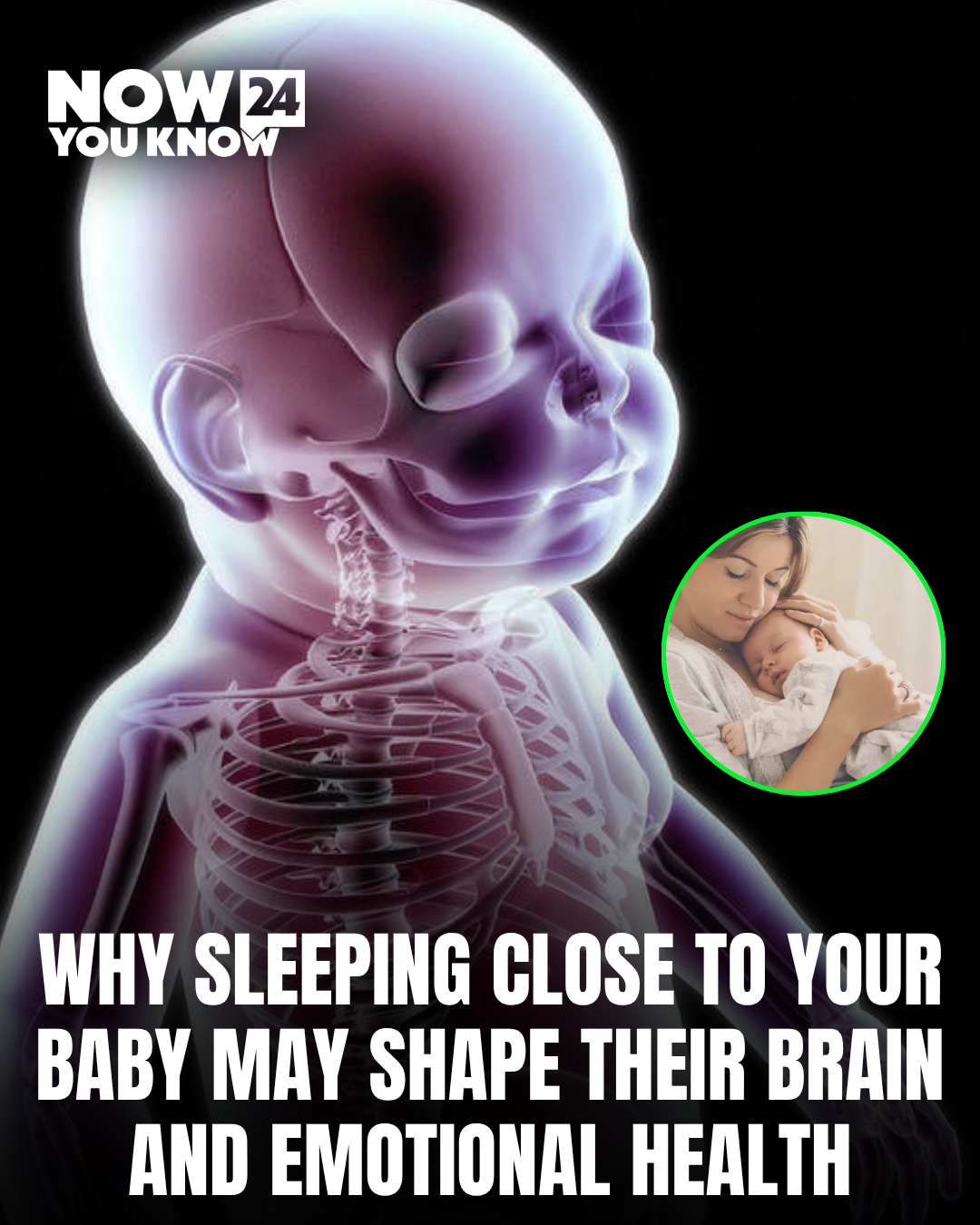

Research suggests that babies who sleep close to a parent receive thousands of extra hours of physical touch during early development — and it may play a bigger role than many people think.
This constant contact is not just about comfort. It sends important signals that help an infant’s nervous system learn how to respond to stress, sound, temperature, and emotions in everyday life.

Touch activates receptors that influence heart rate, breathing, and hormone balance. Studies show that close physical contact is linked to lower cortisol (stress hormone) and higher oxytocin, which supports bonding and overall well-being.
Over time, these changes can help strengthen the immune system and create conditions for healthier growth and reduced stress sensitivity.
Physical closeness also supports brain development. Repeated contact helps build neural pathways related to emotional regulation, attention, and social connection.
When babies feel safe through consistent touch, their brains can shift focus from survival to learning, exploration, and development.
This process contributes to what experts call secure attachment, which is linked to better emotional resilience and stronger relationships later in life.
Experts emphasize that sleeping close does not “spoil” a child — it can provide the regulation and reassurance their developing brain naturally needs in the early years.