




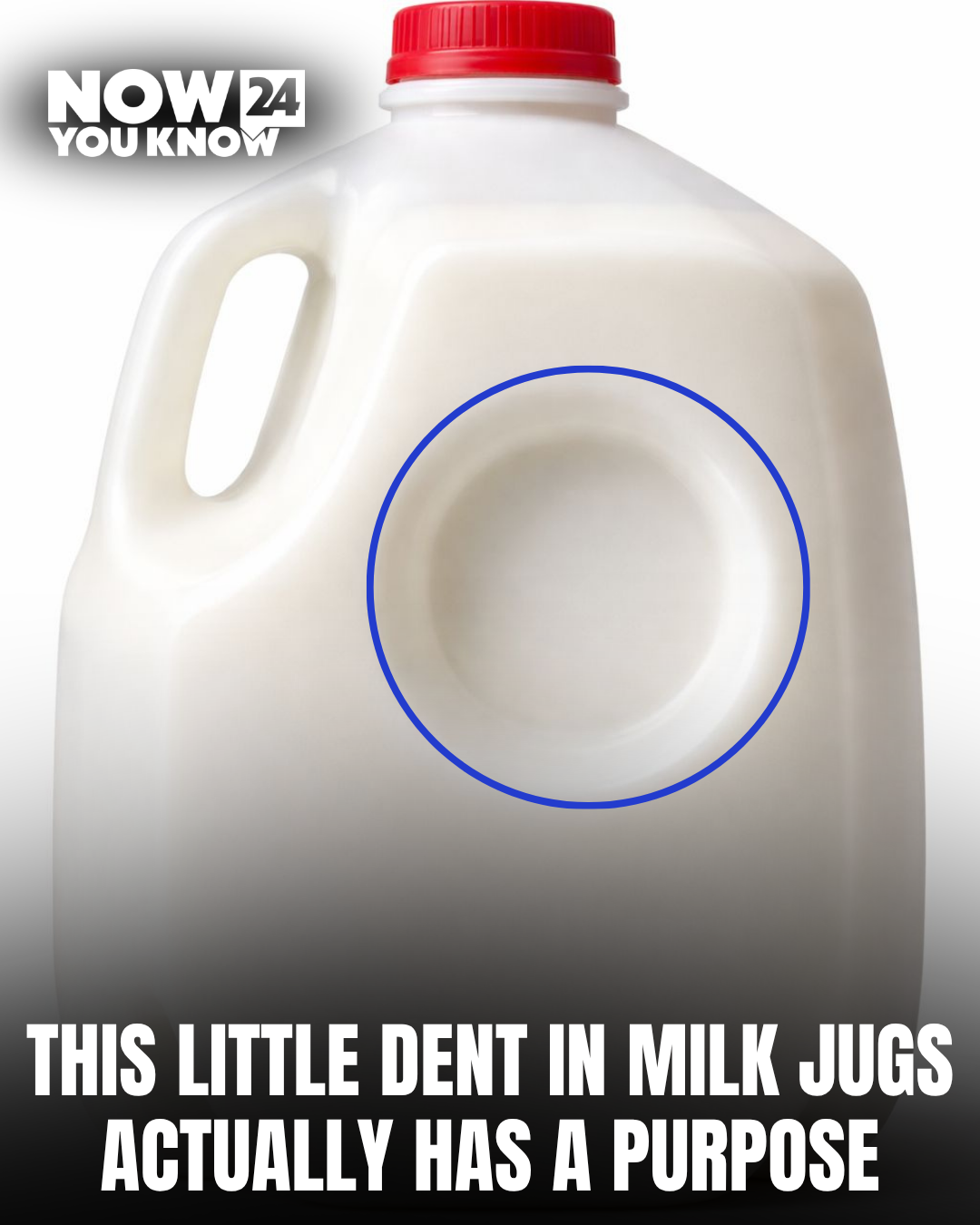

If you have ever looked at a plastic milk jug, you may have noticed a small dent or circular indentation on the side. Many people think it is just part of the design, but it actually serves an important purpose.
The dent is built into the jug to help manage pressure changes. Milk containers are sealed tightly, and temperature changes during transport or storage can cause pressure to build up inside the jug.
When pressure changes, the dent can expand or contract slightly. This helps prevent the container from cracking or leaking. In simple terms, the dent acts like a small safety feature.
It also helps protect the jug if it is dropped. The dent can flex inward, absorbing some of the impact and reducing the chance that the container will burst open.
Another reason for the dent is related to the manufacturing process. The indentation helps the plastic container keep its shape and makes the jug more stable when it is filled with liquid.
Some packaging experts also say the dent allows manufacturers to use slightly less plastic while still keeping the container strong. This reduces material costs and plastic usage.
So that small dent you see on milk jugs is not a mistake or a random design choice. It is actually a smart feature that helps keep the container from breaking, leaking, or changing shape.