




Kering announced on Tuesday that its sales for the fourth quarter of fiscal 2025, ending December 31, decreased by 3% on a constant currency basis to €3.9 billion. This result outperformed the market consensus, which anticipated a 5% decline, leading to an 11% increase in Kering’s stock in early trading.
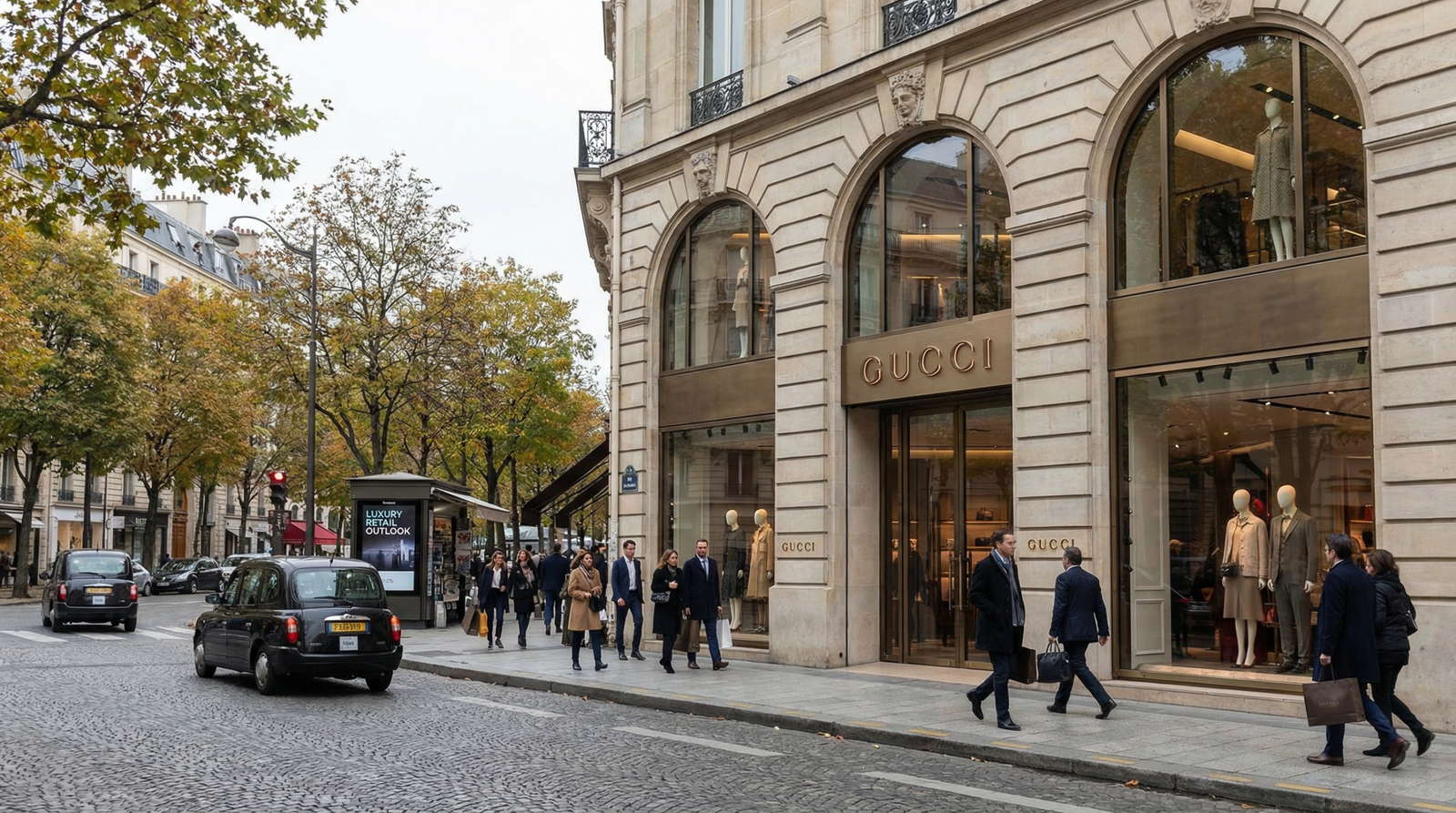
The luxury group’s largest brand, Gucci, experienced a 10% drop in sales year-over-year for the quarter, though this was better than the expected 11.5% decline. The launch of the La Famiglia collection, introduced in September 2025 and steadily released from early January, was noted as a factor that helped bolster interest in the Gucci label. Gucci’s new artistic director, Demna, is scheduled to unveil the Fall/Winter 2026 season show on February 27.
Other brands in Kering’s portfolio showed varied performance in the quarter. Saint Laurent’s sales remained stable, continuing an upward trend, while Bottega Veneta’s revenues increased by 3%. The group’s “other houses” segment, including names like Balenciaga, Alexander McQueen, and Boucheron, also grew by 3%. Additionally, Kering’s eyewear and corporate sales rose by 2%.
Analysts view these developments as signs of incremental improvement across Kering’s brand portfolio. Bernstein luxury goods analyst Luca Solca commented that whether this signals a broader turnaround, particularly for Gucci’s anticipated growth in 2026, remains a key point of investor focus.
Regionally, sales in the Asia-Pacific area decreased by 6%, Japan saw a 7% decline, and Western Europe also fell by 7%. Conversely, sales in North America increased by 2%, while other global markets grew by 3%.
Comparisons with other luxury conglomerates indicate differing trends; LVMH recorded 1% organic sales growth in Q4 to approximately €22.7 billion, despite a 3% fall in its fashion and leather goods segment. Richemont noted an 11% rise in sales on a constant exchange rate basis for the same period. Hermès is expected to release its Q4 results on February 12.
For the full year 2025, Kering’s revenue totaled €14.7 billion, a 10% decline compared to the previous year. Gucci’s annual sales dropped 19% to €6 billion, Saint Laurent’s decreased 6% to €2.6 billion, while Bottega Veneta’s increased 3% to €1.7 billion. Sales from other houses declined 6% to €2.9 billion. The group’s recurring operating income for 2025 was €1.63 billion, down 33% year-on-year.
Kering’s CEO Luca de Meo, who joined the company in September 2025, emphasized that the year’s performance did not reflect the full potential of the group. He outlined steps taken in the second half of the year, including strengthening the balance sheet, cost reductions, and strategic decisions aimed at laying the groundwork for future growth.
De Meo reiterated that the company’s detailed strategy will be presented at Kering’s Capital Markets Day on April 16. He affirmed the team’s commitment to making Kering leaner and faster in 2026, with priorities on enhancing brand positioning, increasing sales, rebuilding margins, and boosting cash flow to support sustainable long-term value.
Market sentiment has turned more optimistic since the leadership changes, with Kering shares outperforming the luxury sector in 2025 after previous underperformance. Citi managing director Thomas Chauvet noted the rise as a “hope trade” following the appointments of Luca de Meo as CEO and Demna as Gucci’s creative director. Current consensus projects a 5% increase in group sales for 2026, including Gucci’s anticipated 5% growth.
Kering’s latest financial results and management’s outlook indicate ongoing efforts to navigate market challenges while positioning the group for recovery and future expansion.