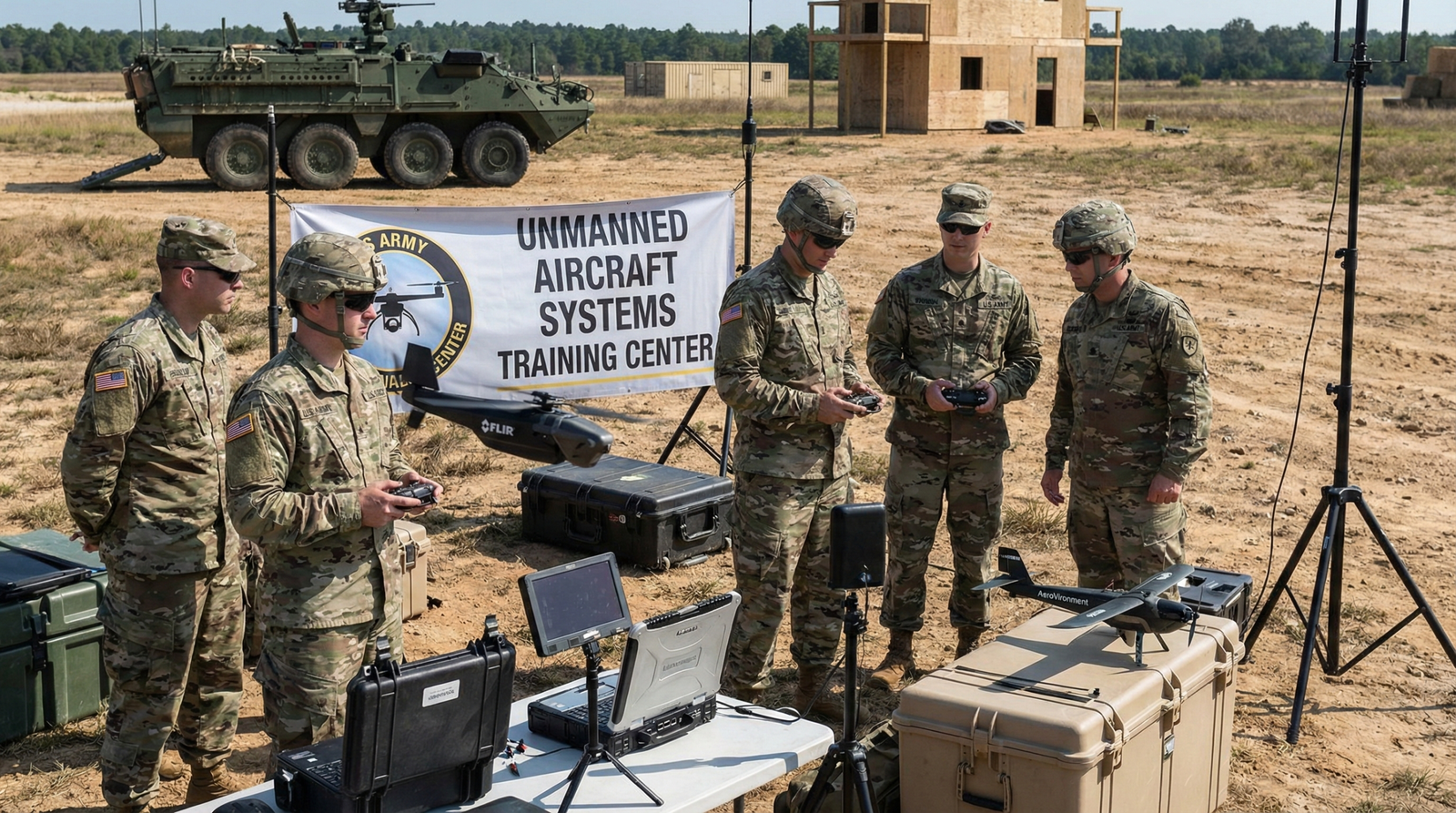

Leaders at the US Army’s drone training program are emphasizing the importance of modular and easily upgradeable equipment to keep pace with the rapidly evolving demands of modern warfare. The Army’s Unmanned Advanced Lethality Course, which trains soldiers to operate small drones effectively, is focused on ensuring that the gear used can be quickly adapted and enhanced to meet mission requirements.
Maj. Wolf Amacker, head of the Army’s Unmanned Aircraft Systems and Tactics Branch at the Aviation Center of Excellence, explained that the Army prefers to work with defense contractors who produce modular systems. These systems allow parts—both hardware and software—to be swapped or upgraded without the need to replace an entire platform. Amacker stresses that if companies cannot produce interoperable tools, such as a single arming device usable across multiple drone types, the Army will seek other partners.
“Modularity gives soldiers more flexibility in deploying and employing their weapons,” Amacker said. He further highlighted the desire to collaborate with companies that are open to evolving their equipment in alignment with soldiers’ operational needs, rather than offering rigid, one-size-fits-all solutions.
Maj. Rachel Martin, director of the Unmanned Advanced Lethality Course, echoed these views. She noted that both tactics and technology in drone warfare have been shifting at an unprecedented rate, especially over the past two years. Martin observed that industry partners who actively listen to soldier feedback and make rapid adjustments—sometimes overnight—are succeeding. Conversely, equipment that is not modular or adaptable risks being excluded from Army programs.
This emphasis on modularity and rapid adaptability is strongly influenced by lessons learned from recent conflicts, such as Russia’s invasion of Ukraine. The fast-changing battlefield dynamics have forced many arms and drone manufacturers to redesign their approaches to enable quick upgrades and modifications.
Companies like Milrem Robotics and Granta Autonomy, who have supplied systems to Ukrainian forces, have prioritized software-first, modular designs. These allow soldiers to swap parts and update software remotely with minimal downtime. Ukrainian troops have expressed the need for flexible systems that can be customized on the front lines. For example, the Da Vinci Wolves Battalion uses ground robots configurable for a variety of missions, from evacuation to offensive operations.
Industry leaders such as Gediminas Guoba, CEO of Granta Autonomy, have noted that relying solely on new hardware development is insufficient due to the lengthy production cycles. Instead, they focus on building platforms that remain relevant over time through continuous software updates. Similarly, Matt McCrann, CEO of DroneShield’s US branch, stated that the pace of drone and counter-drone development has accelerated significantly, shortening innovation cycles to weeks rather than months or years.
Patrick Shepherd, chief sales officer at Milrem Robotics, emphasized that their robots are intentionally designed for multiple roles rather than single-use purposes, enabling users to adjust configurations rapidly to suit mission demands. This flexible design contrasts with traditional monolithic systems that require extensive overhauls for new tasks.
Overall, the US Army’s drone training leadership underlines that future battlefield success requires partnerships with industry leaders committed to creating modular, interoperable, and adaptable unmanned systems that can evolve in real time with soldier feedback and operational changes.