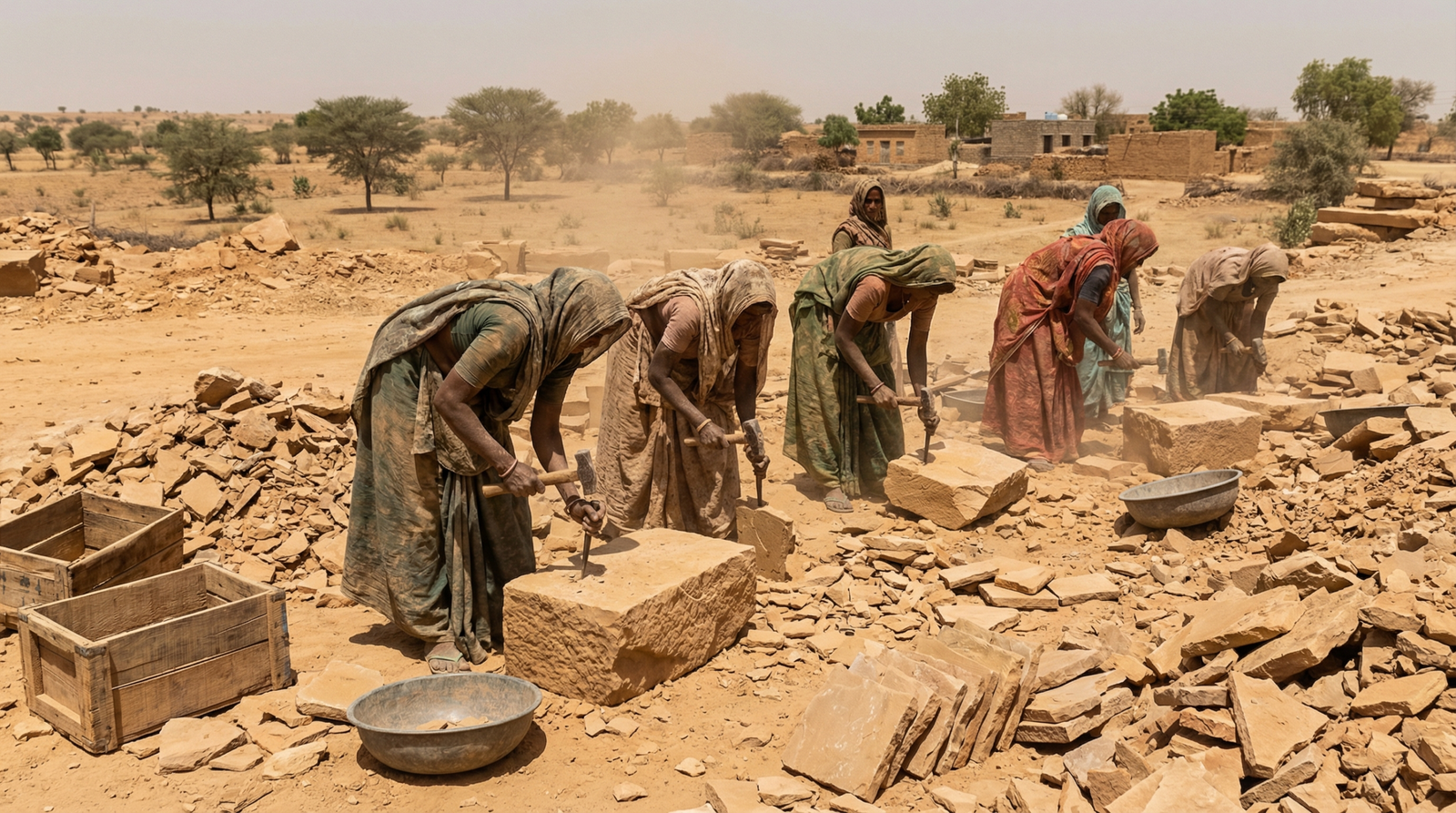

In a village near Bhil-Basti in Rajasthan, India, many widows are working in sandstone quarries—the same hazardous environment that caused their husbands’ deaths. Silicosis, a lung disease triggered by inhaling fine silica dust generated during sandstone mining, has claimed the lives of numerous men in the area. These widows, including individuals like Bimla, Sapna, and Radha Bai, now work in the mines despite the deadly health risks and minimal pay, compelled by overwhelming debt and the need to support their families.
Silicosis scars lung tissue and progressively impairs breathing. According to a 2020 report, many miners in Rajasthan die before reaching the age of 40 due to this incurable disease. Independent estimates suggest more than half of the workers in these mines suffer from silicosis, with as many as 800,000 people in the state potentially affected.
In the small village of about 30 households, Business Insider observed that 20 women had become widows from silicosis-related deaths. Bimla, in her late twenties, works breaking sandstone into tiles, a job once held by her late husband who died from the disease in 2021. She earns about 7,000 rupees ($80) monthly, which supports herself and her four children, but this income is barely sufficient.
Despite the state’s provision of 25 kilograms of grain per month, Bimla says this aid does not meet her household’s needs. She often goes hungry to ensure her children are fed. In addition to daily living expenses, she is burdened with debt exceeding 100,000 rupees ($1,100), which she has taken out to cover medical bills, funerals, and daily necessities. Approximately 3,000 rupees ($33) per month go toward repaying loans, much of which were initially accrued by her husband.
Sapna, another widow from the same village, faces a similar plight. Both her husband and daughter died due to silicosis, with her daughter passing away at just 20 years old. Despite her deteriorating health and diagnosis of silicosis, Sapna continues to work when possible, earning about 300 rupees ($3) per day. She is trapped in debt to a quarry owner who charges an exorbitant 70% interest and demands payments every two weeks. Over time, she has lost track of the total amount owed and sees little hope of repayment.
Radha Bai, in her sixties and also a widow, began quarry work in 1983. Her husband died from silicosis a few years later. She produces around 30 sandstone tiles daily for about 30 cents. Illiterate and lacking other job opportunities, she continues this labor to support herself. Radha Bai expressed deep sadness over her status as a widow and the loss of her husband.
The mining industry in Rajasthan is vast, with over 960 million tons of sandstone valued at more than $160 billion. In recent years, sandstone exports have reached approximately $59 million. Despite this, workers receive low wages—women generally earn about half of what men do—and are often bound by debt to quarry operators and local moneylenders.
According to activist Rana Sengupta, who leads the Mine Labour Protection Campaign, this cycle of debt and forced labor amounts to a contemporary form of slavery. Mine owners lease land from the government and work with contractors to recruit workers and extend loans, creating a system that exploits laborers without safeguarding their rights or health.
Efforts to obtain official responses from Rajasthan’s Ministry of Mines, Department of Labor, and other relevant agencies on debt bondage and silicosis aid were unsuccessful. Many contact numbers were unreachable, and inquiries to government officials were met with silence or disconnection.
The widows and workers in these sandstone quarries continue to face hazardous working conditions, health risks, and financial hardship with limited access to assistance or alternative employment options. Many hold firm to the hope of providing education for their children to break the cycle of mining-related suffering.