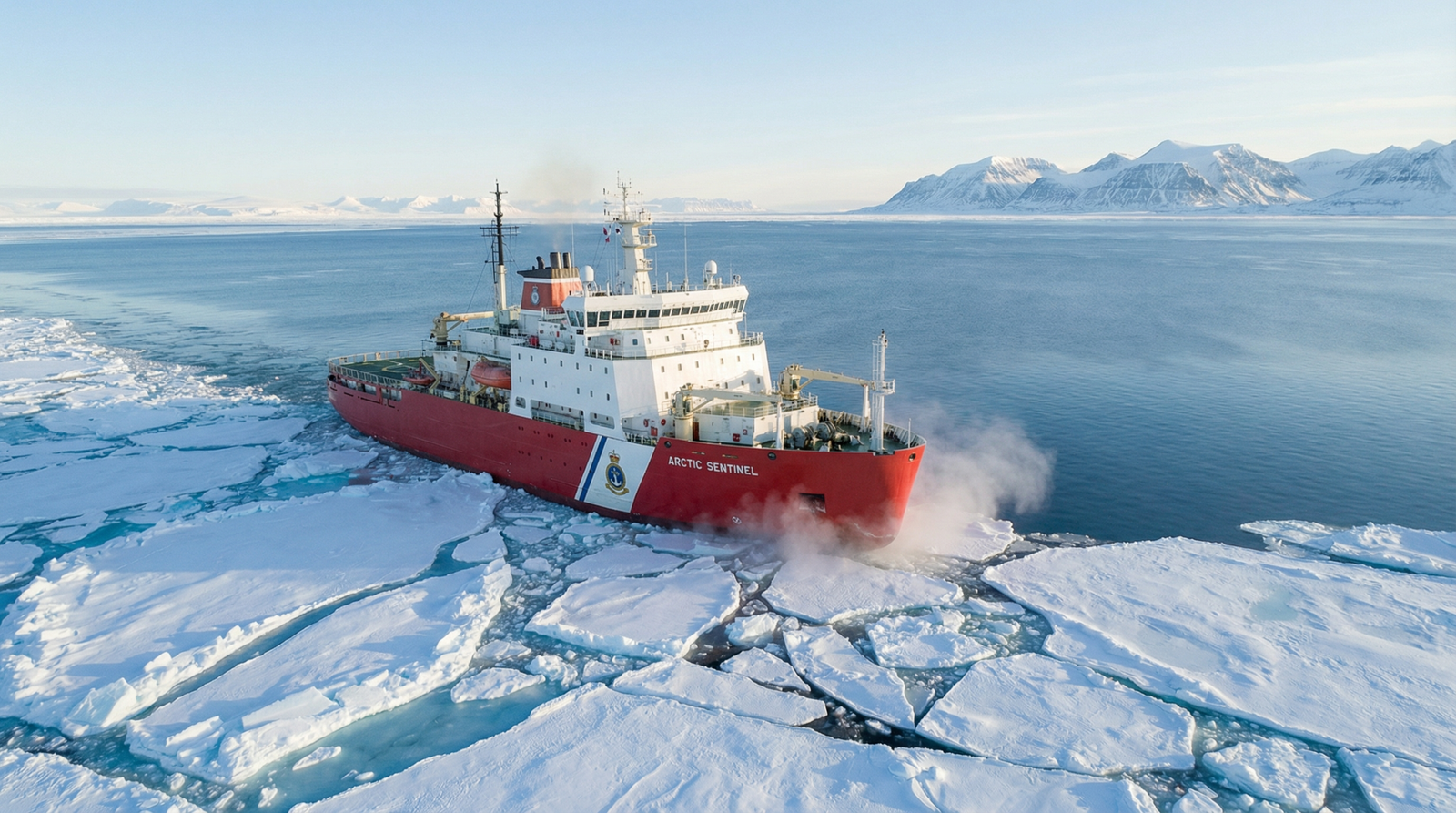

NATO is currently behind Russia and China in building icebreaker ships, which are essential for operating in the Arctic—a region of growing strategic importance, according to Vice Admiral Rune Andersen, chief of the Norwegian Joint Headquarters. In a recent interview, Andersen highlighted this shortfall as a major capability gap that NATO must address to maintain operational readiness in the Arctic.
Icebreakers are specialized ships designed to navigate and break through sea ice, allowing access to crucial maritime routes, natural resource extraction areas, and strategic military zones in the frozen north. Andersen noted that Russia and China are progressing with icebreaker construction at a scale that far outpaces Western efforts. Russia boasts approximately 40 icebreakers, the largest fleet globally, while China has around five and is actively working with Russia to expand its presence in the region.
In comparison, the United States operates only one heavy polar icebreaker, supplemented by several smaller vessels. A report from the U.S. Coast Guard flagged the existing fleet as insufficient for current operational demands, posing a risk to national security. The Trump administration recognized this deficiency and prioritized expanding the fleet, announcing plans to acquire additional vessels, including ordering four Arctic Security Cutters from Finland and constructing seven more domestically using Finnish expertise.
NATO allies collectively have several icebreakers, contributed mainly by Canada, Finland, and other member countries, which somewhat narrows the gap. However, many of these vessels are nearing or exceeding their design life, and Russia’s fleet is believed to be more robust and specialized for heavy ice operations compared to those of the alliance.
While Russia may possess a numerical advantage in maritime platforms suited for the Arctic, a NATO official speaking anonymously indicated that Moscow faces its own readiness challenges affecting the deployment of its fleet. This situation creates complex strategic considerations regarding Russia’s ability to project power effectively in the region.
NATO member states are conscious of the icebreaker deficit and are taking tangible steps to enhance their capabilities. Finland remains a global leader in icebreaker design and construction, having produced the majority of the world’s fleet. Their expertise is instrumental in Western efforts to modernize and expand Arctic naval assets.
Beyond icebreakers, NATO allies are investing in other technologies to strengthen their Arctic presence. These investments include enhanced surveillance systems, unmanned aerial vehicles, satellites, and cold-weather resilient vehicles. The alliance has also increased the scope of its Arctic training exercises and deterrence operations to better prepare forces for the region’s challenging environment and evolving security dynamics.
As tensions persist and activity increases in the Arctic, NATO’s ability to keep pace with Russia and China in icebreaker capabilities remains central to maintaining operational effectiveness and strategic balance in this critical area.