




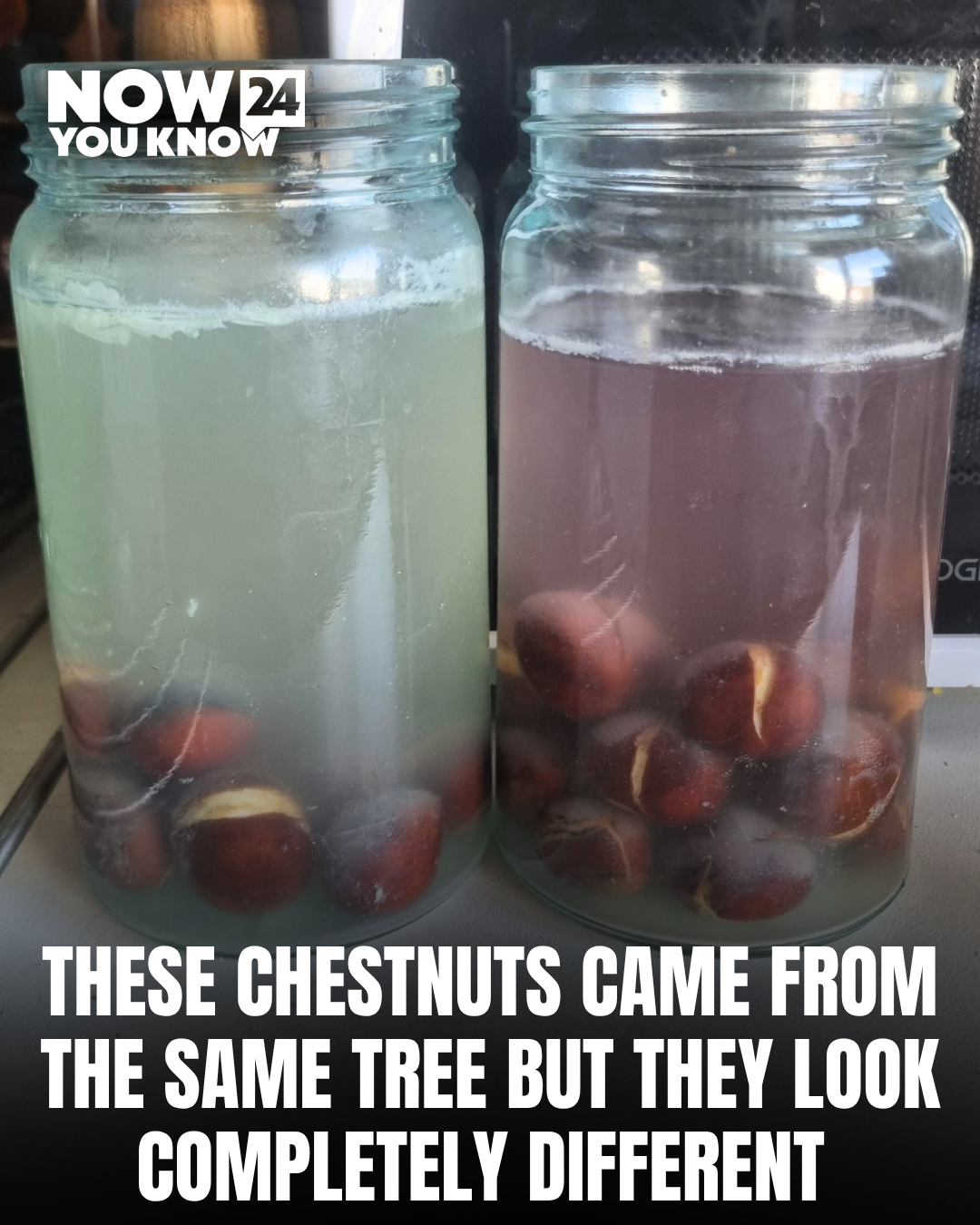

A seemingly simple experiment has captured attention online after revealing an unexpected result. Two jars filled with water and horse chestnuts appear strikingly different, despite the nuts coming from the same tree.
In the image, one jar contains cloudy, pale greenish water, while the other displays a clearer liquid with a reddish-purple tint. The surprising contrast has sparked curiosity, leaving many wondering how identical chestnuts could produce such different outcomes.
The explanation lies in the natural compounds found inside horse chestnuts. These nuts contain tannins and saponins, substances that are released when soaked in water and can alter its color, clarity, and texture over time.
Even when harvested from the same tree, no two chestnuts are chemically identical. Variations in maturity, sunlight exposure, and nutrient absorption can affect how strongly each nut releases pigments and residues into the water.
Another contributing factor is oxidation, a process that occurs when plant compounds react with oxygen. This reaction can darken or discolor the water, much like how a cut apple turns brown after being exposed to air.
The cloudy appearance seen in one jar may also result from fine particles or natural starches dissolving into the liquid. Differences in temperature, soaking time, or water composition can further influence the final result.
Although visually intriguing, horse chestnuts are toxic if consumed and should not be eaten. They are commonly used for educational experiments and traditional crafts rather than for food.
What appears unusual at first glance is actually a reminder of nature’s complexity. Even under identical conditions, subtle biological differences can lead to surprisingly distinct results.