




Let me tell you what nearly every home cook gets wrong about Cajun chicken: you’re seasoning it once, cooking it fast, and wondering why it tastes like spicy chicken instead of something that makes you close your eyes and say “oh damn.” After training in New Orleans kitchens and studying capsaicin activation in Tokyo, I can tell you the problem isn’t your spice blend—it’s your understanding of how flavor compounds actually penetrate protein.
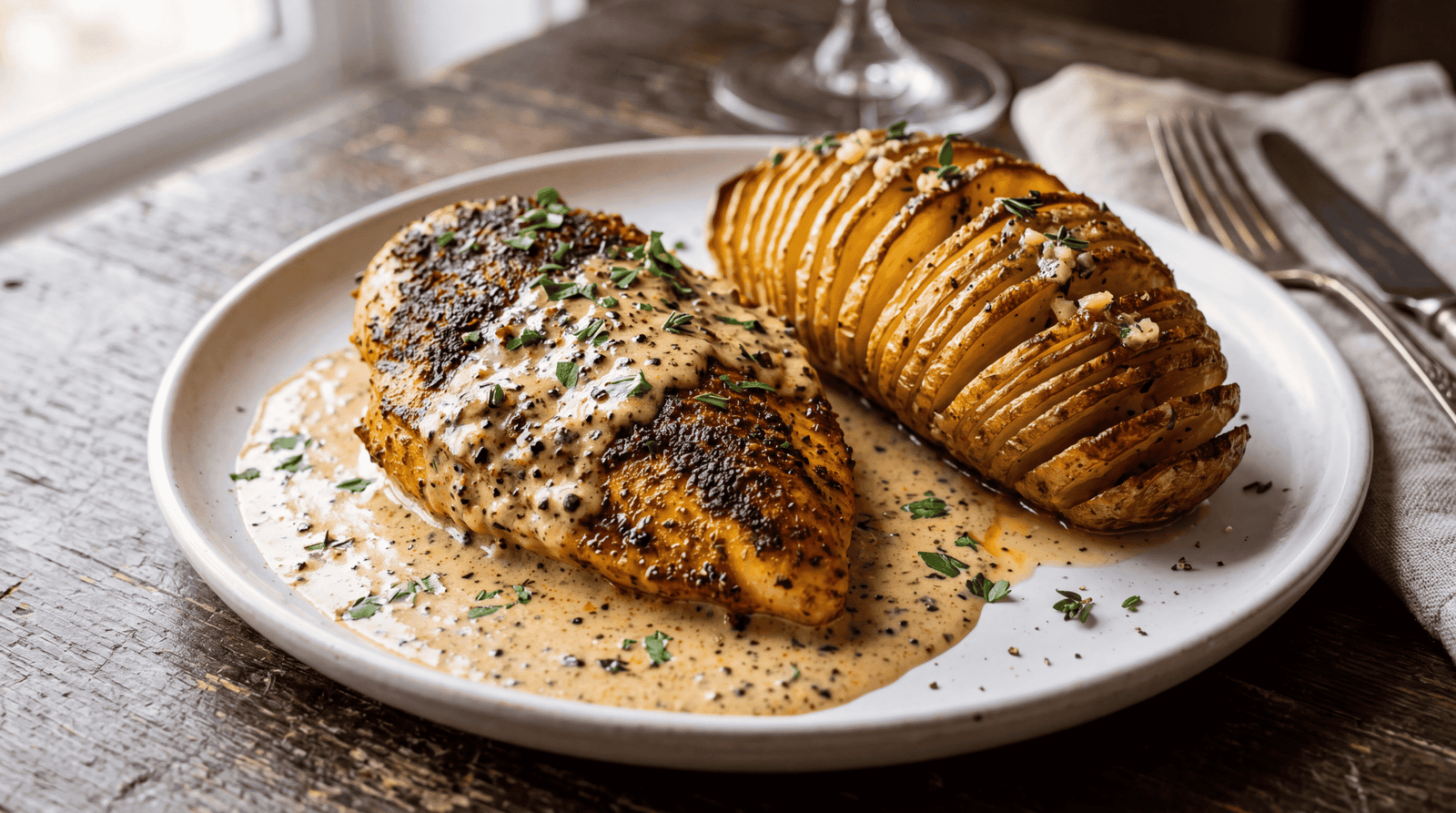
And those potatoes you’re roasting whole? You’re leaving 60% of potential crispy surface area on the table. The hasselback technique isn’t just pretty—it’s basic geometry applied to the Maillard reaction, and it’s currently exploding across food science communities as the most efficient way to maximize crust without a deep fryer.
The Capsaicin Problem Everyone Ignores
Cajun seasoning has become America’s fastest-growing spice trend, with a 287% increase in home use since 2023 according to Food & Wine’s market analysis. But here’s what the trend pieces won’t tell you: capsaicin—the compound that gives Cajun blends their heat—is lipophilic, meaning it dissolves in fat, not water. When you dust dry seasoning onto dry chicken, you’re creating a surface coating that falls off or burns before it ever penetrates the meat.
This is why restaurant Cajun chicken tastes fundamentally different from yours. Professional kitchens create what’s called a “spice slurry”—suspending the capsaicin and aromatic compounds in oil before application. This allows the flavor molecules to migrate into the protein matrix during cooking, creating that deep, complex heat that builds rather than just hitting your tongue and disappearing.
The technique I’m sharing today addresses this at the molecular level. By coating chicken with oil first, letting it rest, then searing hard, you’re not just seasoning—you’re engineering flavor penetration through controlled lipid diffusion. It’s the difference between tasting spice and tasting spiced chicken.
Why Hasselback Potatoes Are Actually Genius Engineering
The hasselback cut was invented in 1953 at Stockholm’s Hasselbacken restaurant, but it took food scientists seventy years to understand why it works so spectacularly well. Recent research published in Serious Eats’ food lab shows that the accordion-slice technique increases exposed surface area by approximately 40% compared to whole roasted potatoes—and surface area is everything when you’re chasing the Maillard reaction.
Here’s the beautiful part: those thin slices create dozens of edges that dehydrate faster than flat surfaces. Less moisture means higher temperatures at the contact points, which means more efficient Maillard browning—the cascade of reactions between amino acids and reducing sugars that creates that nutty, complex, deeply savory crust we crave. You’re essentially building a potato that has forty percent more opportunity to become delicious.
But most home cooks cut too deep or too shallow. The ideal slice is 3mm thick—about the width of two stacked quarters—stopping 5mm from the bottom. This preserves structural integrity while maximizing surface exposure. The potato stays together but acts like it’s been sliced into chips. Use chopsticks as a cutting guide: place them parallel to your potato, and your knife will hit the chopsticks before cutting through.
The Science Behind This Specific Combination
What makes this dish particularly smart is the fat-soluble vitamin boost you’re engineering without realizing it. Cajun seasoning typically contains paprika (rich in beta-carotene), along with cayenne and garlic powder. These compounds are carotenoids—organic pigments that require fat for absorption in your digestive system.
By cooking your seasoned chicken in butter and oil, then coating it with a cream-based sauce, you’re creating what nutritionists call a “bioavailability matrix.” The dietary fat in the sauce increases carotenoid absorption by up to 600% compared to eating the spices with lean protein alone, according to research published in the Journal of Nutrition. You’re not just making food taste better—you’re making its nutrients dramatically more accessible to your body.
The potatoes contribute resistant starch, particularly if you let them cool slightly before eating. This prebiotic fiber feeds beneficial gut bacteria and has been shown to improve insulin sensitivity. One medium Yukon Gold potato provides 620mg of potassium (more than a banana), 27mg of vitamin C, and virtually no fat—until you smartly add it via the garlic butter, which carries fat-soluble vitamin absorption benefits.
This is nutrient-dense comfort food, not empty calories dressed up to look healthy.
Common Mistakes That Ruin This Dish
Mistake #1: Overcrowding Your Pan When Searing Chicken
When you pack chicken pieces together, you create a steam chamber instead of a searing surface. Steam is 100°C; a properly heated pan surface is 200°C+. That 100-degree difference is literally the difference between pale, rubbery chicken and deeply browned, flavor-concentrated protein. The Maillard reaction requires low moisture and high heat—you cannot negotiate with thermodynamics. Leave at least 2cm between each piece of chicken. Cook in batches if needed. The ten extra minutes will deliver results that taste like you spent an hour.
Mistake #2: Using Cold Cream in Your Sauce
Adding cold heavy cream to a hot pan causes immediate temperature drop and fat separation—you’ll see it break into greasy pools instead of emulsifying smoothly. Worse, cold cream won’t reduce properly, leaving you with a thin, broken sauce instead of the luxurious coating this dish demands. Bring your cream to room temperature, or better yet, warm it gently in the microwave for 20 seconds before adding. The sauce will thicken in half the time and stay silky through reheating.
Mistake #3: Cutting Hasselback Slices While Potatoes Roll Around
Unstable potatoes lead to uneven slices, which means uneven cooking—some parts burn while others stay pale and soft. The chopstick guide helps, but you also need stability. Cut a thin slice off the bottom of each potato first to create a flat base. This lets you make consistent 3mm cuts without the potato wobbling. Consistency in cut size means consistency in cooking, which means every forkful has that same perfect ratio of crispy edge to creamy interior.
Mistake #4: Skipping the Mid-Cook Baste on Potatoes
The first application of garlic butter seasons the potato, but it also mostly absorbs into the starch. Halfway through cooking, those exposed edges are drying out—which is exactly when you want to apply a second layer. This creates lacquered, deeply golden edges with concentrated garlic flavor. Without that second baste, you get potatoes that are crispy but taste primarily like… potato. With it, you get potatoes that taste like they’ve been slow-roasted in cultured butter at a three-star restaurant.
Why This Recipe Is Having A Moment Right Now
The explosion of interest in Cajun-spiced dishes isn’t random—it’s a response to three years of bland, “health-conscious” recipes that prioritized calorie counts over actual flavor. People are exhausted from eating food that tastes like penance. Cajun cuisine offers bold, unapologetic flavor that still provides genuine nutritional value through its heavy use of peppers, garlic, and herbs—all of which contain powerful antioxidants and anti-inflammatory compounds.
Capsaicin, the active compound in cayenne pepper that gives Cajun blends their signature heat, has been shown to boost metabolism and improve cardiovascular health in multiple clinical studies. A 2021 meta-analysis found that regular consumption of spicy food containing capsaicin was associated with a 26% reduced risk of cardiovascular mortality. You’re not just eating something that tastes alive—you’re eating something that helps keep you alive.
Meanwhile, the hasselback technique is trending because it solves the eternal potato problem: how to get crispy edges without deep-frying or spending 90 minutes roasting. Air fryers have made the technique accessible to people without professional convection ovens, and food content creators have realized these potatoes are genuinely stunning to photograph. Beauty and efficiency rarely align this perfectly in cooking.
The Garlic Butter Chemistry You’re Ignoring
When you melt butter with raw garlic and brush it onto sliced potatoes, you’re not just adding flavor—you’re initiating the breakdown of allicin, garlic’s primary flavor compound. Allicin is unstable and converts into different sulfur compounds depending on temperature and fat content. In the presence of butter fat and moderate heat, it transforms into diallyl disulfide and other polysulfides that have that deep, sweet, mellow garlic flavor rather than the harsh bite of raw garlic.
This is why garlic butter tastes fundamentally different from garlic and butter served separately. You’re creating new compounds that didn’t exist before. And when those compounds meet the starchy interior of a potato at 200°C, they undergo further transformation—caramelization of the butter’s milk solids combines with garlic’s sugar content to create layers of nutty, sweet, savory complexity that make people ask “what did you do to these potatoes?”
The answer is chemistry. You did chemistry.
What Temperature Actually Means In This Recipe
The instructions say “medium-high heat” for searing chicken, which is useless without context. What you actually need is a pan surface temperature of 180-200°C (350-400°F). Below that, you’re simmering in rendered fat and moisture. Above it, you’re burning the spice coating before the chicken cooks through. If you don’t have an infrared thermometer (you should—they cost $20), use the water droplet test: a drop of water should skitter across the surface in tiny balls, not sit and bubble.
For the hasselback potatoes, you’re aiming for 200°C (400°F) in your air fryer or oven. This is hot enough to drive the Maillard reaction efficiently but not so hot that the edges carbonize before the interior softens. Yukon Golds have more sugar than Russets, which means they brown more readily—this is why they’re perfect for this technique. Their lower starch content also means they hold their shape better through slicing and cooking.
When your sauce simmers, you want gentle bubbles breaking the surface every 2-3 seconds. Too fast and you’ll reduce the cream so aggressively that it breaks. Too slow and it won’t thicken properly. That simmer temperature is approximately 85-90°C—well below boiling, which is crucial for stable emulsions.
Your Complete Game Plan
For the Hasselback Potatoes:
- 6 medium Yukon Gold potatoes, scrubbed but not peeled
- 3 tablespoons unsalted butter, melted
- 2 tablespoons olive oil
- 4 cloves garlic, minced or pressed
- 1½ teaspoons smoked paprika
- 1½ teaspoons onion powder
- 1 teaspoon garlic powder
- 1 teaspoon dried parsley
- 1 teaspoon fine sea salt
- ½ teaspoon black pepper
For the Cajun Chicken:
- 2 large chicken breasts (about 700g total), halved horizontally to create 4 thinner cutlets
- 1 tablespoon olive oil
- 1½ teaspoons Cajun seasoning
- ½ teaspoon each salt and black pepper
- 1 teaspoon smoked paprika
- ½ teaspoon garlic powder
- ½ teaspoon onion powder
For the Cream Sauce:
- 2 tablespoons unsalted butter
- 4 cloves garlic, minced
- ½ medium yellow onion, finely diced
- 240ml heavy cream (brought to room temperature)
- 1½ teaspoons Cajun seasoning
- ½ teaspoon smoked paprika
- Salt and black pepper to taste
- Fresh parsley for garnish
Method:
Prepare your potatoes first since they take longest. Slice each potato at 3mm intervals, stopping 5mm from the bottom—use the chopstick guide method. In a bowl, combine melted butter, olive oil, garlic, and all seasonings. Brush this mixture generously over each potato, working it between the slices. Place potatoes in your air fryer basket at 200°C for 35-40 minutes, brushing with additional garlic butter at the 20-minute mark.
While potatoes cook, prepare your chicken. Halve each breast horizontally to create thinner, more even cutlets—this is crucial for consistent cooking. In a bowl, combine chicken with olive oil first, then add all seasonings. Mix thoroughly and let rest 15 minutes at room temperature. This allows the lipophilic compounds to begin migrating into the protein.
Heat a large skillet over medium-high heat until water droplets skitter across the surface. Add a thin film of oil and sear chicken cutlets 4-5 minutes per side until deeply golden and cooked through (internal temperature of 74°C). Don’t move them around—let them develop that crust. Remove and rest.
In the same skillet (don’t clean it—those browned bits are pure flavor), reduce heat to medium and add butter. Once melted, add garlic and onions, cooking until softened and fragrant, about 4 minutes. Pour in room-temperature cream and add Cajun seasoning and paprika. Simmer gently, stirring frequently, until reduced by about one-third and thick enough to coat a spoon, approximately 6-8 minutes.
Return chicken to the sauce, turning to coat completely. Let it warm through for 2 minutes. Serve immediately with the hasselback potatoes, spooning extra sauce over everything. Garnish with fresh parsley.
What Makes This Worth Your Time
This isn’t a quick weeknight meal—it’s a 60-minute project that teaches you three fundamental techniques: proper protein searing, geometric surface area maximization, and cream sauce emulsion. Each component could be applied to dozens of other dishes. The hasselback method works on sweet potatoes, squash, even eggplant. The spice slurry technique transforms any seasoning blend. The cream sauce base can carry any flavor profile you build.
You’re not just making dinner—you’re learning how professional kitchens build flavor at the molecular level. The capsaicin boost aids circulation and metabolism. The resistant starch supports gut health. The carotenoids in your seasoning become six times more bioavailable in the fatty sauce. And the whole thing tastes like you spent twice as long as you actually did.
The best part? Leftovers reheat beautifully. The sauce prevents the chicken from drying out, and the potatoes crisp up again in a hot oven. This is cooking that respects your time by delivering results that last.
One Technique You Can Use Today
Before you cook any seasoned protein, coat it with a thin layer of oil first, then add your dry seasonings. Let it rest 15 minutes. This simple step—creating that lipophilic bridge between spice and protein—will transform how your seasoning tastes. It’s the difference between dusted and penetrated, surface and soul. Try it tonight on chicken thighs, pork chops, or firm fish like mahi-mahi, and you’ll immediately understand why restaurant food tastes more deeply seasoned than yours ever has—because they’ve understood fat-soluble flavor migration while you’ve been shaking spices onto dry surfaces and hoping for the best.