
Let me tell you what home cooks have been getting wrong about pasta for decades: you think the sauce and the pasta are separate entities that merely coexist on a plate. This viral TikTok baked feta pasta? It accidentally taught millions the fundamental truth that Italian nonnas have known forever—emulsification is everything, and fat is the conductor of an orchestra where tomatoes sing soprano and cheese provides the bass notes.
When this recipe exploded across TikTok in 2021, causing Finnish grocery stores to sell out of feta overnight, food snobs dismissed it as internet nonsense. They were catastrophically wrong. This dish went viral because it makes restaurant-quality emulsified pasta sauce foolproof for anyone with an oven and a baking dish.
The Molecular Magic Behind the Viral Phenomenon
Here’s what happens in that 400-degree oven that you cannot replicate on the stovetop without serious skill: the tomatoes undergo enzymatic breakdown at precisely the temperature where their pectin walls collapse but their umami-rich glutamates concentrate. According to research on tomato chemistry, cherry tomatoes hit their flavor peak at 375-425°F when their natural sugars caramelize while their acidity mellows into rounded sweetness.
Simultaneously, the feta—and this is crucial—doesn’t melt like mozzarella because it has a different protein structure. Feta is a brined cheese with a pH around 4.6, which means its casein proteins stay relatively intact even under heat. Instead of melting, it softens into a luxurious, tangy cream that emulsifies with the olive oil and tomato juices into a unified, glossy sauce.
That half-cup of olive oil isn’t excessive—it’s structural. The oil creates a fat matrix that suspends the water-based tomato liquid and the protein-rich cheese in a stable emulsion, exactly like a proper aglio e olio or carbonara. Professional chefs understand that pasta water’s starch acts as an emulsifier, but here the feta’s proteins do that job even more effectively.
Why This Technique Produces Restaurant Results
The genius of this method is that the oven does the work your wooden spoon normally does—it maintains consistent, gentle heat that gradually breaks down ingredients without the scorching hot spots of a skillet. When you make tomato sauce on the stove, you’re constantly stirring to prevent burning and ensure even cooking. The oven provides 360-degree radiant heat that surrounds every tomato, every clove of garlic, transforming them uniformly.
The block of feta in the center creates what culinary scientists call a “flavor gradient.” The edges brown and develop nutty, complex notes through the Maillard reaction—the same chemical process that makes bread crusts delicious and steak surfaces irresistible. The interior stays creamy and bright with lactic tang. When you stir it all together, you get layers of flavor in a single sauce that would take a trained chef multiple pans and constant attention to achieve.
Cherry tomatoes are non-negotiable here, and here’s why: their high sugar-to-acid ratio (typically 4:1 compared to 3:1 in regular tomatoes) means they achieve that coveted jammy texture without becoming watery. Food science research shows that small tomatoes have thicker skin relative to their flesh, which means they hold their shape longer before bursting, releasing concentrated flavor exactly when you want it.
The Science Behind It: What’s Really Happening
At a molecular level, this dish is a masterclass in controlled denaturation and fat emulsification. When feta cheese heats above 140°F, its protein bonds begin to loosen—but because feta has been preserved in brine, its calcium-bound protein structure remains relatively stable compared to fresh cheeses. This is why it softens but doesn’t turn into a puddle.
The tomatoes contain an enzyme called polygalacturonase that breaks down pectin—the glue holding plant cell walls together—most actively between 140-180°F. By the time your oven reaches 400°F on the surface, the tomato interiors are hovering in that sweet spot, slowly collapsing into jammy, concentrated pockets of umami while their skins caramelize.
The olive oil undergoes its own transformation. Extra virgin olive oil contains polyphenols and oleic acid that, when heated gently (not to smoking point), develop subtle fruity and peppery notes. More importantly, the oil serves as a fat-soluble flavor carrier—compounds like lycopene from the tomatoes and aromatic terpenes from the thyme dissolve into the oil, creating a unified flavor base that coats every piece of pasta.
When you add that reserved pasta water at the end, the residual starch molecules (amylose and amylopectin) act as natural emulsifiers, binding the oil and water-based liquids into a cohesive sauce that clings to pasta instead of sliding off. This is the exact same principle behind cacio e pepe, but the feta proteins make it virtually impossible to break the emulsion.
Common Mistakes That Ruin This Dish
Mistake #1: Using pre-crumbled feta. Those little crumbles are usually dried out and often contain cellulose (wood pulp) as an anti-caking agent. You need a proper block of feta packed in brine—preferably sheep’s milk or sheep-goat blend from Bulgaria, Greece, or France. The moisture content and fat percentage are completely different in authentic block feta, and it creates an entirely different sauce consistency.
Mistake #2: Skipping the pasta water. I see home cooks drain their pasta completely and wonder why the sauce seems thick and clumpy instead of silky and fluid. That starchy pasta water is liquid gold—it contains dissolved starches that act as natural emulsifiers and salt that enhances every flavor in the dish. Always, always reserve at least a cup before draining. You might not use it all, but you need the option to adjust consistency.
Mistake #3: Using low-quality olive oil. When olive oil is literally half your sauce, quality matters exponentially. Refined olive oil or old, oxidized extra virgin oil will taste flat and greasy. You want a relatively fresh (within a year of harvest) extra virgin with some peppery bite and fruity notes. The oven heat will mellow its sharpness into a rich, rounded flavor base that makes everything taste expensive.
Mistake #4: Overcrowding the baking dish. The tomatoes need space to roast, not steam. If they’re piled too deep, they’ll release moisture that doesn’t evaporate, leaving you with watery sauce instead of concentrated, caramelized intensity. Use a dish large enough that tomatoes form a single layer around the feta—a 9×13 inch dish for the standard recipe, or a 2-quart oval baker if you’re feeling fancy.
Mistake #5: Tossing the pasta in the baking dish. Here’s what separates good home cooks from great ones: finish your pasta in the sauce, not just mixed with it. After you add the cooked pasta to the baking dish with the roasted ingredients, keep it warm and toss vigorously for 1-2 minutes. This allows the starch on the pasta surface to hydrate and bind with the sauce. It’s the difference between sauce-coated pasta and pasta that IS the sauce.
The Recipe: Baked Feta Pasta Done Right
Preheat your oven to 400°F—not 375°F, not 425°F. Temperature precision matters when you’re engineering enzymatic reactions. In a 9×13 inch baking dish, combine 2 pints (4 cups) of cherry tomatoes, one quartered shallot, and 4 smashed garlic cloves. Pour over 7 tablespoons of excellent extra virgin olive oil, season with 1 teaspoon flaky sea salt and ½ teaspoon red pepper flakes, then toss everything to coat.
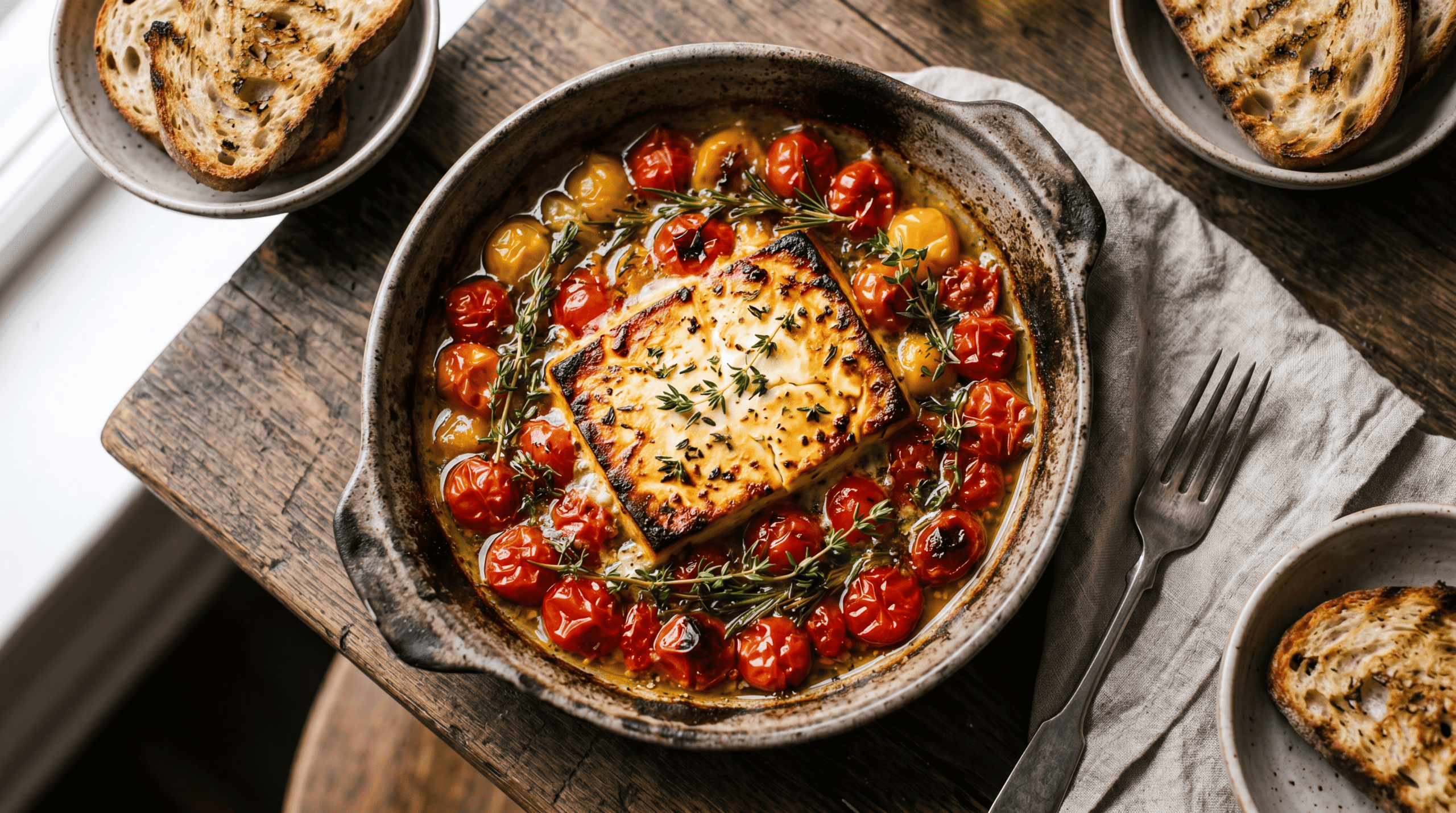
Nestle an 8-ounce block of feta (drained but not rinsed—that brine carries flavor) into the center of the tomatoes. Drizzle the feta with the remaining 1 tablespoon of olive oil and scatter 4-5 sprigs of fresh thyme across everything. The thyme isn’t decorative—its essential oils contain thymol and carvacrol, compounds that enhance the perception of umami and add a subtle complexity that makes people unable to identify exactly why this tastes so good.
Bake for 40-45 minutes until the tomatoes burst and their juices bubble around the edges, and the feta develops golden-brown patches on its surface. While the magic happens in the oven, cook 12 ounces of short pasta (cavatappi, rigatoni, or penne—tubes or twisted shapes that catch sauce) in heavily salted boiling water until exactly al dente. Reserve 1 cup of pasta water before draining.
Remove the baking dish from the oven and discard the thyme stems (the leaves will have fallen into the sauce where they belong). Add the drained pasta and ½ cup of the reserved pasta water to the baking dish. Using tongs or two wooden spoons, toss everything vigorously for 90 seconds, breaking up the feta and crushing some tomatoes against the side of the dish to help them integrate. Add more pasta water by the tablespoon if the sauce seems tight—you want it loose and glossy, not gluey.
Finish with a generous grating of lemon zest (the oils in citrus zest contain limonene, which brightens all the other flavors without adding acidity), torn fresh basil leaves, and a drizzle of your best olive oil. The final oil drizzle isn’t gilding the lily—it adds a fresh, raw olive note that contrasts beautifully with the cooked, mellow oil in the sauce.
Why TikTok Actually Got It Right
Food snobs love to dismiss viral recipes as dumbed-down gimmicks, but this dish went viral because it accidentally teaches fundamental cooking principles better than most culinary school assignments. It demonstrates emulsification, the importance of fat ratios, proper roasting technique, and the magic of finishing pasta in its sauce—all in one beginner-friendly package.
Finnish food blogger Jenni Häyrinen created the original recipe, but TikToker Mackenzie Smith (@grilledcheesesocial) launched it into the stratosphere in early 2021. Within weeks, major news outlets reported that Finnish grocery stores couldn’t keep feta in stock. The recipe’s genius lies in its accessibility—you don’t need knife skills, multiple pans, or perfect timing. The oven does the hard work while you boil pasta.
But accessibility doesn’t mean the technique is simplistic. This recipe harnesses the same principles that make traditional Italian pasta sauces great: fat emulsification, concentrated flavors, proper pasta water integration, and respecting the ingredient ratios. It just achieves them through a more forgiving method than a hot sauté pan where seconds of inattention can mean scorched garlic and broken sauce.
How to Make It Your Own
Once you understand the underlying chemistry, you can riff endlessly on this template. Swap cherry tomatoes for halved stone fruits (peaches, nectarines, plums) in summer—they contain similar pectin structures and will jam up beautifully while adding sweet-tart complexity. Replace feta with a soft, rindless goat cheese for a milder, more delicate sauce, or use a creamy blue cheese if you want something aggressively funky.
Add protein by tucking raw shrimp into the tomatoes for the last 12-15 minutes of baking—they’ll poach gently in the tomato juices and pick up the garlic and oil flavors. Or stir shredded rotisserie chicken into the finished dish for a complete meal. The sauce is rich enough to support additions without getting diluted.
For a deeper, smokier flavor profile, char your tomatoes under the broiler for 5 minutes before adding the feta and transferring to the oven. The blistered skins add a subtle smokiness that mimics wood-fired pizza. Or roast a whole head of garlic alongside the feta—the cloves will turn sweet and spreadable, adding another layer of complexity when mashed into the sauce.
The One Technique You Can Use Today
Here’s what you should steal from this recipe even if you never make it: the principle of building an emulsified sauce in the oven with a high-quality fat and ingredients that break down at complementary rates. This same technique works with blocks of Boursin cheese and asparagus, whole heads of roasted garlic with white beans, or even chunks of squash with goat cheese. You’re creating a fat-based sauce matrix that unifies disparate ingredients into a cohesive whole—without the technical skill required to do it on the stovetop.
The next time a recipe goes viral on TikTok, don’t dismiss it as internet nonsense. Sometimes millions of people recognize brilliance faster than food critics ever will. This baked feta pasta might look like a simple weeknight dinner, but it’s actually teaching fundamental sauce-making principles to a generation of home cooks—and making restaurant-quality results achievable for anyone willing to turn on an oven and wait 45 minutes for chemistry to work its magic.