
Here’s what drives me absolutely insane: home cooks spend hundreds on fancy ingredients while ignoring the single most powerful flavor-building technique humanity has ever discovered. Fermentation isn’t just a trend — it’s the original flavor amplifier, and you’ve been missing out on taste dimensions that literally cannot exist without it.
When Gordon Ramsay recently highlighted fermentation and pickling as essential summer techniques, he wasn’t jumping on a bandwagon. He was pointing to a fundamental truth that professional kitchens have exploited for centuries: controlled decomposition creates flavor compounds that fresh ingredients simply cannot produce.
The Flavor Revolution Hiding in Your Kitchen
Let me be blunt: if you’re not fermenting, you’re cooking with one hand tied behind your back. The flavor complexity in a properly fermented vegetable makes its fresh counterpart taste one-dimensional by comparison. This isn’t opinion — it’s biochemistry.
During fermentation, beneficial bacteria break down sugars and proteins into hundreds of new flavor molecules. According to food science research on fermentation, this microbial activity generates glutamates (umami), organic acids (brightness), esters (fruity notes), and dozens of volatile compounds that create layers of flavor impossible to achieve through any other cooking method.
The current fermentation trend isn’t about being trendy — it’s about home cooks finally discovering what chefs have known forever. When you ferment cabbage into kimchi or sauerkraut, you’re not preserving vegetables. You’re engineering entirely new flavors through controlled bacterial warfare.
The Science Behind It: Why Fermentation Is Flavor Alchemy
Here’s what actually happens when you ferment, and why it matters for your cooking. When you submerge vegetables in salt brine, you create an anaerobic (oxygen-free) environment. This hostile territory kills off harmful bacteria while encouraging beneficial Lactobacillus species to thrive.
These bacteria consume the sugars in your vegetables and excrete lactic acid, dropping the pH below 4.6 — the magic number where spoilage organisms cannot survive. But the real treasure isn’t preservation. It’s the flavor metamorphosis.
As Serious Eats explains in their fermentation guide, Lactobacillus species produce enzymes that break down cell walls, releasing trapped sugars and amino acids. Additional bacteria convert these into complex acids, alcohols, and esters. A fresh cucumber has perhaps 20 distinct flavor compounds. A properly fermented pickle can have over 200.
This is why fermented foods taste “deeper” than fresh ones. You’re literally tasting hundreds of molecules that didn’t exist before fermentation began. The tangy brightness, the rounded umami, the unexpected fruit notes — none of these are accidents. They’re the intentional products of microbial metabolism.
Why Your Summer Cooking Needs This Now
Summer produce presents a beautiful problem: abundance. You have more tomatoes, cucumbers, peppers, and stone fruits than you can eat fresh. Most home cooks freeze them or, worse, let them rot. Both options waste the flavor potential sitting on your counter.
Fermentation transforms this abundance into a flavor arsenal that extends months beyond summer. A batch of fermented cherry tomatoes becomes a umami bomb for winter pasta. Pickled jalapeños develop complexity that fresh peppers cannot match. Fermented peaches create acids and esters that make desserts taste professionally crafted.
But the real power move? Using fermented ingredients as seasoning tools. Professional kitchens don’t serve fermented vegetables as side dishes — we use them as flavor bases. A spoonful of kimchi liquid adds more complexity to a vinaigrette than any commercial vinegar. Sauerkraut brine is liquid umami for braising liquids. This is how you cook with professional depth.
The Quick-Pickle Trap That’s Ruining Your Food
Here’s where most home cooks go wrong: they confuse quick pickling with fermentation. They’re not remotely the same thing, and the difference matters enormously for flavor.
Quick pickling means pouring hot vinegar over vegetables. You get acidity, yes, but you get exactly one flavor note: acetic acid from the vinegar. The vegetable tastes like itself plus vinegar. Nothing new is created.
True fermentation means submerging vegetables in salt brine and waiting days or weeks while bacteria build complex flavors. You get acidity plus hundreds of new compounds. The vegetable becomes something entirely different — more complex, more interesting, more useful as a cooking ingredient.
The tragic irony? Quick pickling is barely faster. You still need to wait for flavors to penetrate, usually overnight. For one extra day of patience, you could have flavors that are exponentially more sophisticated.
Common Mistakes That Kill Your Ferments
Using iodized salt. Iodine inhibits the beneficial bacteria you’re trying to cultivate. Use kosher salt or sea salt. The mineral content doesn’t matter nearly as much as avoiding iodine and anti-caking agents, which interfere with bacterial activity.
Not using enough salt. The most common beginner mistake is timidity with salt. You need 2-3% salt by weight of your vegetables plus water. Too little, and you create an environment where harmful bacteria can compete with beneficial ones. Too much, and fermentation stalls. Use a kitchen scale — guessing is gambling with food safety.
Letting vegetables poke above the brine. Anything exposed to air will develop mold. Period. Use fermentation weights, a small plate, or even a zip-lock bag filled with brine to keep everything submerged. One moldy pepper ruins an entire batch.
Fermenting in warm environments without monitoring. Fermentation speed is temperature-dependent. At 70-75°F, vegetables ferment in 3-7 days. Above 80°F, they can ferment in 24-48 hours and develop off flavors. Below 65°F, fermentation slows dramatically but produces more complex results. Know your kitchen temperature and adjust timing accordingly.
Giving up when you see bubbles or cloudiness. This is success, not failure. Bubbles mean active fermentation. Cloudy brine means beneficial bacteria are thriving. The only red flags are surface mold (skim it off immediately), pink or slimy textures, or genuinely foul odors (not just the sulfur smell of cabbage fermentation, which is normal).
The Three Ferments Every Cook Should Master This Summer
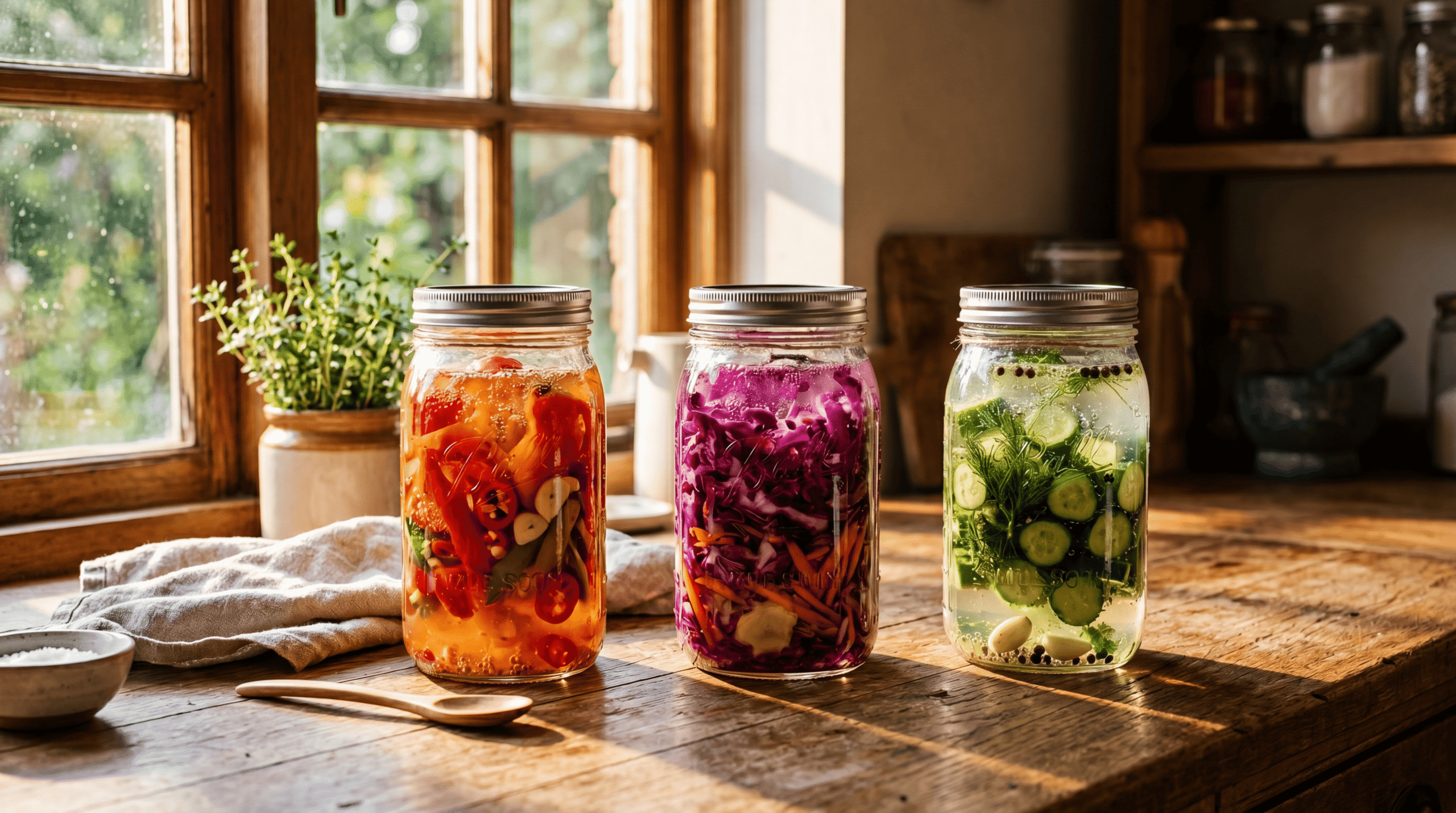
Lacto-fermented hot sauce. Blend hot peppers with 3% salt by weight, submerge in brine, and ferment for two weeks. After fermentation, blend with vinegar and strain. The resulting hot sauce has roundness and depth that Tabasco cannot touch. The fermentation mellows harsh capsaicin burn while building savory complexity.
Fermented cherry tomatoes. Halve cherry tomatoes, toss with 2.5% salt, pack tightly in a jar, and ferment for 4-5 days. The result tastes like umami concentrate. Use them anywhere you’d use sun-dried tomatoes, but with ten times the flavor depth. They transform simple pasta into restaurant-quality dishes.
Quick kimchi. Forget the complicated recipes. Napa cabbage, salt, gochugaru (Korean chili flakes), garlic, ginger, and fish sauce. Massage salt into cabbage, rinse, toss with seasonings, pack tightly, and ferment 3-5 days. You now have a flavor weapon that improves everything from fried rice to grilled cheese.
Why This Matters Beyond Flavor
Fermentation isn’t just about taste — though the taste alone justifies the effort. It’s about developing kitchen confidence and understanding that the most powerful techniques aren’t complicated. They’re patient.
When you successfully ferment vegetables, you prove to yourself that you can control microbial processes, manage food safety, and create flavors that cannot be purchased. This is real cooking power. Not following recipes — understanding food transformation at a fundamental level.
The fermentation trend that Ramsay highlighted isn’t going away, because it represents something genuine: home cooks rediscovering that the best flavors require time, not expensive equipment. You don’t need sous vide machines or molecular gastronomy kits. You need salt, vegetables, and the patience to let bacteria work their magic.
Your Action Plan for This Week
Start absurdly simple. Take one cucumber, slice it, and submerge it in 3% salt brine (30 grams salt per liter of water). Weight it down with a small plate. Leave it on your counter for three days, tasting daily.
On day one, it tastes like salty cucumber. On day two, it starts developing tang. On day three, it tastes like something new — brighter, rounder, more complex than any cucumber you’ve eaten. This is the fermentation enlightenment moment. Once you taste the difference, you’ll understand why professional kitchens are obsessed with fermentation.
Then scale up. Ferment a quart jar of whatever vegetables are overwhelming your kitchen. Make mistakes — fermentation is forgiving. Even a batch that over-ferments can become a potent cooking liquid. The only real failure is not trying.
The current food trends aren’t about novelty. They’re about techniques that have built cuisines for millennia finally becoming accessible to home cooks. Fermentation transforms you from someone who heats ingredients into someone who engineers flavor. That’s not a trend — that’s a superpower.