
Jacqueline Zünd’s documentary “Heat” offers an immersive look into the inequality caused by rising temperatures in the Persian Gulf, premiering in the main competition at Switzerland’s Visions du Réel film festival. The Swiss director chose to depict global warming not through scientific explanation but as a sensory experience, emphasizing how extreme heat uniquely impacts different social groups.
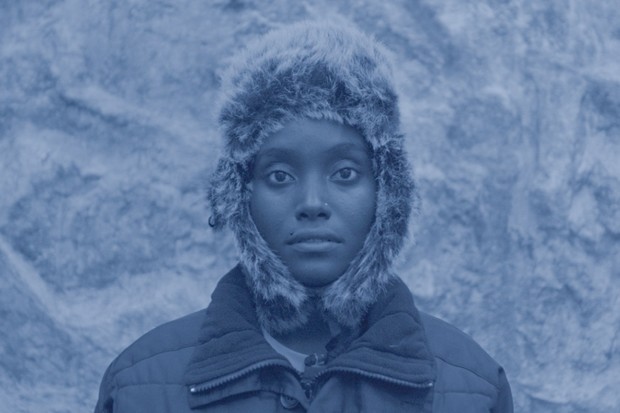
Filmed in the United Arab Emirates, Kuwait, and Egypt, “Heat” follows several individuals including a delivery driver working 12-hour shifts under intense heat, a Kenyan woman employed at a Dubai ice lounge, and a real estate agent who cares for stray cats by bringing them ice and food. A Kuwait-based meteorologist also features in the film, reflecting on the profound changes the region has seen due to climate shifts.
The documentary developed alongside Zünd’s fiction feature “Don’t Let the Sun,” which premiered last year at the Locarno Film Festival. While the fiction film imagines societies adjusting by shifting to nocturnal lives due to heat, the documentary reveals that these dystopian scenarios are already materializing. Zünd explains that her fictional narrative pushed an idea she found grounded in reality: some workers already live night shifts to avoid daytime heat.
Shooting the film presented challenges, including dealing with temperatures that sometimes exceeded 50 degrees Celsius and limited access due to corporate reluctance and strict filming regulations in the region. The production often operated with a minimal crew and occasionally without official permits, especially when filming the laborer’s living quarters. Zünd noted these accommodations were actually better than many others, which could be overcrowded and lack proper ventilation.
The crew also experienced scrutiny from local authorities; while filming in Dubai, team members were briefly detained and questioned, though no reasons were provided.
Visually, “Heat” employs a stylized approach developed with cinematographer Nicolai von Graevenitz to convey the oppressive heat beyond what natural footage could show. Early filming failed to visually represent the discomfort felt on location, leading Zünd to emphasize sound design in post-production to evoke the sensation of extreme heat through environmental noises like wind. The documentary opens with footage of actual mirages near Aswan in Egypt, a powerful visual metaphor for the heat’s distortion effect.
The film also integrates sequences shot on Super 8 film, which introduce a reflective temporal quality described by Zünd as a “nostalgia of the present,” portraying today as if remembered from the future.
Zünd’s sensory approach aims to engage viewers who may be fatigued by traditional climate narratives. She hopes that by focusing on feelings and atmospheric experiences, audiences will gain a different, more immediate understanding of climate inequality.
“Heat” is produced by Louis Mataré for Lomotion AG in cooperation with Zünd’s Real Film and is supported by ARTE and Swiss Radio and Television (SFR). The documentary will premiere on April 20 during Visions du Réel, which runs in Nyon until April 26. Distribution is managed by Taskovski Films.