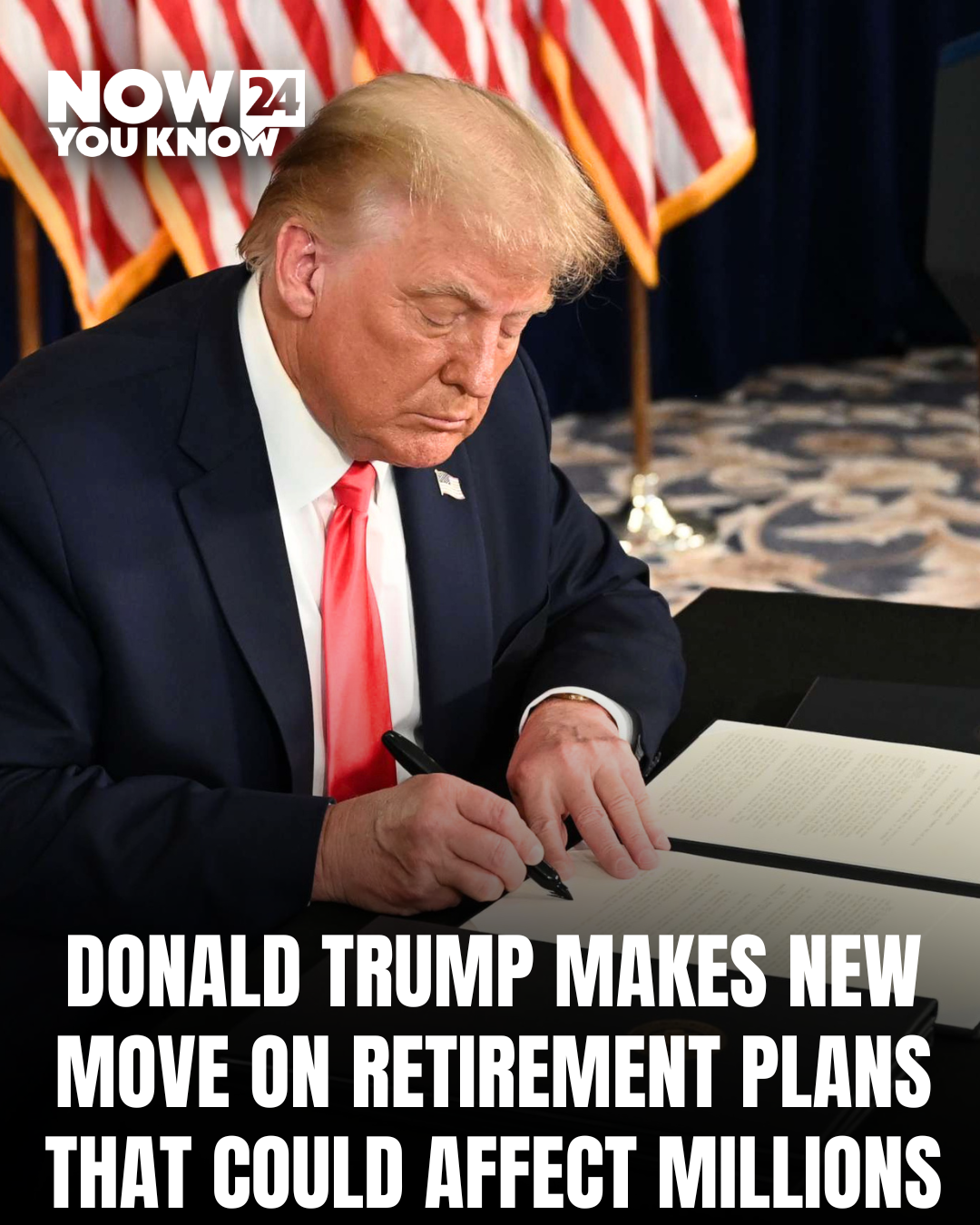

President Donald Trump signed an executive order on Thursday designed to expand access to retirement savings options for millions of Americans who currently lack employer-sponsored plans.
The move targets what policymakers often call the “retirement coverage gap,” which affects more than 50 million private-sector workers, particularly those in lower-income brackets.
Who the plan is meant to help
The initiative focuses on workers who typically fall outside traditional retirement systems. This includes small business employees, part-time workers, independent contractors, and the self-employed.
According to AARP, a large majority of very small businesses do not offer retirement plans, leaving many workers without structured savings options.
Introduction of a new IRA platform
Under the proposal, workers will be able to open retirement accounts through a new federal website, TrumpIRA.gov, starting next year.
The administration says these accounts will function similarly to the Thrift Savings Plan used by federal employees, offering low-cost investment options designed for long-term savings.
Cost limits and accessibility features
The executive order sets strict limits on fees for participating IRA providers, capping total annual expenses at 0.15% of an account balance.
It also prohibits minimum contribution requirements, a move aimed at making the system more accessible to workers with limited or irregular income.
Saver’s Match could boost participation
The plan also highlights the upcoming Saver’s Match, a federal incentive created under prior legislation, which will take effect next year.
Eligible low- and moderate-income workers who contribute to retirement accounts may receive a federal match of up to $1,000, or $2,000 for couples, depending on income and contribution levels.
Research from Pew Charitable Trusts suggests that such incentives could significantly increase participation among workers who currently do not save.
Limits and uncertainties remain
While the proposal could expand access, participation will be voluntary. That means its overall impact may depend heavily on awareness and individual uptake.
Analysts, including those at Morningstar, have noted that automatic enrollment tends to drive much higher participation rates, something this plan does not currently include.
What happens next
The administration has indicated it will work with Congress to potentially expand eligibility for incentives and formalize aspects of the program into law.
For now, the long-term impact remains uncertain, particularly in terms of how many eligible workers will actually open and contribute to these accounts.