
At Wednesday’s 113th First Lady’s Luncheon, Melania Trump and Second Lady Usha Vance shared a stage — but not much warmth, according to a body language expert who analyzed their interaction. The moment has sparked conversation about how political spouses navigate public appearances in an era where every gesture is scrutinized.
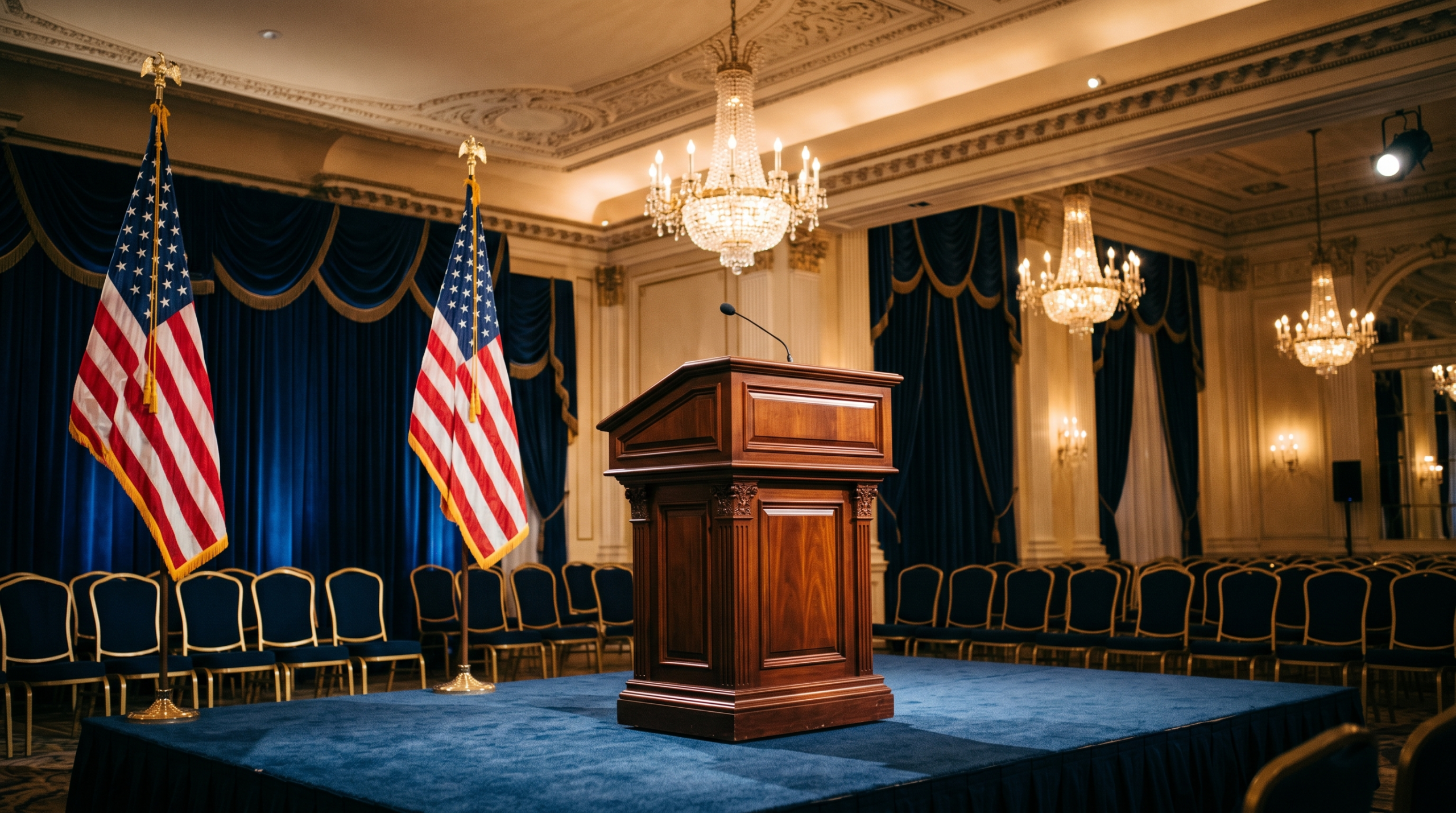
The bipartisan event at the Washington Hilton, which has honored first ladies since 1912, focused on youth advocacy and foster care reform. But it was the unspoken communication between Trump and Vance that caught attention, highlighting how modern political partnerships often prioritize professional distance over traditional displays of camaraderie.
What the Expert Observed
Body language analyst Judi James, speaking to the Irish Star, noted conspicuous absences in the women’s interaction. As Vance concluded her introduction — praising Trump’s career as a model, businesswoman, author, and now film producer — no hug occurred. No brief touch. No sustained eye contact.
“Vance thoughtfully reaches out to turn the page on the notes for her too, and we can hear a ‘thank you’ from Melania although there is no greeting ritual between the two women when you might have expected a hug or even a brief touch plus some warm eye contact of acknowledgment,” James told the outlet.
Vance stood beside Trump and turned to smile at her. Trump, meanwhile, kept her gaze and smile directed outward toward the audience of nearly 2,000 attendees. The former Slovenian model maintained what James characterized as a “businesslike” posture throughout.
Strategic Distance or Personal Preference?
James offered a diplomatic interpretation: the interaction may have been deliberately staged to project authority rather than traditional first-lady warmth. “Melania has been very much in businesslike mode recently, and perhaps this body language was pre-arranged to make her or both of them appear more like serious heavyweights with some powerful messages rather than adhering to the more traditional first lady body language traits of tactile affection and empathy,” she explained.
This reading aligns with Trump’s broader public approach since returning to the White House. Unlike her first tenure, when she often appeared reluctant in ceremonial roles, Trump has adopted a more assertive public presence — launching business ventures, producing a documentary, and spearheading legislative initiatives.
The contrast with predecessors is stark. Michelle Obama and Jill Biden frequently employed physical warmth in public settings, using touch and direct engagement as political tools. Hillary Clinton and Laura Bush, while more reserved, still adhered to expected greeting rituals at official events. Trump’s approach signals either personal preference or a calculated reimagining of the role’s visual language.
The Foster Care Focus
Beyond the body language analysis, Trump used the platform to advance substantive policy work. She addressed her recent collaboration with the House Ways and Means Committee on foster care system reform, building on her “Be Best” initiative’s focus on child welfare.
“Progress is not granted, you must be the composer, embolden your influence in the community with a strong vision to the future,” Trump told the ballroom audience, according to USA Today. She expressed confidence that the legislation would “soon become the law of the land,” calling it “the second piece of legislation I have championed for the protection of America’s next generation.”
The bill aims to strengthen protections for children in the U.S. foster care system, addressing gaps in oversight and support services. Trump’s advocacy represents a continuation of child-focused work she began during her first term, though with noticeably more legislative engagement this time around.
Context: When Political Spouses Share Stages
The Trump-Vance dynamic sits within a larger pattern of evolving expectations for political spouses. Historically, first ladies and vice presidential spouses have performed unity through visual cues — coordinated appearances, mutual praise, shared initiatives. These gestures serve as shorthand for administration cohesion.
Yet recent years have seen fractures in this performance. Tensions between Melania Trump and Ivanka Trump during the first Trump administration were widely reported. Jill Biden’s relationship with Kamala Harris reportedly cooled after the 2020 vice presidential debate. Karen Pence maintained careful distance from many official functions.
Usha Vance, a former corporate litigator who left her legal career when her husband became vice president, represents yet another model — the high-achieving professional adapting to a role that still carries outdated expectations of deference and decorative presence.
The absence of warmth between Trump and Vance may simply reflect two women navigating impossible standards: appear engaged but not attention-seeking, warm but not frivolous, serious but not cold. Every choice invites interpretation.
What This Moment Reveals
Body language analysis of political figures is a cottage industry, often revealing more about our hunger for subtext than actual interpersonal dynamics. A smile held too long becomes “fake.” A lack of smile becomes “cold.” Women in politics face particular scrutiny — their facial expressions parsed for evidence of jealousy, ambition, submission, or defiance.
The Trump-Vance interaction may have been exactly what James suggested: a strategic choice to project professional gravity. Or it may have been two people who simply aren’t close, performing a ceremonial duty without pretending otherwise. In an age of relentless image management, that kind of restraint might be its own statement.
Both women received gifts from the Congressional Club Museum and Foundation following their remarks. Video of the event circulated widely on social media, where reactions split along predictable lines — some applauding Trump’s “strength,” others criticizing her “coldness,” most projecting their existing views onto a 30-second interaction.
Looking Ahead
Trump’s legislative push on foster care will test whether her second-term approach translates to measurable policy impact. The First Lady’s Luncheon, meanwhile, will continue as it has for 113 years — a space where political theater and genuine advocacy uncomfortably coexist, and where every gesture is both meaningful and overanalyzed.
Whether Trump and Vance develop a warmer public rapport or maintain professional distance ultimately matters less than the work they claim to champion. But in a political culture that scrutinizes every angle, every smile, every omitted hug, the performance remains part of the message — intentional or not.