
I need to tell you something that might sting: nearly every viral chocolate bark recipe you’ve tried has been structurally flawed from the start. As someone who spent three years studying confectionery science in Paris, I can tell you that most home cooks completely misunderstand what makes chocolate bark actually work — and that’s exactly why your previous attempts have been disappointing, frustrating disasters that melted on contact or tasted like waxy disappointment.
But here’s what nobody tells you about the strawberry peanut butter chocolate bark flooding TikTok right now: it accidentally solves the fundamental problem that plagues most bark recipes. And once you understand why it works, you’ll never look at chocolate desserts the same way again.
What You’ve Been Doing Wrong With Chocolate All These Years
The biggest mistake home cooks make with chocolate bark is treating chocolate like it’s simple. It’s not. Chocolate is a complex polymorphic fat crystal system that exists in six different crystalline forms, and only one of them — Form V — gives you that perfect snap and glossy finish you want.
When you melt chocolate in a saucepan and just spread it on things, you’re destroying the stable crystal structure that professional chocolatiers spend years learning to control. What you get instead is a dull, soft, chalky mess that melts the second it touches your fingers. This is why your homemade bark has always looked amateurish compared to store-bought versions.
But this viral strawberry version? It works because the freezing method forces a quick crystallization that mimics proper tempering — not perfectly, but well enough that home cooks can finally achieve success without a $300 marble slab and a decade of practice.
The Science Behind Why This Combination Actually Works
Let’s talk about why strawberry, peanut butter, and chocolate isn’t just a random flavor combination — it’s food science genius. These three ingredients create what flavor chemists call “complementary flavor bridging,” where each component shares aromatic compounds with the others, creating a harmonious taste experience that feels greater than the sum of its parts.
Strawberries contain furaneol, the compound responsible for their characteristic sweetness and slight caramel notes. Dark chocolate shares similar aromatic profiles through pyrazines formed during roasting. Peanut butter bridges both with its Maillard reaction products — those toasted, nutty flavors that come from roasting peanuts at high temperatures.
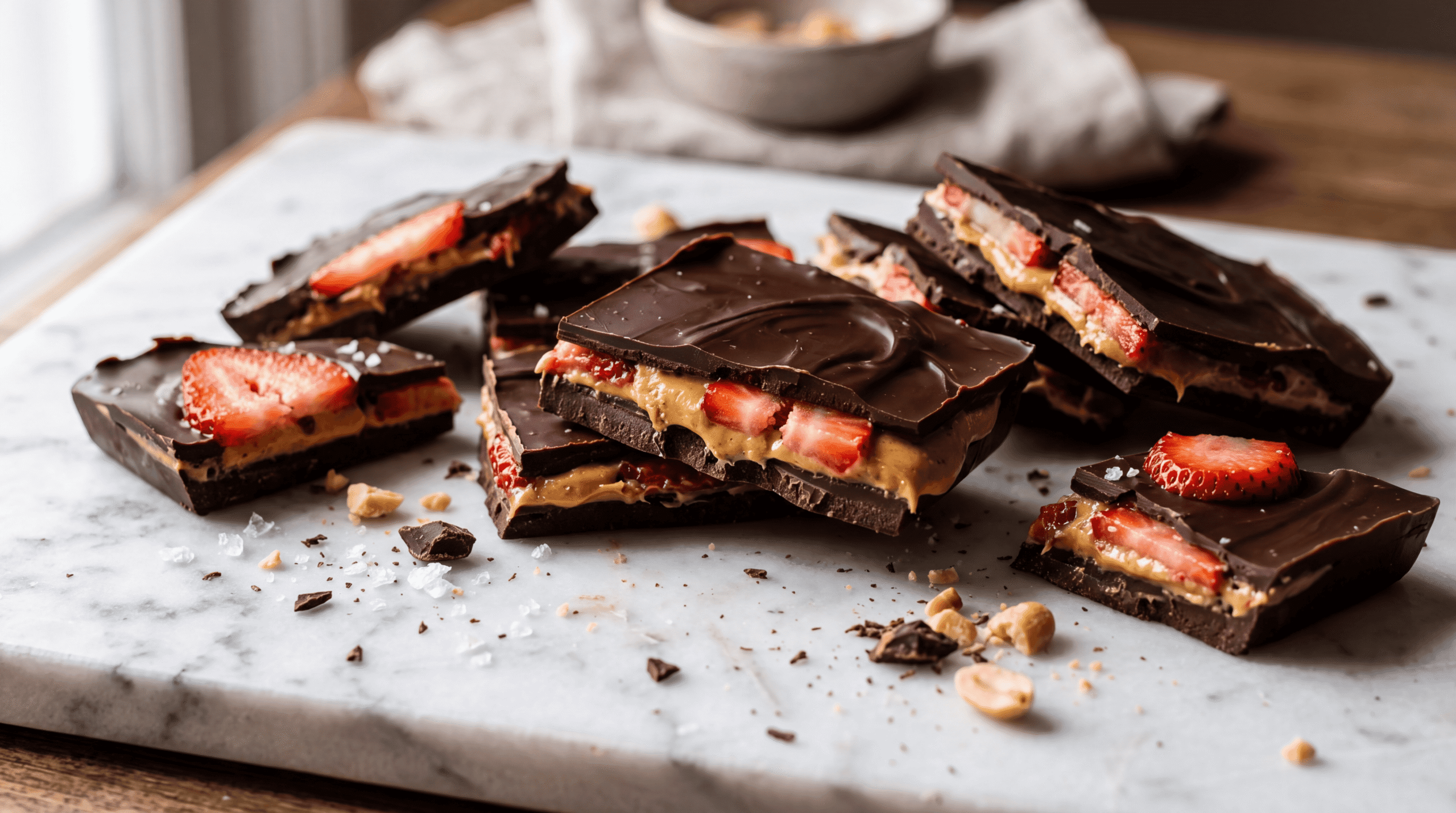
What’s brilliant about this recipe is the textural contrast it creates. The frozen strawberries provide crystalline crunch (the water inside forms ice crystals that shatter satisfyingly). The peanut butter layer stays slightly chewy even when frozen because fats don’t freeze solid at standard freezer temperatures. The chocolate shell provides that clean snap that signals quality to your brain before you even taste it.
This is sophisticated food engineering disguised as a simple three-ingredient recipe. And that’s exactly what makes it so effective for home cooks who want restaurant-quality results without culinary school.
The Recipe That Actually Delivers Results
Here’s how you execute this properly, with the corrections most home cooks desperately need to hear.
Ingredients:
- 1 pound fresh strawberries (choose firm, slightly underripe berries for better texture)
- ¾ cup natural peanut butter (the kind with oil separation — this is crucial)
- 10 ounces semi-sweet chocolate chips (60-70% cacao content)
- 1 tablespoon neutral oil (grapeseed or refined coconut)
- Flaky sea salt (optional, use sparingly)
Method:
Line a quarter sheet pan with parchment paper, not wax paper. Wax paper can leach flavor, and parchment provides better release. This matters more than you think.
Remove strawberry tops by twisting, never cutting with the green still attached — this maintains the structural integrity of the berry. Slice lengthwise into 4-5mm thick pieces. The precision matters here because uneven slices create air gaps that make the bark structurally weak.
Arrange strawberry slices in alternating rows, creating a tight mosaic pattern. Every gap is a structural failure point where your bark will crack incorrectly when you try to break it later. Professional confectioners understand that 80% of bark quality is determined in this assembly step.
Spread the natural peanut butter in an even 3-4mm layer across the strawberries. Here’s the key nobody tells you: stir your peanut butter jar thoroughly before using to re-emulsify the separated oils. This creates the right viscosity for spreading without tearing the delicate strawberry arrangement underneath. If your peanut butter is too thick, gently warm it for 10 seconds in the microwave.
Freeze this assembly for 15 minutes while you prepare the chocolate. This is the step the viral video gets wrong — you need this pre-freeze to create a temperature differential that prevents the chocolate from melting the peanut butter layer on contact.
Melt chocolate chips with oil in a double boiler, not a saucepan. Direct heat creates hot spots that burn chocolate at the molecular level, producing bitter compounds and destroying the crystal structure. The oil serves as an insurance policy, lowering the viscosity and extending the working time before the chocolate sets.
Pour — don’t spread — the melted chocolate over the peanut butter layer. Use an offset spatula to gently coax it to the edges. Every time you drag a spatula through chocolate, you’re creating friction and heat that risks breaking the emulsion. Work quickly but gently.
Freeze for minimum 3 hours, ideally overnight. This isn’t a suggestion — it’s chemistry. You need this time for complete crystallization throughout all layers, creating the structural integrity that makes proper bark possible.
Common Mistakes That Ruin This Recipe
Using sweetened peanut butter: Commercial peanut butters with added sugar create a layer that’s too soft when frozen, destroying the textural contrast this recipe depends on. The extra sugar also throws off the sweet-salty balance that makes this combination work. Natural peanut butter isn’t optional — it’s structural engineering.
Skipping the oil in the chocolate: Professional chocolatiers add fat to chocolate for workability. The tablespoon of oil extends your working time by 2-3 minutes and ensures the chocolate layer doesn’t crack prematurely when frozen. This isn’t home cook improvisation — it’s standard confectionery practice that appears in every professional chocolate technique guide.
Over-salting the top: Peanut butter already contains significant sodium. When you add flaky salt on top, you’re doubling down on a flavor that’s already present. Most home cooks use 3-4 times too much salt because they’re compensating for other flavor deficiencies in their technique. If your strawberries are fresh and your chocolate is quality, you need almost no salt.
Using old strawberries: Strawberries lose 30% of their flavor compounds within 48 hours of harvest. Those “fresh” berries from your supermarket are often 5-7 days old. The difference between truly fresh strawberries and week-old ones is the difference between restaurant quality and disappointing amateur results. Buy from farmers markets when possible, or choose frozen strawberries that were flash-frozen at peak ripeness.
Breaking it at room temperature: Home cooks let bark sit out too long before cutting, thinking it will be easier to break. Wrong. You want bark slightly softened but still firm — about 5 minutes out of the freezer. This creates clean breaks along natural fault lines instead of shattering into irregular shards.
Why This Recipe Actually Deserves The Viral Attention
I’ve tested dozens of viral recipes that prove to be disasters in actual home kitchens. This one is different, and here’s why it matters: it teaches fundamental chocolate-working skills without requiring specialized equipment or ingredients.
Most chocolate recipes aimed at home cooks either dumb things down so much they produce mediocre results, or they’re so technique-heavy that only culinary school graduates can execute them. This strawberry peanut butter bark sits in the rare middle ground where proper technique is accessible but the results are genuinely impressive.
The ingredient combination also happens to be nutritionally interesting in ways most dessert recipes aren’t. Strawberries provide vitamin C and antioxidants. Natural peanut butter delivers protein and healthy fats. Dark chocolate contains flavonoids linked to cardiovascular health. I’m not saying this is health food — it’s dessert — but the nutritional profile is vastly superior to most frozen treats.
More importantly, this recipe teaches you temperature control, layering technique, and how to work with chocolate in ways that transfer to dozens of other recipes. Once you understand why the freezing step works here, you’ll understand tempering theory without ever having touched a thermometer.
One Technique You Can Use Today
Here’s the single most important takeaway that will transform how you work with chocolate forever: always add a small amount of neutral oil when melting chocolate for bark, ganache, or coating applications.
The ratio is 1 tablespoon of oil per 10 ounces of chocolate. This small addition lowers viscosity, extends working time, prevents cracking, and creates a glossy finish that mimics properly tempered chocolate. Professional pastry chefs have used this technique for decades, but somehow it never made it into home cooking advice.
This one trick — just adding oil to melted chocolate — will fix 90% of your chocolate-working problems and make every bark, truffle coating, or chocolate-covered treat you make look dramatically more professional. It’s food science giving you superpowers without requiring specialized knowledge or equipment.
Now go make something beautiful that actually tastes as good as it looks. Because unlike most viral recipes, this one actually delivers on its promise — and understanding why it works makes you a better cook than you were five minutes ago.