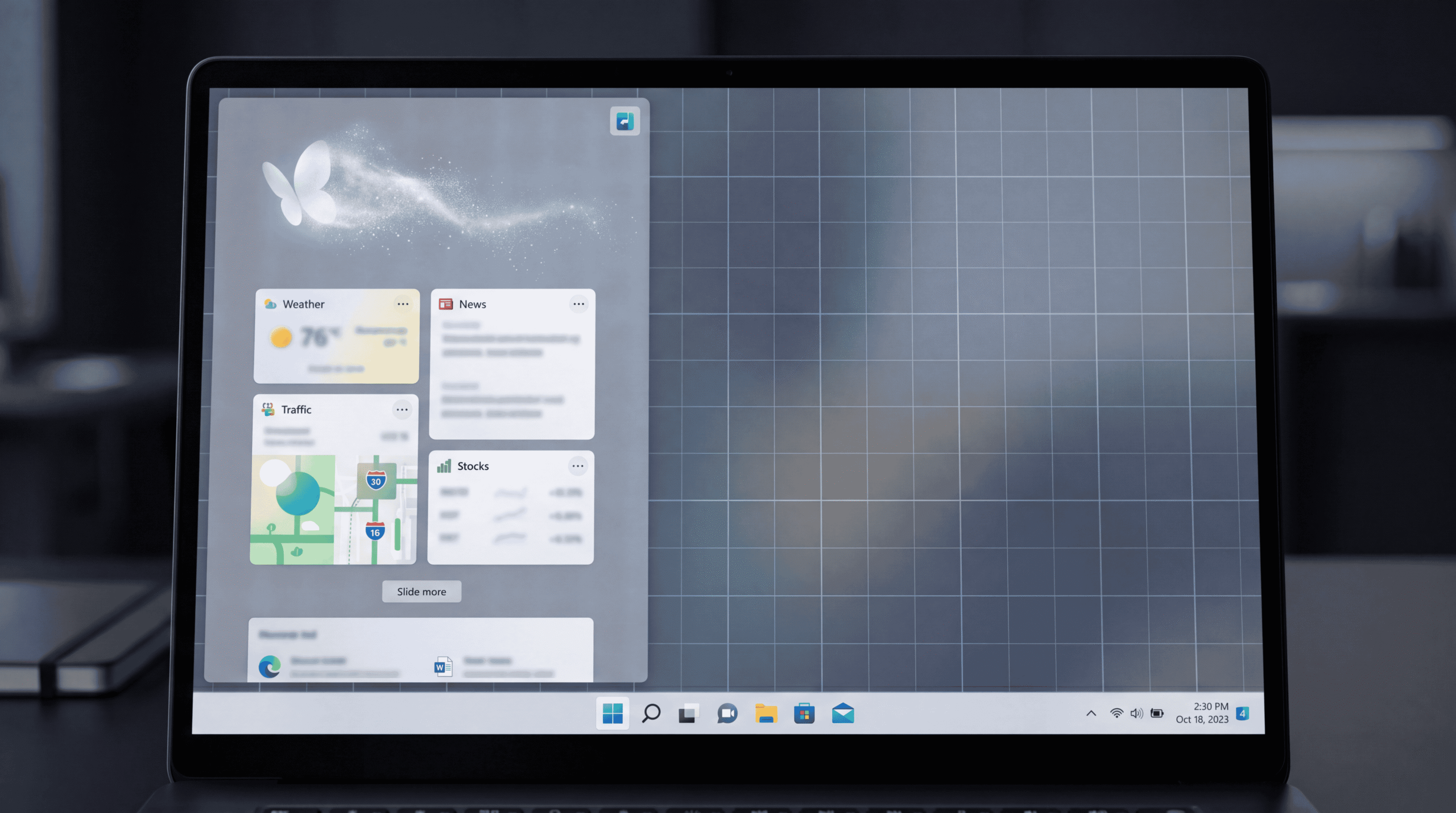

Microsoft just announced they’re removing the MSN news feed from Windows 11 widgets. If your first reaction is “wait, people actually use Windows widgets?” — you’re asking the right question. Here’s what this seemingly minor product decision reveals about how platform companies handle feature bloat when billions of dollars in ad revenue are at stake.
The Real Story: Microsoft Let Users Opt Out Two Years Ago
The headline makes this sound like breaking news. It’s not. Microsoft added the ability to disable the MSN feed in Windows 11 widgets back in January 2023. What changed now is they’re finally making “no MSN spam” the default experience instead of forcing users to hunt through settings.
This is the product management equivalent of declaring victory after losing the war. When you ship a feature, let users disable it for two years, then remove it entirely — that’s not a strategic pivot. That’s admitting defeat with a press release.
Why Microsoft Clung to a Dead Feature for So Long
The MSN feed wasn’t just editorial content. It was an ad inventory play. Every widget panel that opened was another impression Microsoft could monetize. The company generates advertising revenue through these content partnerships, and walking away from that revenue stream doesn’t happen unless the metrics are truly terrible.
Here’s what likely happened internally: The engagement numbers were abysmal, click-through rates were embarrassing, and worse — the feature was actively training users to never open the widgets panel. When a revenue feature becomes a user acquisition problem for your entire widget ecosystem, finance finally loses the argument with product.
What The Press Got Wrong
Most coverage frames this as Microsoft “listening to users” and “improving the experience.” That’s charitable. The more accurate read: Microsoft spent two years A/B testing whether they could salvage ad revenue from a feature users hated, determined they couldn’t, and are now cutting losses.
The real tell is in the implementation. They’re not removing widgets entirely — they’re making them “quiet by default.” Translation: the infrastructure stays, the ad inventory technically remains available, but they’re reducing the surface area for user complaints. This is defensive product management, not visionary UX design.
The Technical Reality Behind “Quiet By Default”
Microsoft’s new approach disables the widget panel from opening when you hover over the taskbar icon. On the surface, this seems like a simple boolean flip. The interesting part is what they’re preserving: the entire widget rendering engine, the content delivery pipeline, and the notification system all remain in Windows 11.
Why keep all that code if you’re killing the feature? Because widgets are part of Microsoft’s long-term platform strategy for contextual computing and their Copilot integration roadmap. The MSN feed was just one (failed) content source. The underlying system is designed to plug in whatever comes next — probably AI-generated summaries and Copilot recommendations.
From an architectural standpoint, this explains the two-year limbo period. They weren’t waiting for user feedback. They were waiting for the replacement content pipeline to be ready. The MSN feed was placeholder content that stayed too long.
Who Actually Wins and Loses
Winners:
- Windows 11 users who never asked for content widgets — You get a cleaner taskbar experience and fewer distractions. Microsoft is finally admitting that not every square inch of the OS needs to be monetized.
- Microsoft’s Copilot team — They inherit a content delivery system without the baggage of the MSN brand. When Copilot-generated news summaries show up in widgets next year, remember this transition set the stage.
- Third-party widget developers — Microsoft’s pivot away from first-party content spam creates room for better widget experiences. The API remains, the distribution channel stays open.
Losers:
- MSN content partners — Publishers who relied on MSN’s Windows distribution just lost a prominent (if poorly performing) placement. This is another nail in the coffin for the traditional web portal model.
- Microsoft’s advertising business unit — They’re surrendering inventory that theoretically reached hundreds of millions of Windows users. The fact they’re willing to do this signals just how worthless those impressions actually were.
- Users who actually wanted news widgets — Yes, this person exists. Probably in Microsoft’s usability lab. They’ll need to find another way to get content in Windows.
The Overlooked Implication: Platform Defaults Matter More Than Features
Here’s what every product team should learn from this: Microsoft shipped widgets, let users disable the MSN feed, collected two years of telemetry, and still decided the right move was changing the default to “off.” That’s not a feature failure — that’s a defaults failure.
The widget system itself is fine. The content was fine. The implementation was fine. What wasn’t fine was forcing it on users who never asked for it. Research consistently shows that default settings shape behavior more than any other design decision. Microsoft spent two years learning this the hard way.
For founders building platform features: if you’re planning to make something opt-out instead of opt-in, you’re not confident in the feature. Ship it as opt-in, measure real engagement, and scale from there. Microsoft’s mistake was assuming distribution (built into Windows) would overcome a weak value proposition (generic news you didn’t ask for).
What Users Should Actually Expect
In the short term: fewer interruptions, cleaner taskbar behavior, and widgets that stay hidden until you explicitly want them. The changes are rolling out in Windows 11 preview builds now and should reach stable release within a few months.
In the medium term: Microsoft will quietly rebuild the widget content strategy around Copilot. Expect to see AI-generated summaries, personalized recommendations, and contextual information that actually relates to what you’re working on. That’s the vision that justified keeping the widget infrastructure alive.
The cynic in me says they’ll repeat the same mistake — defaulting new Copilot widgets to “on” and forcing users to disable them again. The optimist hopes they learned that platform trust, once lost, doesn’t come back easily.
The Bigger Pattern: Feature Bloat as Revenue Theater
This isn’t just about Windows widgets. It’s about how large platform companies handle the tension between user experience and monetization. Google does this with Chrome’s new tab page. Apple does this with Apple News notifications. Microsoft does this with MSN in widgets.
The pattern is always the same: ship a feature that theoretically serves users but primarily serves ad inventory, make it difficult to disable, collect data for 18-24 months, then quietly walk it back when the metrics prove it damaged the platform more than it helped revenue.
What’s different here is Microsoft actually published the retreat. Most platform companies just deprecate features silently and hope no one notices. The fact Microsoft is framing this as an improvement rather than a removal suggests they’re genuinely concerned about Windows 11 perception issues.
The Technical Debt That Remains
Even with the MSN feed gone, the Windows 11 widget system carries significant technical debt. The panel still requires a Chromium-based rendering engine, still consumes memory even when hidden, and still maintains a persistent connection to Microsoft’s content servers. None of that is changing with this update.
From a system resource perspective, the widget infrastructure is one of several reasons Windows 11 uses more RAM than Windows 10. Microsoft could make widgets truly optional — as in, removable components — but that would require architectural changes they’re unwilling to make. The widget engine is too deeply integrated into their future platform plans.
For IT administrators managing Windows 11 deployments, the calculus hasn’t changed. You can disable widgets via Group Policy, but you can’t remove the underlying system components. The attack surface remains, the resource usage remains, and the potential for future unwanted features remains.
My Prediction: Copilot Widgets Within 12 Months
Microsoft isn’t killing widgets — they’re repositioning them for the AI era. Within a year, we’ll see Copilot-powered widgets that summarize your emails, suggest meeting actions, and surface contextual information based on your work patterns. That’s the play that justifies keeping this infrastructure alive.
The difference is those widgets might actually deliver value beyond ad impressions. Microsoft’s bet is that AI-generated, personalized content will overcome the engagement problems that doomed generic MSN articles. Whether users will trust Microsoft enough to give widgets a second chance is the real question this change sets up.
Until then, Windows 11 just became slightly less annoying, and sometimes that’s the best outcome a large platform company can hope for when admitting a feature didn’t work as planned.