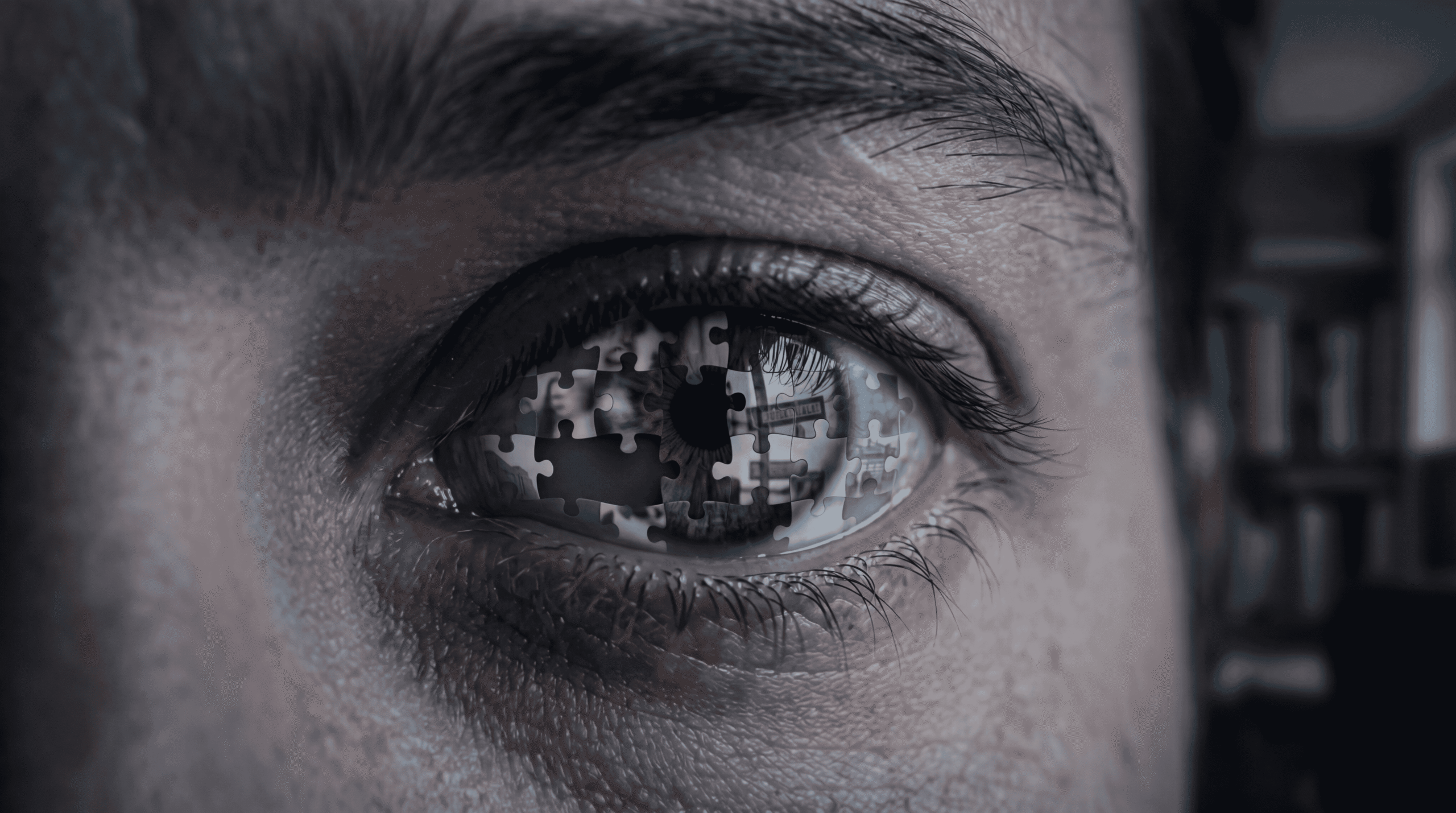

You believe some people can glance at a page and replay it like a video file in their mind. You’ve seen it in Sherlock, believed it about that brilliant classmate, maybe even claimed it about yourself. Here’s what you need to hear: photographic memory doesn’t exist, and the fact that you believe it does reveals something uncomfortable about how little you understand your own mind.
I’ve spent fifteen years studying how memory actually works, and I can tell you this with absolute certainty: your memory is not a camera. It’s not a recording device. It’s not even trying to be accurate. And once you understand what it’s actually doing, you’ll never trust your own recollections the same way again.
The Hollywood Illusion That Rewired Your Expectations
Every detective show, every legal drama, every genius character needs their party trick. The writers give them “photographic memory” because it’s clean, it’s impressive, and it moves the plot forward. You watch Joy Kwon in “The Pitt” recite every patient detail after the computer crashes, and something in your brain says “that’s possible.”
That’s the availability heuristic at work—a cognitive bias where your brain judges what’s possible based on how easily examples come to mind. You’ve seen “photographic memory” dramatized so many times that it feels real, documented, scientifically verified. It’s none of those things.
The term “photographic memory” suggests your brain takes snapshots—objective, complete, unchanging records of experience. This metaphor is so intuitive, so aligned with how cameras work, that research shows most people believe it exists even though no scientific study has ever demonstrated it in adults.
What Your Brain Is Actually Doing When You Remember
Here’s the truth that makes most people uncomfortable: every time you recall something, you’re not retrieving a file. You’re rebuilding an approximation from fragments, and your current beliefs, emotions, and context are part of the construction materials.
Memory is a reconstructive process, not a reproductive one. When you try to remember where you left your keys, your brain doesn’t play back security footage. It takes available pieces—where you usually put them, what you were thinking about when you came in, what you’ve searched for already—and generates a plausible narrative.
This isn’t a bug. It’s exactly how human cognition evolved to work. Neuroscience research shows that remembering and imagining activate overlapping brain networks because both are constructive processes. Your brain is optimized for creating useful predictions about the future, not perfect records of the past.
The Eidetic Memory Red Herring
Some researchers study what’s called “eidetic imagery”—primarily in children who can look at an image and continue to “see” it briefly after it’s removed. This sounds like photographic memory until you look at the actual data.
Eidetic images fade within minutes. They’re not perfect reproductions. They can’t be “scanned” for new details the way a photograph can. And they virtually disappear by adolescence. Psychology research confirms that even in the rare children who show this ability, it bears no resemblance to what Hollywood depicts.
The people who claim photographic memory as adults? When scientists actually test them, their recall isn’t photographically accurate—it’s just exceptionally good. And that difference matters immensely.
Why You Keep Believing the Myth
You want to believe in photographic memory for the same reason you want to believe in effortless genius: it protects you from confronting the actual work that exceptional memory requires. If someone is just “born with it,” then you’re off the hook for not developing your own capabilities.
This is the fixed mindset bias that psychologist Carol Dweck has documented across domains. When you attribute others’ abilities to innate gifts rather than developed skills, you simultaneously excuse your own limitations and misunderstand how improvement actually happens.
The real memory champions—people who can memorize the order of shuffled decks of cards or hundreds of random digits—don’t have photographic memory. They use elaborate mnemonic techniques, practice obsessively, and still make mistakes. Studies of memory athletes show they have normal brain anatomy. What’s different is their strategies, not their hardware.
The Research Says: Perfect Recall Is Not How Brains Work
Elizabeth Loftus, one of the most cited psychologists alive, has spent decades demonstrating how easily memories distort. In her famous car crash experiments, simply changing one word in a question (“smashed” vs. “hit”) altered participants’ memories of vehicle speed and whether they saw broken glass that never existed.
More recent work using fMRI scanning shows that even vivid, confident memories involve the same neural reconstruction processes as vague recollections. There’s no special “photographic” encoding that some people access. There’s only the universal architecture of human memory—imperfect, malleable, deeply influenced by suggestion and current beliefs.
Research by Alan Baddeley on working memory shows humans can hold roughly four chunks of information in active awareness at once. This isn’t a limitation that photographic memory overcomes—it’s a fundamental constraint of human cognition that no verified case has ever transcended.
What You’re Actually Doing When You Remember “Perfectly”
Those moments when you’re certain your memory is exact? That’s not accuracy—that’s metacognitive confidence, and it’s shockingly uncorrelated with actual precision. Your brain gives you the subjective feeling of certainty using completely different mechanisms than those that determine whether your recall is correct.
You can be absolutely positive about a memory and completely wrong. You can be uncertain about a memory and perfectly accurate. The feeling of photographic clarity is just that—a feeling, generated by how fluently your brain reconstructs the narrative, not by accessing some privileged recording.
This explains why eyewitness testimony is so unreliable even when witnesses are absolutely certain. It’s why therapists had to abandon recovered memory therapy after realizing they were helping patients construct detailed, emotionally vivid memories of events that never happened. Confidence is not accuracy.
The Real Superpower You’re Ignoring
Here’s what actually separates people with exceptional memory: they use better encoding strategies, they practice retrieval, and they understand that memory is an active skill, not a passive recording.
The method of loci, used by ancient Greek orators and modern memory champions, works by creating vivid mental associations and spatial arrangements. It’s deliberate, effortful, and improvable. Neuroscience research confirms that training in these techniques actually changes brain connectivity patterns—not because you’re unlocking hidden photographic abilities, but because you’re building more elaborate retrieval scaffolding.
The students who do best aren’t the ones convinced they have photographic memory. They’re the ones who test themselves, space their practice, and accept that memory requires work. They’re not trying to record information—they’re actively transforming it into memorable forms.
Why This Myth Matters Beyond Trivia
Your belief in photographic memory isn’t just a harmless misconception. It shapes how you approach learning, how you evaluate your own capabilities, and how you interpret your failures.
When you believe memory should be photographic, you interpret your normal forgetting as personal failure rather than how cognition works. You don’t develop effective study strategies because you’re waiting to “just remember” the way you think gifted people do. You trust confident eyewitnesses, including yourself, far more than the evidence warrants.
In courtrooms, lives have been destroyed by confident testimony from witnesses who were certain they remembered a face or an event photographically. In education, students waste time on ineffective strategies because they don’t understand how memory actually encodes information. In everyday life, families fracture over disagreements about shared events because everyone is certain their version is the objective truth.
Try This Today: Test Your Photographic Certainty
Think of a memory you’re absolutely certain about—something you’d bet money you remember perfectly. Now write down every detail you can recall. Then, if possible, check it against any objective record: a photo, a video, another person’s account written at the time.
The discrepancies you find aren’t evidence of a failing brain. They’re evidence of a brain doing exactly what human brains do: reconstructing plausible narratives from fragments, influenced by everything you’ve learned and felt since the original experience.
Or try this: describe a room in your house without looking at it. Then go look and count how many details you missed or got wrong. Your confidence before checking is not correlated with your accuracy.
What Changes When You Accept This
Once you accept that memory isn’t photographic, something shifts. You stop trusting your certainty as proof. You start actually testing your understanding instead of assuming recognition equals retention. You become more humble in arguments about what happened.
You also become more strategic. If memory is reconstructive, then the quality of your encoding matters. The connections you build matter. The way you practice retrieval matters. Memory becomes a skill you can develop rather than an ability you either have or don’t.
And you become more forgiving—of yourself and others. That argument about what someone said or didn’t say? Both of you are working with reconstructions, not recordings. Your certainty means nothing except that your brain has built a compelling narrative.
The Uncomfortable Truth About Your Mind
Your brain is not trying to give you truth. It’s trying to give you useful narratives that let you function, predict, and survive. Sometimes those narratives are accurate. Often they’re not. Your subjective experience of memory—that feeling of replaying the past—is itself a construction.
Photographic memory is a myth that persists because it’s convenient, because Hollywood keeps depicting it, and because accepting the alternative means confronting how unreliable your own experience really is. But that confrontation is where actual understanding begins.
Every memory you trust as photographic is actually a story your brain is telling right now, assembled from fragments and shaped by who you are today—not a faithful reproduction of who you were then.